0 views
Share this clip
Know someone who'd love this clip?
Share it with friends and fellow fans.
Share this clip
Know someone who'd love this clip?
Share it with friends and fellow fans.
Origins[edit] Originally written in 1934 for Adios, Argentina, an unproduced 20th Century Fox film musical, "Don't Fence Me In" was based on text by a poet and engineer with the Department of Highways in Helena, Montana, Robert (Bob) Fletcher. Cole Porter, who had been asked to write a cowboy song for the 20th Century Fox musical, bought the poem from Fletcher for $250. Porter reworked Fletcher's poem, and when the song was first published, Porter was credited with sole authorship. Porter had wanted to give Fletcher co-authorship credit, but his publishers did not allow that. After the song became popular, however, Fletcher hired attorneys who negotiated his being given co-authorship credit in subsequent publications. Although it was one of the most popular songs of its time, Porter claimed it was his least favorite of his own compositions.[1] In 1934, Robert Fletcher sent Porter his song, entitled "Don't Fence Me In," which he had written at the suggestion of film producer Lou Brock, with the film Adios, Argentina in mind. Porter bought the rights, with the agreement that he would use the title, could re-work the lyrics if he chose, and could write his own music. Porter's revision of the song retained quite a few portions of Fletcher's lyrics, such as "Give me land, lots of land", "... breeze ... cottonwood trees", "turn me loose, let me straddle my old saddle," "mountains rise ... western skies", "cayuse", "where the west commences," and "... hobbles ... can't stand fences,"[2][3][4] but in some places modified to give them "the smart Porter touch".[5][6] Porter substituted some whole lines, rearranged lyric phrases, added two verses, and composed his own music for it. (Porter's exact verse about Wildcat Kelly was not included in any of the hit recordings of the song nor used in either of the movies in which the song was used. Roy Rogers did refer to "Wildcat Willy" when he performed it in 1944's Hollywood Canteen).[2][7] Cover versions[edit] Ten years later, in 1944, Warner Bros. resurrected "Don't Fence Me In" for Roy Rogers to sing in the movie Hollywood Canteen. Many people heard the song for the first time when Kate Smith introduced it on her radio broadcast of October 8, 1944. "Don't Fence Me In" was also recorded by Bing Crosby and The Andrews Sisters in 1944. Crosby entered the studio on July 25, 1944, without having seen or heard the song. Within 30 minutes, he and the Andrews Sisters had completed the recording, which sold more than a million copies and topped the Billboard charts for eight weeks in 1944--45. Ella Fitzgerald recorded the song on her Verve Records, Cole Porter Songbook, album. It was also released on Ella Fitzgerald Sings More Cole Porter. Covers of the song were also made by Gene Autry; Eddy Arnold who included it on his release A Dozen Hits, and Hoyt Axton on his 1982 LP Pistol Packin' Mama. Willie Nelson also recorded a version of the song with Leon Russell. Little Willie Littlefield recorded a version for his 1990 album Singalong with Little Willie Littlefield. Mickey Mouse, Minnie Mouse, Goofy and the kids sing this song in "Campout at Walt Disney World" released in 1994 while going on a hay-ride. The Killers recorded the track to be used in support of the 2013 Nevada state tourism campaign, called "A World Within. A State Apart." Roy Rogers and "Don't Fence Me In"[edit] In 1945, the song was sung again as the title tune of another Roy Rogers film, Don't Fence Me In (1945), in which Dale Evans plays a magazine reporter who comes to Roy Rogers' and George "Gabby" Hayes' ranch to research her story about a legendary late gunslinger. When it's revealed that Gabby Hayes is actually the supposedly dead outlaw, Rogers must clear his name. Rogers and The Sons of the Pioneers perform songs, including the Cole Porter title tune. The next year (1946), a biopic about Cole Porter titled Night and Day used a clip from H
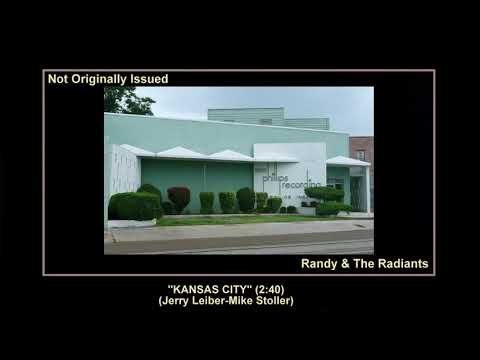
Born Sept. 16, 1931 in El Campo, Texas, USA. Died June 23, 2013 in Leusden, The Netherlands Blues singer/pianist popular in California during the early 1950's. He recorded the original version of Leiber & Stoller's song Kansas City in 1952 under the title of "K.C. Loving". Littlefield popularised the 'triplet' piano style in R&B on his Modern recordings.
More about Little Willie Littlefield→Added
 21:42
21:42Tex Williams
 0:43
0:43ron kenol
 2:53
2:53 4:12
4:12Scott Park, Songwriter
 5:37
5:37Little Willie Littlefield
 2:09
2:09Little Willie Littlefield
 6:53
6:53Little Willie Littlefield
 2:41
2:41Little Willie Littlefield