0 views
Share this clip
Know someone who'd love this clip?
Share it with friends and fellow fans.
Share this clip
Know someone who'd love this clip?
Share it with friends and fellow fans.
STUDIO SESSION FOR RANDY & THE RADIANTS FOR SUN RECORDS 1964 SAM PHILLIPS RECORDING STUDIO 639 MADISON AVENUE, MEMPHIS, TENNESSEE SUN SESSION: SATURDAY OCTOBER 17, 1964 SESSION HOURS: UNKNOWN PRODUCER AND RECORDING ENGINEER - SAM PHILLIPS AND/OR KNOX PHILLIPS ''KANSAS CITY'' Composer: - Jerry Leiber-Mike Stoller Publisher: - B.M.I. - Jerry Leiber Music-Mike Stoller Music Matrix number: - None - Not Originally Issued (2:40) Recorded: - October 17, 1964 Released: - April 30, 2013 First appearance: - X5 Music Group (MP3) Internet Sample-10 mono VARIOUS ARTISTS - DISCOVER - KANSAS CITY BLUES "Kansas City" is a rhythm and blues song written by Jerry Leiber and Mike Stoller in 1952. First recorded by Little Willie Littlefield the same year, the song later became a chart-topping hit when it was recorded by Wilbert Harrison in 1959. "Kansas City" is one of Leiber and Stoller's "most recorded tunes, with more than three hundred versions", with several appearing in the R&B and pop record charts. "Kansas City" was written by Jerry Leiber and Mike Stoller, two nineteen-year-old rhythm and blues fans from Los Angeles. Neither had been to Kansas City, but were inspired by Big Joe Turner records. I'm goin' to Kansas City, Kansas City here I come (2×) They got a crazy way of lovin' there, and I'm gonna get me some I'm gonna be standing on the corner, of Twelfth Street and Vine (2×) With my Kansas City baby, and a bottle of Kansas City wine Through a connection to producer Ralph Bass, they wrote "Kansas City" specifically for West Coast blues/rhythm and blues artist Little Willie Littlefield. There was an initial disagreement between the two writers over the song's melody: Leiber (who wrote the lyrics) preferred a traditional blues song, while Stoller wanted a more distinctive vocal line; Stoller ultimately prevailed. They taught the song to Littlefield at Maxwell Davis' house, who arranged and provided the tenor sax for the song. Littlefield recorded the song in Los Angeles in 1952, during his first recording session for Federal Records, a King Records subsidiary. Federal's Ralph Bass changed the title to "K. C. Loving", which he reportedly considered to sound "hipper" than "Kansas City". Littlefield's record had some success in parts of the U.S., but it did not reach the national chart. n 1955, Little Richard recorded two rather different versions of "Kansas City", both of which were not released until years later. The first version, which was close to the original song, was released in November 1970, on the compilation album Well Alright!. Little Richard substantially re-worked the song for his second version, particularly the refrain starting with words "Hey, hey, hey, hey; Hey baby, hey child, hey now". It was released in late 1958 on The Fabulous Little Richard and in April 1959 as a single. On May 9, 1956, Little Richard recorded "Hey-Hey-Hey-Hey", also known as "Hey-Hey-Hey-Hey! (Goin' Back to Birmingham)", which was similar to a part of the second version of "Kansas City" recorded six months earlier. Credited to Richard, it was released in January 1958 as the B-side of "Good Golly, Miss Molly" and in July 1958 on Little Richard. In 1959, after several years of performing Littlefield's "K. C. Loving", Wilbert Harrison decided to record the song. In March 1959, after Little Richard's version was released, Harrison, with a trio including guitarist Wild Jimmy Spruill, recorded it in a New York studio for producer Bobby Robinson of Fury Records. "Kansas City" was released on a single by Fury later that year. Although the song's arrangement varied little from Littlefield's, it "struck such a solid shuffle groove that it was unforgettable", with inspired rhythm and solo guitar work by Spruill. Harrison's song was issued with Leiber and Stoller's original name, "Kansas City", but changed the refrain to "They got some crazy little women there, and I'm gonna get me one" and dropped one twelve-bar section. Shortly after the song's release, several other versions appeared. Billboard magazine's pop song pick of the week for March 30, 1959, listed five different releases of "Kansas City": Harrison's and versions by Hank Ballard and the Midnighters, Rocky Olson, Rockin' Ronald & the Rebels, and a reissue by Littlefield. A week later, the magazine announced the single release of a version by Little Richard. Although Ballard's and Richard's versions both appeared in the lower reaches of the Billboard charts, Harrison's was a runaway hit, reaching number one in both the Rhythm & Blues and pop charts, where it remained for seven weeks, and became one of the top selling records of 1959. Source: From Wikipedia, the free encyclopedia Name (Or. No. Of Instruments) Randy Jay Haspel - Vocal & Guitar Bob Simon - Singer/Songwriter Ed Marshall - Lead Guitar Howard Calhoun - Bass & Keyboard Mike Gardner - Drums Bill Slais - Tenor Saxophone and Vocals © - 706 UNION AVENUE SESSIONS - ©
Born Sept. 16, 1931 in El Campo, Texas, USA. Died June 23, 2013 in Leusden, The Netherlands Blues singer/pianist popular in California during the early 1950's. He recorded the original version of Leiber & Stoller's song Kansas City in 1952 under the title of "K.C. Loving". Littlefield popularised the 'triplet' piano style in R&B on his Modern recordings.
More about Little Willie Littlefield→Added
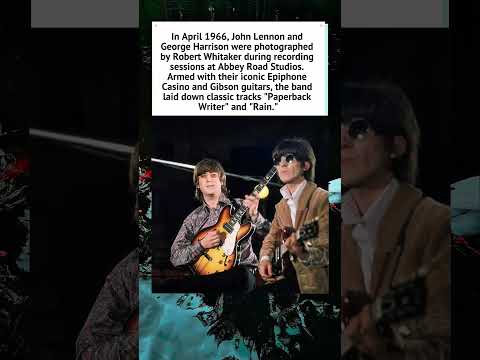
John Lennon
 8:57
8:57Mark Dolfen
 6:42
6:42Mark Dolfen
 15:59
15:59Mark Dolfen
 5:37
5:37Little Willie Littlefield
 2:09
2:09Little Willie Littlefield
 6:53
6:53Little Willie Littlefield
 6:46
6:46Little Willie Littlefield