John Dee Holeman & Fris Holloway Mama Got Mad 'Cause Papa Didn't Bring No Coffee Home
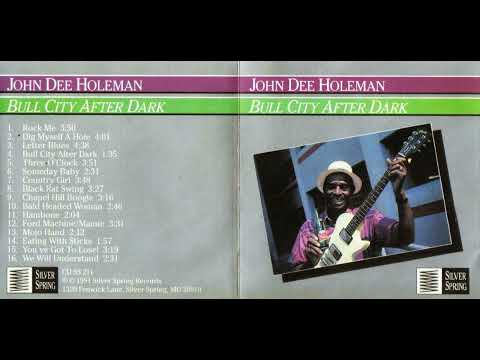
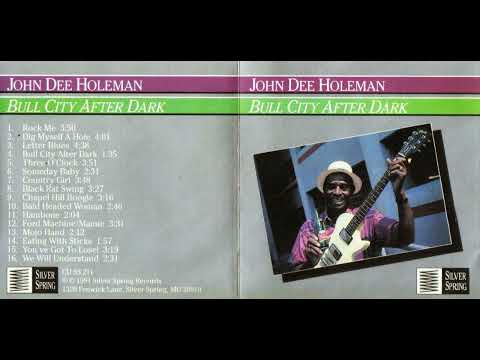
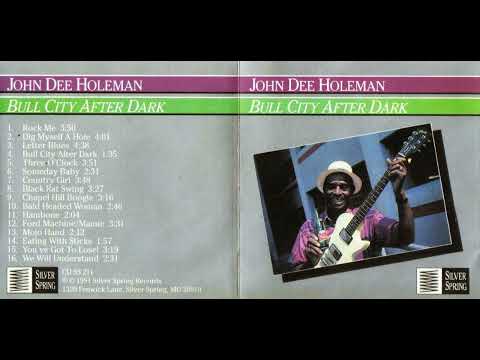
John Dee Holeman (April 4, 1929 – April 30, 2021) was an American Piedmont blues guitarist, singer, and songwriter. His music includes elements of Texas blues, R&B and African-American string-band music. In his younger days he was also known for his proficiency as a buckdancer. Holeman was born in Hillsborough, North Carolina. on April 4, 1929. He was raised on a farm in Orange County. He learned to play the guitar, and listened to traveling bluesmen from other parts of the South, as well as on the radio. Drawing inspiration from Blind Boy Fuller, he began singing and playing guitar at local parties and other community events by the time he was in his mid-teens. He went on to purchase his first electric guitar during his mid-twenties. Holeman relocated to Durham, North Carolina, in 1954, where he played with the pianist Fris Holloway. The duo became adept at the Juba dance, also known as the hambone or buckdance, which he had earlier learned at country dances. During his working lifetime, Holeman had full-time employment as a construction worker, and music was a part-time pursuit. However, he was able to tour in the United States and overseas in the 1980s, including performances at Carnegie Hall, and abroad on behalf of the United States Information Agency's Arts America program. He played at the 42nd National Folk Festival at Wolf Trap, Virginia, in 1980. He performed yearly at the Black Banjo Festival, in Boone, North Carolina. His first album, Bull City After Dark, was nominated for a W. C. Handy award (a predecessor of the Blues Music Awards). He recorded the album Bull Durham Blues in 1988, which featured Taj Mahal. It was re-released on the Music Maker label in 1999. Also in 1988, the National Endowment for the Arts presented Holeman with a National Heritage Fellowship. Holeman was presented with the North Carolina Folk Heritage Award in 1994. A song Holeman wrote, "Chapel Hill Boogie", was featured on the 2007 Grammy Award–nominated album 10 Days Out: Blues from the Backroads, recorded by Kenny Wayne Shepherd. In 2007, Music Maker issued the album John Dee Holeman & the Waifs Band, on which Holeman was backed by the Waifs, an Australian folk-rock group. He played several shows in 2018 with Cajun/Zydeco musician Mel Melton in Durham. Holeman was married to Joan until his death. He died on April 30, 2021, at the age of 92.
About This Footage
This rare footage of John Dee Holeman and Fris Holloway performing "Mama Got Mad 'Cause Papa Didn't Bring No Coffee Home" is a treasure trove for blues enthusiasts and historians alike. Recorded in 2021, this clip offers a glimpse into the musical legacy of one of America's most revered Piedmont blues guitarists.
At 4:15 minutes long, the duration provides ample opportunity to appreciate Holeman's mastery of the genre. His music, characterized by elements of Texas blues, R&B, and African-American string-band traditions, is a testament to his dedication to preserving the blues heritage. As a performer who began singing and playing guitar in his mid-teens, inspired by Blind Boy Fuller, Holeman's journey as an artist spans over six decades.
The collaboration with Fris Holloway, a pianist, adds another layer of depth to this performance. The duo's proficiency in the Juba dance, also known as the hambone or buckdance, is evident in their energetic and synchronized movements. This aspect of American musical heritage, often overlooked, highlights the rich cultural exchange between African-American string-band traditions and blues music.
What makes this footage particularly notable is its rarity. As a musician who worked full-time as a construction worker, Holeman's part-time pursuit of music was a testament to his passion and dedication. Despite his relatively low profile compared to other blues legends, he managed to tour extensively in the 1980s, including performances at prestigious venues like Carnegie Hall.
The recognition he received during this period, such as the National Heritage Fellowship from the National Endowment for the Arts in 1988, underscores his significance within the blues community. His nomination for a W.C. Handy award and the re-release of his album Bull Durham Blues on the Music Maker label in 1999 further attest to his enduring influence.
This clip is not only a valuable addition to Holeman's discography but also serves as a poignant reminder of his passing in 2021, at the age of 92. As an artist who embodied the spirit of American blues, his legacy continues to inspire new generations of musicians and fans alike. This rare footage, preserved for posterity on YouTube, is a testament to the enduring power of music to transcend time and circumstance.
For those familiar with Holeman's work, this clip offers a welcome opportunity to revisit his unique style and sound. For newcomers, it provides an introduction to the rich cultural heritage of American blues, as embodied by one of its most respected practitioners. As we continue to navigate the complexities of our shared musical past, clips like these serve as essential touchstones, connecting us to the artists who have shaped the course of American music history.
Curated from public records and music databases.
About John Dee Holeman
John Dee Holeman (April 4, 1929 – April 30, 2021) was an American Piedmont blues guitarist, singer, and songwriter. His music includes elements of Texas blues, R&B and African-American string-band music.
More about John Dee Holeman→Added
Know someone who'd love this clip?
Share it with friends and fellow fans.