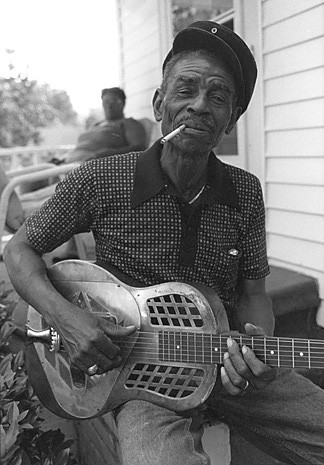
John Dee Holeman — Rare Footage & Clips
A Legacy of Lonesome [Blues](/genre/blues): The Enduring Artistry of John Dee Holeman
In the vast expanse of American music history, few figures have managed to transcend generations and genres with as much quiet dedication as John Dee Holeman. A masterful blues singer and guitarist from North Carolina, Holeman's career spanned an astonishing 92 years, leaving an indelible mark on the genre that has captivated audiences for nearly a century. Through his remarkable body of work, Holeman distilled the essence of the American blues tradition, imbuing it with a unique sense of place and perspective.
One of the most compelling aspects of Holeman's artistry lies in its unassuming nature. Unlike some of his more flamboyant contemporaries, Holeman preferred to let his music speak for itself, eschewing flash and spectacle in favor of a raw, unvarnished emotional intensity. This approach is evident in clips from the DeepCutsArchive, where we find Holeman delivering a heart-wrenching rendition of "Bull City After Dark" (1991). His voice, a low, mournful growl that seems to emanate from the very marrow of his bones, conveys the pain and longing that lies at the core of the blues.
This clip is but one example of Holeman's remarkable ability to evoke the spirit of the American South. A region steeped in musical tradition, North Carolina has given birth to some of the most iconic figures in blues history – Son House, Blind Boy Fuller, and Etta Baker, to name just a few. And yet, despite his geographical proximity to these legends, Holeman forged his own unique path, one that was deeply rooted in the soil of his native Orange County.
Holeman's music is characterized by its unassuming, almost homespun quality – a trait that belies the complexity and nuance that lies beneath the surface. Take, for example, his 1999 album "Bull Durham Blues," which features a series of haunting, instrumental ballads that seem to conjure the very essence of the American wilderness. These tracks, recorded in a spare, intimate setting, demonstrate Holeman's ability to coax an astonishing range of emotions from his instrument – a testament to his skill as both singer and guitarist.
One of the most significant aspects of Holeman's career lies in its longevity. Spanning nearly nine decades, his active years saw him navigate some of the most seismic shifts in musical history – from the rise of electric blues in the 1940s to the folk revival of the 1960s, and beyond. Through it all, Holeman remained steadfastly committed to his art, refusing to compromise his vision or conform to the whims of fashion.
This unwavering dedication is perhaps most evident in his later work, which saw him teaming up with younger musicians to create a new generation of blues enthusiasts. The 2006 album "John Dee Holeman & The Waifs Band" features a series of collaborations that demonstrate Holeman's willingness to adapt and evolve – even as he approached the twilight of his years.
And yet, despite this remarkable legacy, Holeman's music remains curiously underappreciated – a testament to the enduring power of the blues to transcend generations and genres. In an era where musical trends come and go with dizzying rapidity, it is refreshing to encounter an artist who has managed to remain true to himself, even as the world around him changed beyond recognition.
In clips from the DeepCutsArchive, we find Holeman delivering a poignant rendition of "You Got to Lose You Can't Win All the Time" (2008) – a song that seems to distill the essence of his life's work into a single, haunting phrase. Here, as in so much of his music, we encounter a figure who is both deeply rooted in tradition and yet utterly modern – an artist whose legacy will continue to inspire and captivate audiences for generations to come.
In the years ahead, as we reflect on Holeman's remarkable career, it is clear that his impact will be felt far beyond the narrow confines of the blues community. For in his music, we find a profound sense of humanity – a testament to the enduring power of art to transcend time and circumstance. As we celebrate this extraordinary artist, we are reminded of the simple yet profound truth at the heart of all great music: that it has the ability to touch our souls, to move us to tears, and to connect us with something deeper and more meaningful than ourselves.
Through his remarkable body of work, John Dee Holeman leaves behind a legacy that will continue to inspire and captivate audiences for generations to come. His music is a testament to the enduring power of the blues – a genre that has captured the hearts and imaginations of people around the world with its raw emotional intensity and profound sense of humanity. As we reflect on his remarkable career, we are reminded of the simple yet profound truth at the heart of all great music: that it has the ability to touch our souls, to move us to tears, and to connect us with something deeper and more meaningful than ourselves.
Curated from public records and music databases.