Josh White — Rare Footage & Clips
The name Josh White is synonymous with the rich cultural heritage of American folk music. As one of the most influential and beloved singers of his generation, White's contributions to the genre are nothing short of profound. With a career spanning over five decades, from 1914 to 1969, White's impact on the world of music is still felt today.
One of the earliest glimpses into White's artistry can be seen in the rare footage available on DeepCutsArchive, showcasing his early days as Pinewood Tom in the mid-1930s. These recordings, though not extensively documented, provide a glimpse into the raw talent and charisma that would soon propel him to stardom.
White's breakthrough came with the release of his album "Harlem Blues" in 1940, which marked the beginning of his reign as one of America's most popular and influential folksingers. The album's success was not limited to its musical merit; it also served as a powerful commentary on the social and racial issues plaguing the nation at the time.
The significance of White's music lies not only in its technical proficiency but also in its ability to capture the essence of the human experience. His songs, often infused with a sense of longing and struggle, resonated deeply with audiences seeking solace and hope during some of America's most tumultuous periods.
One of his most enduring compositions, "One Meat Ball," stands as a testament to White's uncanny ability to craft songs that not only entertained but also educated. This poignant ballad, which tells the story of a poor man struggling to make ends meet, has become an anthem for those fighting against economic inequality and social injustice.
White's impact on music history extends far beyond his own artistic contributions. His influence can be seen in the work of countless artists who followed in his footsteps, including some of the most iconic figures of the folk revival movement of the 1960s. The likes of Bob Dylan, Pete Seeger, and Joan Baez all drew inspiration from White's music, which served as a powerful catalyst for social change.
One of the most notable examples of White's commitment to using his platform for social activism is his performance at the 1944 concert "Songs for Victory: Music for Political Action." This landmark event brought together some of America's most prominent musicians and artists in support of President Roosevelt's war efforts, with White taking center stage alongside luminaries such as Paul Robeson and Langston Hughes.
The 1950s proved to be a challenging time for White, as the rise of McCarthyism cast a shadow over his career. Despite this, he continued to use his music as a powerful tool for social commentary, releasing albums like "Ballads and Blues" (1952) and "Josh at Midnight" (1956), which showcased his mastery of the blues genre.
White's later years saw him continue to push boundaries, releasing albums that tackled complex issues such as racism and economic inequality. His 1963 performance at the March on Washington, where he sang alongside other notable figures like Martin Luther King Jr., serves as a poignant reminder of his unwavering commitment to using music as a force for social change.
Throughout his illustrious career, White's personal life was marked by a deep sense of purpose and conviction. As a civil rights activist, actor, songwriter, and devoted father, he embodied the very spirit of American folk music: one that is rooted in tradition yet forever pushing forward into new and uncharted territories.
As we delve deeper into the archives, we find glimpses of White's remarkable life and artistry, providing a testament to his enduring legacy. His story serves as a powerful reminder of the transformative power of music, which has the ability to transcend generations, cultures, and borders.
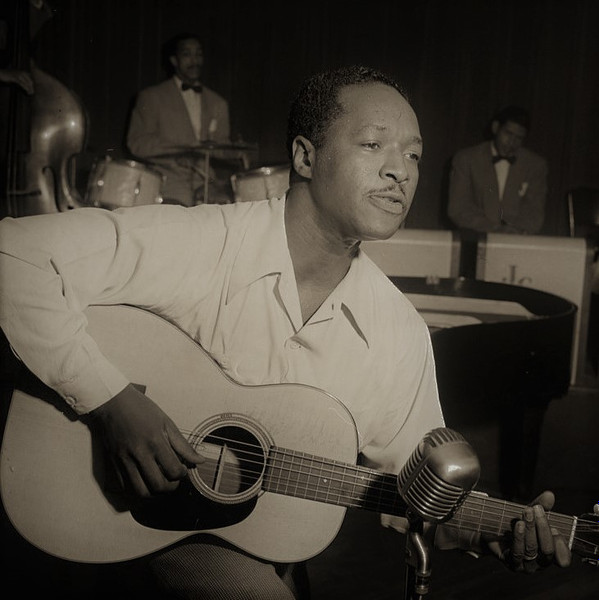
In the rare footage available on DeepCutsArchive, we see White in all his glory: as a masterful guitarist, a charismatic performer, and a devoted advocate for social justice. His music continues to inspire new generations of artists and activists, cementing his place as one of the most significant figures in American folk music history.
As we reflect on Josh White's remarkable career, we are reminded that true artistry is not merely about technical proficiency or commercial success but about leaving a lasting impact on the world. With his unwavering commitment to using music as a force for social change, White has left an indelible mark on American culture and history.
Curated from public records and music databases.