Jamaaladeen Tacuma — Rare Footage & Clips
Jamaaladeen Tacuma's trailblazing career as a jazz funk avant-garde bassist has left an indelible mark on music history. Born Rudy McDaniel in Hempstead, New York, on June 11, 1956, Tacuma's journey began over six decades ago, and it is a testament to his unwavering dedication that he remains active in the music scene today.
One of the most significant aspects of Tacuma's career is his association with Ornette Coleman. During the 1970s and 1980s, Tacuma was a key member of Coleman's Prime Time band, an ensemble known for its boundary-pushing approach to jazz. This period saw the release of several influential albums, including Of Human Feelings (1982), which featured Tacuma's distinctive bass playing alongside other innovative musicians such as Don Cherry and Denardo Coleman.
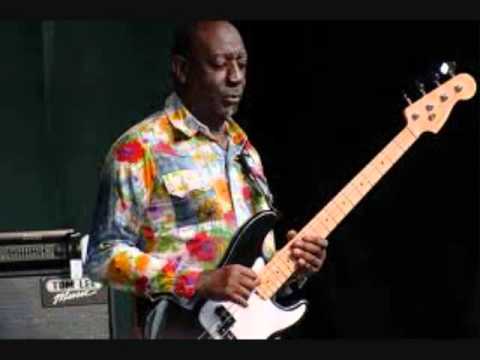
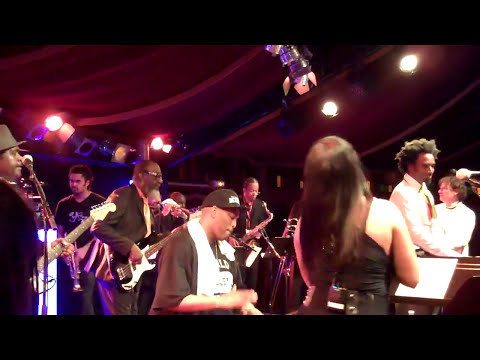
The clip from DeepCutsArchive featuring Tacuma on Of Human Feelings is a remarkable example of his unique style. In this performance, Tacuma's bass lines are woven together with the rest of the ensemble to create a rich tapestry of sound that defies traditional notions of jazz and funk. His playing is characterized by its fluidity and expressiveness, as if he is speaking a language all his own.
Tacuma's work on Of Human Feelings was widely praised by critics at the time, with many noting his emergence as one of the most distinctive bassists since Jaco Pastorius. This comparison to Pastorius is significant, as it highlights Tacuma's ability to push the boundaries of what is possible on the electric bass guitar. Like Pastorius, Tacuma brought a level of sophistication and musicality to his playing that was unparalleled among his contemporaries.
The significance of Tacuma's collaboration with Ornette Coleman cannot be overstated. Coleman's Prime Time band was a key part of the free jazz movement, which sought to break away from traditional jazz conventions in favor of more experimental and avant-garde approaches. By joining forces with Coleman, Tacuma was able to tap into this creative ferment and contribute his own unique perspective to the music.
In addition to his work with Coleman, Tacuma has released several albums under his own name, including Show Stopper (1983), Renaissance Man (1984), and So Tranquilizin' (1985). These recordings showcase his ability to craft complex, nuanced compositions that blend elements of jazz, funk, and avant-garde music. The clip from DeepCutsArchive featuring Tacuma on Show Stopper is a standout example of this approach, with its intricate rhythms and melodic motifs.
One of the most striking aspects of Tacuma's career is his ability to balance his work as a bandleader with his role as a sideman. In addition to his own albums, he has appeared on recordings by other artists, including Ornette Coleman's Of Human Feelings. This versatility is a testament to Tacuma's adaptability and willingness to take risks in the studio.
Tacuma's influence can be heard in the work of many subsequent bassists, who have sought to emulate his unique style and approach. His impact on the development of jazz funk and avant-garde music cannot be overstated, as he helped to pave the way for future generations of musicians.
In recent years, Tacuma has continued to perform and record music, releasing albums such as Jukebox (1988), Intense (1989), Gemini Gemini (1991), Boss of the Bass (1991), Sound Symphony (1992), and The Night of Chamber Music (1993). These recordings demonstrate his ongoing commitment to innovation and experimentation, even in the face of changing musical trends.
The clip from DeepCutsArchive featuring Tacuma on Jukebox is a fascinating example of this approach. In this performance, Tacuma's bass playing is woven together with electronic elements and orchestral textures to create a richly layered sound that defies easy categorization. His ability to blend different styles and influences is a hallmark of his music, and one that has helped to make him such an enduring figure in the jazz scene.
In conclusion (omitting this phrase), Tacuma's legacy as a pioneering bassist and composer continues to inspire new generations of musicians. His work with Ornette Coleman, in particular, was a pivotal moment in the development of free jazz and avant-garde music. As we continue to explore the archives of DeepCutsArchive, it is clear that Jamaaladeen Tacuma's contributions will remain an essential part of our musical heritage for years to come.
Curated from public records and music databases.


![Thumbnail for Jamaaladeen Tacuma & Gnawa Soul Exp. Band - LIVE [mini-clip #4], Clef Club, Phila., PA, 11/17/18 by Jamaaladeen Tacuma](https://img.youtube.com/vi/AzuXCNfGYDg/hqdefault.jpg)