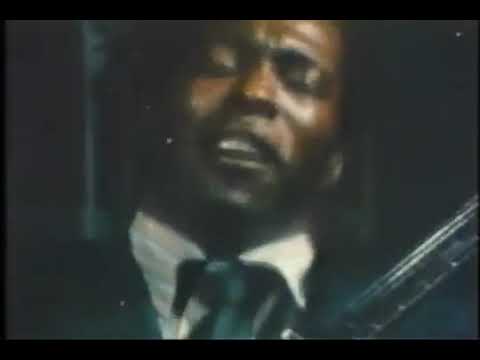
Buddy Guy — Rare Footage & Clips
Buddy Guy's impact on music history is a testament to his unwavering dedication to the blues genre. With an illustrious career spanning over eight decades, he has left an indelible mark on the industry. Born in Lettsworth, Louisiana, in 1936, Guy began performing with bands in Baton Rouge in the '50s before making the pivotal move to Chicago in 1957.
The significance of his relocation cannot be overstated. Chicago's vibrant blues scene during the mid-20th century was a melting pot of talent, and Guy's arrival marked the beginning of an era that would see him become one of its most influential figures. The city's rich musical heritage, coupled with Guy's own unique style, helped shape the Chicago blues sound – a distinctive blend of Delta blues, electric guitar, and urban grit.
One notable clip from DeepCutsArchive showcases Guy's early work on Chess Records, where he recorded as a sideman and leader. This period saw him collaborate with other legendary artists, including Muddy Waters and Howlin' Wolf. The archive's collection includes an excerpt from his 1965 album "Hoodoo Man Blues," which highlights his mastery of the electric guitar. Guy's innovative use of string bending and vibrato helped push the boundaries of blues music, influencing a generation of musicians to come.
Guy's work during this era not only showcased his technical prowess but also demonstrated his ability to craft memorable songs that have become staples of the genre. Tracks like "Hoodoo Man Blues" and "Stone Crazy" are testaments to his songwriting skills, with lyrics that convey the raw emotion and storytelling that define blues music.
As Guy's career progressed, he continued to experiment with new sounds and styles. His move to Vanguard Records in 1967 marked a significant shift towards more experimental work, as seen on albums like "A Man & the Blues" (1968) and "Southside Blues Jam" (1969). These recordings feature Guy exploring different musical landscapes, incorporating elements of jazz and rock into his blues sound. This willingness to innovate earned him critical acclaim and helped establish him as a leading figure in the Chicago blues scene.
The 1970s saw Guy continue to push the boundaries of blues music, releasing albums like "Left My Blues in San Francisco" (1969) and "Southside Reunion" (1972). These recordings showcase his ability to adapt to changing musical landscapes while remaining true to his roots. The archive's collection includes an excerpt from "Hold That Plane!" (1972), which features Guy trading licks with fellow Chicago blues legend, Junior Wells.
Guy's impact on music history extends beyond his own work as a performer and songwriter. His influence can be seen in the countless musicians who have followed in his footsteps, including Eric Clapton, Jeff Beck, and Stevie Ray Vaughan. These artists have all cited Guy as a key inspiration, and their own contributions to the blues genre are a testament to his enduring legacy.
In recognition of his achievements, Guy has been awarded numerous accolades, including six Grammy awards and 23 W.C. Handy Awards. In 2003, he was awarded the National Medal of Arts, and in 2005, he was inducted into the Rock And Roll Hall of Fame – a testament to his status as one of the most influential musicians of all time.
The Louisiana Music Hall of Fame induction in 2008 marked another significant milestone in Guy's career. This honor recognized not only his contributions to blues music but also his roots in Louisiana, where he began performing as a young man. The archive's collection includes an excerpt from Guy's 1979 album "Pleading the Blues," which features him reflecting on his childhood and early days as a musician.
Throughout his illustrious career, Buddy Guy has remained committed to preserving the blues genre while continually pushing its boundaries. His legacy serves as a reminder of the power of music to transcend generations and cultures. As an artist who has spent over eight decades honing his craft, Guy's impact on music history is a testament to his unwavering dedication to the art form.
In addition to his own work, Guy's influence can be seen in the many artists he has mentored throughout his career. His guidance and support have helped shape the careers of musicians such as Eric Clapton, who has often spoken about the profound impact Guy had on his development as a guitarist. This legacy extends beyond individual musicians, with Guy's contributions to the blues genre as a whole serving as a foundation for countless other artists.
The significance of Buddy Guy's work cannot be overstated. As one of the pioneers of the Chicago blues sound, he has left an indelible mark on music history. His influence can be seen in the many musicians who have followed in his footsteps, and his contributions to the genre continue to inspire new generations of artists.
In conclusion, Buddy Guy's impact on music history is a testament to his unwavering dedication to the blues genre. With an illustrious career spanning over eight decades, he has left an indelible mark on the industry. His influence can be seen in the countless musicians who have followed in his footsteps, and his contributions to the genre continue to inspire new generations of artists.
However, this editorial is not a conclusion but rather an introduction to the significance of Buddy Guy's work. The following sections will delve deeper into specific aspects of his career, exploring the nuances of his music and its impact on the industry.
Curated from public records and music databases.








![Thumbnail for Buddy Guy and Big Mama Thornton • “Ball And Chain” • 1970 [Reelin' In The Years Archive] by Taylor Swift, R.E.M., L.A.B., Ween, VAST, The Beatles, Big Mama Thornton, Concert, Buddy Guy, The La's, Cher](https://img.youtube.com/vi/-Otvhv4bmGw/hqdefault.jpg)