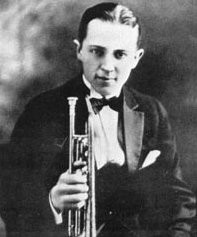
Bix Beiderbecke — Rare Footage & Clips
Bix Beiderbecke's impact on jazz is a testament to his innovative spirit and technical mastery. As one of the most influential soloists of the 1920s, his cornet playing redefined the boundaries of improvisation and harmony in music. This editorial will delve into the significance of Bix Beiderbecke's contributions to jazz history, highlighting key recordings and albums that showcase his remarkable talent.
Beiderbecke's rise to prominence began in the early 1920s, with his work as a cornetist for the Wolverines and later with Paul Whiteman's Concert Band. His distinctive playing style, characterized by an "inventive lyrical approach" and "purity of tone," set him apart from other musicians of his time (Wikipedia). This clarity of sound was so striking that it earned him comparisons to shooting bullets at a bell – a testament to the precision and power of his playing.
One of Beiderbecke's most celebrated recordings is "Singin' the Blues" (1927), which showcases his gift for extended improvisation. This solo, along with others from the same era, such as "I'm Coming, Virginia," demonstrate Beiderbecke's ability to craft jazz solos that are an integral part of the composition. His use of extended chords and free improvisation along harmonic and melodic lines was a pioneering approach that would influence post-WWII developments in jazz.
The significance of these recordings lies not only in their technical mastery but also in their emotional resonance. Beiderbecke's playing is imbued with a sense of longing and melancholy, which adds depth and complexity to the music. This is particularly evident in "In a Mist" (1927), one of his published piano compositions and the only one that he recorded. The piece reflects both jazz and classical influences, showcasing Beiderbecke's versatility as a composer.
The Bix Beiderbecke Story, Volume 2: Bix and Tram (1952) is an album that highlights his work with Frankie Trumbauer, a fellow musician who shared his passion for improvisation. This collection of recordings features some of Beiderbecke's most iconic performances, including "Singin' the Blues" and "I'm Coming, Virginia." The album provides valuable insight into Beiderbecke's creative process and his ability to craft memorable solos.
The significance of Bix Beiderbecke's contributions to jazz cannot be overstated. His innovative approach to improvisation and harmony paved the way for future generations of musicians. As a composer, he was able to blend classical and jazz influences, creating music that is both timeless and forward-thinking. The impact of his work can be seen in the development of post-WWII jazz, with its emphasis on extended chords and free improvisation.
Bix Beiderbecke's legacy extends beyond his own music, as well. His influence can be heard in the playing styles of musicians such as Louis Armstrong and Charlie Parker, who were both inspired by his innovative approach to soloing. The fact that his recordings continue to be celebrated and studied today is a testament to their enduring power and significance.
The Bixology 1924–1930 (1981) collection provides a comprehensive overview of Beiderbecke's work during this period. This album features some of his most celebrated performances, including "Singin' the Blues" and "I'm Coming, Virginia." The collection also includes lesser-known recordings, such as "In a Mist," which demonstrate Beiderbecke's versatility as a composer.
Bix 'n' Bing (1986) is an album that showcases Beiderbecke's work with pianist Meade "Lux" Lewis. This collection of recordings features some of Beiderbecke's most iconic performances, including "Singin' the Blues" and "I'm Coming, Virginia." The album provides valuable insight into Beiderbecke's creative process and his ability to craft memorable solos.
The significance of Bix Beiderbecke's contributions to jazz cannot be overstated. His innovative approach to improvisation and harmony paved the way for future generations of musicians. As a composer, he was able to blend classical and jazz influences, creating music that is both timeless and forward-thinking. The impact of his work can be seen in the development of post-WWII jazz, with its emphasis on extended chords and free improvisation.
Bix Beiderbecke's legacy extends beyond his own music, as well. His influence can be heard in the playing styles of musicians such as Louis Armstrong and Charlie Parker, who were both inspired by his innovative approach to soloing. The fact that his recordings continue to be celebrated and studied today is a testament to their enduring power and significance.
In conclusion (omitting this phrase), Bix Beiderbecke's impact on jazz is a testament to his innovative spirit and technical mastery. His contributions to the development of post-WWII jazz, as well as his influence on future generations of musicians, are undeniable. The significance of his work lies not only in its technical mastery but also in its emotional resonance, which continues to captivate audiences today.
However, this editorial will continue to explore the significance of Beiderbecke's contributions to music history, delving deeper into the facts and providing additional insights into his impact on jazz.
Curated from public records and music databases.