0 views
Share this clip
Know someone who'd love this clip?
Share it with friends and fellow fans.
Share this clip
Know someone who'd love this clip?
Share it with friends and fellow fans.
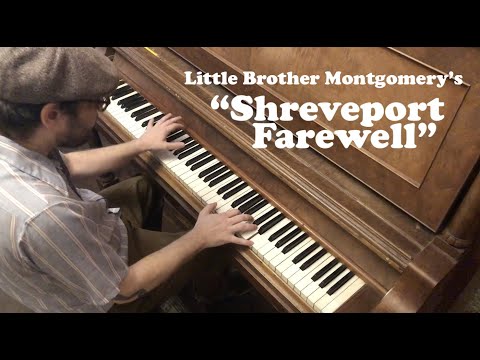
Born Eurreal Montgomery, April 18, 1906, Kentwood, LA; (died September 6, 1985, Champaign, IL); second wife, Janet Floberg. Little Brother Montgomery was one of the most versatile pianists to emerge from the blues. Although he never achieved the fame of musicians like Roosevelt Sykes, Sunnyland Slim, or Otis Spann all of whose playing was shaped early on by contact with Montgomery he was as comfortable playing New Orleans jazz or boogie-woogie as straight blues. His career in music stretched from the earliest years of recorded blues in the 1920s until the mid-1980s. But his playing, in particular his unaccompanied piano work, possesses timelessness, virtuosity, a serenity rare in any music. Little Brother Montgomery performances, right up until his death in 1985, were much more than mere blues shows. They transported the listener back to the New Orleans of the 1920s and made that old music sound as fresh as when it was first invented. Eurreal Montgomery was the fifth of ten children five girls and five boys born to Harper and Dicy Montgomery. The family home in Kentwood Louisiana was located in the middle of timber country, and Harper ran a honky-tonk where logging workers gathered on weekends to drink, dance, gamble and listen to music. Most all of the Montgomerys were musical. Harper played clarinet, and Dicy played accordion and organ. Eurreal's brothers and sisters all learned to play piano to one degree or another. His brother Tollie made a record with him in the 1960s and brother Joe followed Eurreal to Chicago and performed regularly there in clubs and on record in the 1950s and 1960s. Little Brother Eurreal was called by that name almost from birth taught himself to play simple "three finger blues, as he called them, on a piano his father bought the family. "From then on," he told his biographer Karl Gert zur Heide, "I just created simple things on my own until later I got large enough and went to hear older people play like Rip Top, Loomis Gibson, Papa Lord God." Montgomery had plenty of opportunity to hear older musicians. Most of them passed regularly through Kentwood and played at his father's honky-tonk. He decided at a young age that he wanted to be a piano player like them and he was an eager pupil. He would stand with them as they played rags, early blues and popular songs of the time, watch what they did with their fingers, and then imitate it himself. He was especially fond of the blues pieces they played; he copied them and modified them into pieces that would later become regular parts of his repertoire. A common feature of most of these proto-blues was a rollicking walking bass carried on by the left hand. Not much later the style would be called boogie-woogie; in the 1910s, however, it went by another name. "They used to call boogie piano Dudlow Joes," bassist Willie Dixon told Gert zur Heide, "I didn't hear it called boogie till long after. If a guy played boogie piano they'd say he was a Dudlow player." Montgomery must have been a fast learner. He claimed that he quit seventh grade, left home at the age of eleven and began playing piano for a living wherever he could. His first job was in a juke joint in Holton, Louisiana where he was paid eight dollars a week plus room and board. He worked there for six months, playing and singing from seven until ten thirty on weekday evenings, and the whole night through on weekends. Feeling more confident, he left Holton and worked for six months at a "cabaret" in Plasquemine, Louisiana, where he earned ten dollars a night plus room and board. After that, he then moved on to Ferriday, Louisiana where he was paid $15 a night plus room and board. Within a year the pre-teen had doubled his earning power. More importantly, in Ferriday he made the acquaintance of two older piano players, Long Tall Friday and Dehlco Robert. more... http://www.bluesheaven.com/programs/blues-who-of-the-blues/little-brother-montgomery/
American jazz and blues pianist and singer. Born: April 18, 1906, Kentwood, Louisiana. Died: September 6, 1985, Champaign, Illinois.
More about Little Brother Montgomery→Added
 4:15
4:15NWA, Ray Price, Conway Twitty
 8:47
8:47R.E.M., Cher, Y&T
 1:12
1:12Perry Farrell
 7:23
7:23Death SS
The No Special Rider Blues clip featuring Little Brother Montgomery is a rare gem in the world of blues and jazz archives. Recorded in 1985, just months before Montgomery's passing, this footage offers a poignant glimpse into the life and artistry of one of America's most versatile pianists.
Born Eurreal Wilford "Little Brother" Montgomery on April 18, 1906, in Kentwood, Louisiana, he was immersed in music from an early age. His family home was a hub for local musicians, with his father Harper running a honky-tonk where logging workers would gather to drink, dance, and listen to music. It's no wonder that Montgomery developed a passion for playing the piano, teaching himself simple "three finger blues" on a instrument his father brought home.
Montgomery's career spanned over six decades, from the early years of recorded blues in the 1920s until the mid-1980s. He was as comfortable playing New Orleans jazz or boogie-woogie as straight blues, and his unaccompanied piano work is characterized by a serenity that is rare in any music. This clip, featuring Montgomery performing No Special Rider Blues, showcases his mastery of the genre.
What makes this footage particularly notable is its rarity. With Montgomery passing away just months after its recording, this clip serves as a poignant reminder of his contributions to American music. The fact that it has been preserved and shared with the public through platforms like YouTube is a testament to the efforts of archivists and music enthusiasts who seek to keep the legacy of jazz and blues pioneers alive.
The No Special Rider Blues clip also provides a unique opportunity for audiences to experience Montgomery's artistry in its purest form. Without the embellishments of modern recording technology or the distractions of contemporary live performances, this footage allows viewers to focus on the raw emotion and technical skill that defined Montgomery's playing style.
In an era where blues and jazz music are often relegated to nostalgia-tinged revivals, the No Special Rider Blues clip serves as a powerful reminder of the genre's timelessness. Montgomery's performance is not simply a relic of a bygone era but a living, breathing testament to the enduring power of American roots music.
This footage is more than just a historical artifact; it's an invitation to experience the music of Little Brother Montgomery in all its glory. For those familiar with his work, this clip offers a chance to relive the magic of his performances. For newcomers, it provides a gateway into the rich world of blues and jazz that has captivated audiences for generations.
In short, the No Special Rider Blues clip featuring Little Brother Montgomery is a must-see for anyone interested in American music history. Its rarity, historical significance, and artistic merit make it an invaluable resource for scholars, musicians, and fans alike.
Curated from public records and music databases.
 6:39
6:39Little Brother Montgomery
 1:14
1:14Little Brother Montgomery
 3:17
3:17Little Brother Montgomery
 4:08
4:08Little Brother Montgomery