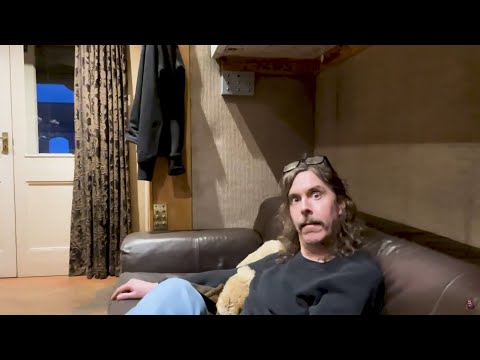
About This Footage
The unassuming village of Rockfield, nestled in the Wye Valley of south-east Wales, has been a crucible for some of rock's most iconic sounds. Founded by brothers Kingsley and Charles Ward in 1963, Rockfield Studios has played host to an astonishing array of talent over the years. Among its many claimants is Liam Gallagher, who returned to the studio with his new band and sons in tow. This footage, "48 Hours at Rockfield (All Interview Clips)," offers a rare glimpse into the inner workings of this storied institution.
At the time of filming, Liam Gallagher was on the cusp of a solo career, having recently parted ways with Oasis. The tumultuous breakup had left him reeling, but also presented an opportunity to forge his own path. Rockfield Studios, with its tranquil surroundings and state-of-the-art facilities, proved the perfect sanctuary for Gallagher's creative rebirth. This clip provides a unique window into his mindset during this pivotal period.
What makes this footage so remarkable is its candidness. Liam Gallagher has never been one for pretension or self-aggrandizement; he speaks from the heart, unvarnished and uncompromising. His words are peppered with humor, humility, and a deep-seated passion for music. This is not an interview designed to showcase Gallagher's charisma (although it does) but rather a genuine conversation about art, family, and the trials of fame.
Rockfield Studios, too, deserves its due. For decades, this unassuming studio has been a haven for musicians seeking refuge from the chaos of the outside world. Its tranquil atmosphere and exceptional facilities have made it a magnet for some of rock's most influential acts. The studio's legacy is inextricably linked with that of its clients; witness the countless classics born within its walls, from The Stranglers to Queen.
This clip offers an intimate look at Liam Gallagher's creative process during his time at Rockfield Studios. We see him discussing everything from songwriting and recording techniques to family life and personal struggles. His words are infused with a sense of gratitude for this second chance – a chance to rediscover himself, to reconnect with the music that has always defined him.
One of the most striking aspects of this footage is its context. The documentary from which these clips were taken provides an unparalleled insight into Rockfield Studios' inner workings during the Gallagher's visit. We witness the camaraderie between Liam and his sons, as well as the studio's staff, all of whom are clearly invested in the creative process.
As we watch this footage, several things become clear: first, that Liam Gallagher is a true artist, driven by an unyielding passion for music; second, that Rockfield Studios remains an essential part of rock's cultural heritage; and third, that even at his most vulnerable, Gallagher's spirit remains unbroken. This clip serves as a poignant reminder that music has the power to transcend personal struggles, family dynamics, and even fame itself.
As we leave this 18-minute conversation with Liam Gallagher behind, one image lingers: the quiet intensity of his gaze, fixed intently on the task at hand – crafting something new, something true.
Curated from public records and music databases.


![Thumbnail for [EIDF2021 OFFICIAL] Rockfield: The Studio on the Farm/ 록필드의 농장 스튜디오 by Rockfield](https://img.youtube.com/vi/IsMGjCiphDs/hqdefault.jpg)