0 views
Share this clip
What Are The Different Atomic Models? Dalton, Rutherford, Bohr and Heisenberg Models Explained
Know someone who'd love this clip?
Help us preserve music history — share it with friends and fellow fans.
Share this clip
Theme
Know someone who'd love this clip?
Help us preserve music history — share it with friends and fellow fans.
Atomic Models: Centuries ago, people didn’t know exactly what was inside an atom, but they had some “ideas”. Around 400 BC, a Greek philosopher named Democritus came up with a theory that everything in the world was made of tiny indestructible particles called “atomos”, which means “uncuttable”. However, this theory was largely discredited by Aristotle—the original social influencer, who believed that everything on this planet was made of four elements: earth, fire, water, and air. The next step in atomic theory development didn’t happen for nearly 2000 years, when British chemist John Dalton conducted some experiments. Following his breakthrough, Dalton proposed that everything in the world was made up of atoms—tiny indestructible solid spheres that were unique for every element. Atoms of different elements combine to form different compounds and are rearranged during chemical reactions. After that, came an English physicist named J.J Thompson and his trusty cathode ray tube. He proposed the famous “plum pudding” model. This model characterizes an atom as a particle that is composed of a positively charged mass (the pudding), as well as tiny negative charges embedded in it (like plums). After this, another chemist called Rutherford proposed his model of an atom where most of the atom’s mass was concentrated in a positively charged center (which he later named the nucleus) around which the electrons orbited like planets around the sun. After Rutherford, another chemist Neils Bohr theorized that if an electron jumped to a lower energy orbit, it would give out the extra energy in the form of radiation, thereby maintaining atomic stability. Even though Bohr’s model doesn’t hold true for complex multi-electron systems, this model is still the most popular representation of atomic structure in most textbooks. #atomicmodels #science #animation References http://abyss.uoregon.edu/~js/ast123/lectures/lec04.html https://web.ics.purdue.edu/~kdickson/democritus.html http://www.brooklyn.cuny.edu/bc/ahp/FonF/Dalton.html https://pubmed.ncbi.nlm.nih.gov/18175369/#:~:text=In%201803%20Dalton%20discovered%20that,for%20his%20incipient%20atomic%20ideas. https://pressbooks-dev.oer.hawaii.edu/chemistry/chapter/evolution-of-atomic-theory/ https://www.pbs.org/wgbh/aso/databank/entries/dp13at.html If you wish to buy/license this video, please write to us at admin@scienceabc.com. Voice Over Artist: John Staughton ( https://www.fiverr.com/jswildwood ) SUBSCRIBE to get more such science videos! https://www.youtube.com/channel/UCcN3IuIAR6Fn74FWMQf6lFA?sub_confirmation=1 Follow us on Twitter! https://twitter.com/abc_science Follow us on Facebook! https://facebook.com/sciabc Follow our Website! https://www.scienceabc.com
John Dalton (; 5 or 6 September 1766 – 27 July 1844) was an English chemist, physicist, and meteorologist whose work laid the foundations of modern atomic theory and stoichiometric chemistry. Building on earlier ideas about the indivisibility of matter and his own precise measurements of combining ratios, Dalton proposed that each chemical element consists of identical atoms of characteristic weight, and that compounds are formed when atoms of different elements combine in fixed whole-number pr...
More about John Dalton→Added
![Thumbnail for Goo Goo Dolls - Iris (Live in Buffalo, NY, 7/4/2004) [Official Video]](https://img.youtube.com/vi/_HZM0QiuUS8/hqdefault.jpg)
 2:04
2:04michito sanchez
 6:22
6:22michito sanchez
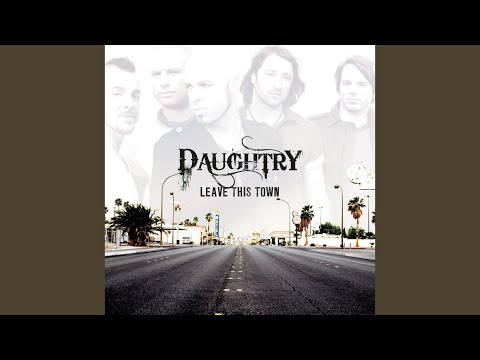 4:20
4:20Lyricist, michito sanchez, NME, Phil X
 3:33
3:33John Dalton, Jim Rodford, The Kinks, Little Richard, Dave Davies, Andy Pyle, John Gosling
 3:21
3:21John Dalton, Jim Rodford, The Kinks, Little Richard, Dave Davies, Andy Pyle, John Gosling
 1:53
1:53John Dalton, Jim Rodford, The Kinks, Little Richard, Dave Davies, Andy Pyle, John Gosling
 0:30
0:30John Dalton