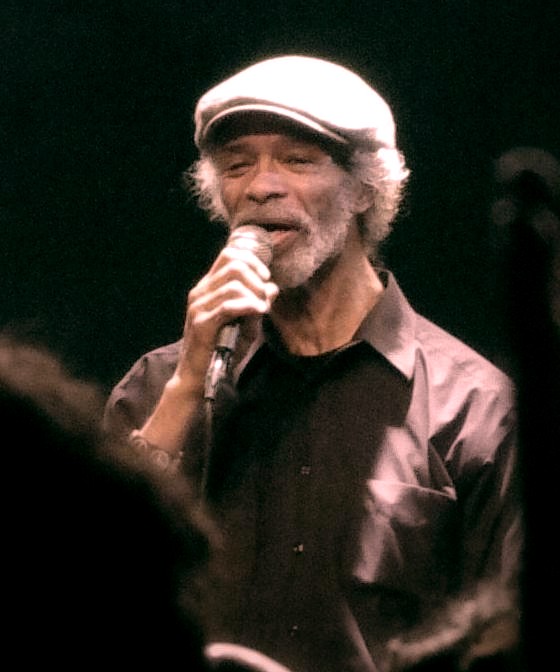
Gil Scott-Heron — Rare Footage & Clips
Gil Scott-Heron's legacy as a spoken-word pioneer is inextricably linked to the pivotal moments of 20th-century American history. As a poet, singer, musician, and author, he navigated the turbulent landscape of social and political change with unflinching candor. His work not only reflected the zeitgeist but also helped shape the course of music itself.
One of the defining aspects of Scott-Heron's artistry was his fusion of jazz, blues, and soul with socially conscious lyrics. This innovative approach can be seen in clips from his 1971 album Pieces of a Man, where he delivers impassioned spoken-word performances over richly textured instrumental backdrops. Tracks like "Home" and "The Bottle" showcase Scott-Heron's ability to craft narratives that not only captured the human experience but also served as potent commentary on the social issues of the time.
Scott-Heron's collaboration with musician Brian Jackson was a key factor in his success, yielding some of his most enduring works. Their partnership resulted in albums like Free Will (1972) and Winter in America (1974), which not only solidified Scott-Heron's reputation as a masterful storyteller but also demonstrated his capacity to blend genres and push boundaries.
However, it is arguably Scott-Heron's poem "The Revolution Will Not Be Televised" that has had the most profound impact on music history. This scathing critique of mainstream media and its role in shaping public opinion was first delivered over a jazz-soul beat in 1970. The clip from DeepCutsArchive features Scott-Heron's raw, emotive delivery, which serves as a powerful indictment of the status quo.
As a cultural touchstone, "The Revolution Will Not Be Televised" has been cited as a major influence by numerous artists across genres. Its impact can be seen in the work of hip hop pioneers like Public Enemy and Kendrick Lamar, who have both referenced Scott-Heron's poem in their own music. This speaks to the enduring power of Scott-Heron's message, which continues to resonate with audiences today.
Scott-Heron's influence extends beyond his spoken-word performances, however. His exploration of African-American identity and experience has had a lasting impact on the development of hip hop and neo-soul. Albums like The First Minute of a New Day (1975) and From South Africa to South Carolina (1975) showcase Scott-Heron's ability to craft narratives that not only reflected his own experiences but also spoke to the broader African-American community.
In the context of music history, Scott-Heron's work represents a critical juncture between the avant-garde experimentation of the 1960s and the emergence of new genres in the 1970s. His fusion of jazz, blues, and soul with socially conscious lyrics helped pave the way for later African-American music genres, including hip hop and neo-soul.
Scott-Heron's legacy is also marked by his innovative approach to storytelling. Rather than relying on traditional narrative structures, he employed a more fluid, improvisational style that blurred the lines between poetry and songwriting. This approach can be seen in clips from albums like The Mind of Gil Scott Heron (1978) and Secrets (1978), where Scott-Heron delivers spoken-word performances over minimalist instrumental backdrops.
Throughout his career, Scott-Heron remained committed to using his art as a platform for social commentary. His music addressed issues ranging from racism and police brutality to economic inequality and social justice. This commitment to activism has made him an enduring figure in American cultural history, with his work continuing to inspire new generations of artists and activists.
In the years following Scott-Heron's passing in 2011, his influence on contemporary music has only grown more apparent. Artists like Kendrick Lamar and J. Cole have cited Scott-Heron as a key inspiration, while others like Kanye West and Jay-Z have referenced his work in their own music. This speaks to the enduring power of Scott-Heron's message, which continues to resonate with audiences today.
As we explore Gil Scott-Heron's extensive discography on DeepCutsArchive, it becomes clear that his legacy extends far beyond the realm of music itself. He was a poet, singer, musician, and author who used his art as a platform for social commentary and activism. His influence can be seen in the work of countless artists across genres, from hip hop to neo-soul.
In the clips from DeepCutsArchive, we see Scott-Heron's innovative approach to storytelling, his fusion of jazz, blues, and soul with socially conscious lyrics, and his commitment to using his art as a platform for social commentary. These elements have had a lasting impact on music history, shaping the course of African-American music genres like hip hop and neo-soul.
As we delve deeper into Scott-Heron's discography, it becomes clear that his legacy is not limited to his own work but also extends to the countless artists who have been inspired by him. His influence can be seen in the work of Public Enemy, Kendrick Lamar, and Kanye West, among others. This speaks to the enduring power of Scott-Heron's message, which continues to resonate with audiences today.
In conclusion, Gil Scott-Heron's legacy as a spoken-word pioneer is inextricably linked to the pivotal moments of 20th-century American history. His innovative approach to storytelling, his fusion of jazz, blues, and soul with socially conscious lyrics, and his commitment to using his art as a platform for social commentary have had a lasting impact on music history. As we explore his extensive discography on DeepCutsArchive, it becomes clear that Scott-Heron's influence extends far beyond the realm of music itself.
Curated from public records and music databases.