Clarence "Gatemouth" Brown — Rare Footage & Clips
Clarence "Gatemouth" Brown's legacy is a testament to the boundless creativity and versatility that defined his six-decade career. As one of the most influential musicians of his generation, Brown's contributions to blues, country, R&B, and jazz are still widely felt today.
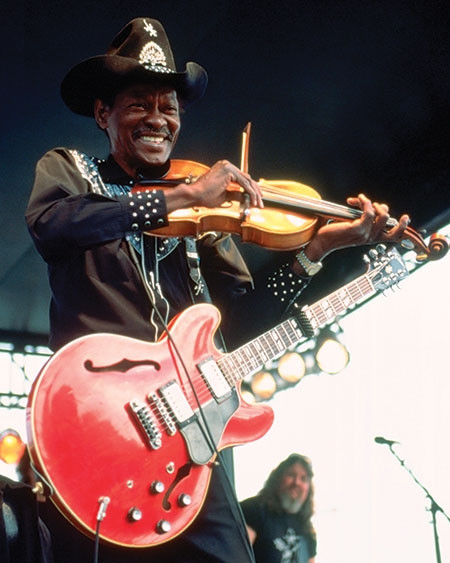
A clip from our archive, recorded in 1973 for The Drifter Rides Again, showcases Brown's mastery of the guitar and fiddle. In this performance, he seamlessly switches between instruments, demonstrating a level of technical proficiency that is awe-inspiring even by modern standards. This ability to play multiple instruments with equal facility was a hallmark of Brown's career, and one that earned him widespread recognition as a true virtuoso.
Brown's early life in Louisiana played a significant role in shaping his unique sound. Born on April 18, 1924, in Vinton, Louisiana, he grew up surrounded by the rich musical traditions of the region. The influence of Cajun and zydeco music can be heard throughout his work, particularly in his use of accordion and fiddle. This blend of styles is characteristic of Brown's eclectic approach to music-making.
The Drifter Rides Again, released in 1973, marked a significant turning point in Brown's career. The album's success was due in part to the growing popularity of blues and roots music in the early 1970s. As the counterculture movement gained momentum, audiences began seeking out authentic, unbridled expressions of American musical heritage – and Brown's music fit the bill.
Brown's ability to transcend genre boundaries is a key aspect of his enduring appeal. His music has been described as "blues, cajun, country, R&B, jazz, and more" – a reflection of his willingness to experiment and push the limits of traditional categorization. This eclecticism is evident in clips from our archive, where Brown can be seen playing with artists from diverse musical backgrounds.
San Antonio Ballbuster, released in 1974, is another standout album in Brown's discography. The title track features a driving rhythm section and a memorable guitar riff that has become one of Brown's signature motifs. This song showcases his ability to craft infectious, danceable tunes that have stood the test of time.
Brown's influence on subsequent generations of musicians cannot be overstated. His Grammy Award for Best Traditional Blues Album in 1982 for Alright Again! is a testament to his enduring impact on the blues genre. The album itself is a masterclass in Brown's unique blend of styles, featuring performances that range from tender ballads to raucous, energetic showstoppers.
One More Mile, released in 1991, marked a new era of creative experimentation for Brown. The album features a mix of original compositions and reinterpretations of classic songs, showcasing his continued willingness to push the boundaries of traditional blues. This period also saw Brown collaborating with younger artists, further cementing his reputation as a mentor and innovator.
Throughout his career, Brown's commitment to preserving traditional musical forms while pushing forward into new territory has earned him widespread respect from peers and fans alike. His legacy serves as a reminder that music is a living, evolving art form – one that can be shaped and reinterpreted by each generation in meaningful ways.
The passing of Clarence "Gatemouth" Brown on September 10, 2005, marked the end of an era for blues and roots music. However, his influence continues to be felt through the countless artists who have been inspired by his work. As we celebrate his remarkable career and contributions to American musical heritage, it is clear that Gatemouth's impact will endure for generations to come.
Clips from our archive offer a unique glimpse into Brown's creative process and artistic vision. By exploring these performances, we can gain a deeper understanding of the man behind the music – a true original who left an indelible mark on the world of blues and beyond.
Curated from public records and music databases.