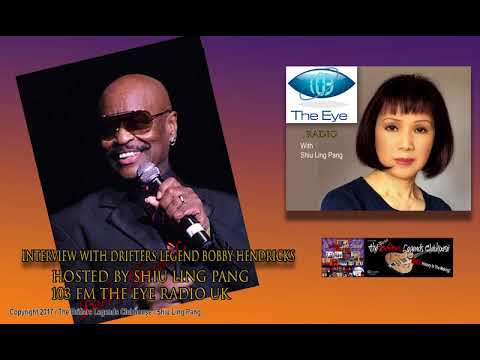
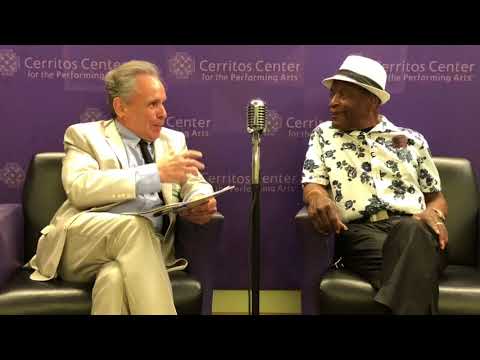
Bobby Hendricks
About Bobby Hendricks
Robert Raymond Hendricks (February 22, 1938 – March 25, 2022) was an American R&B singer who charted two hits in the late 1950s.
Read more on Wikipedia →Origin
Robert Raymond Hendricks (February 22, 1938 – March 25, 2022) was an American R&B singer who charted two hits in the late 1950s.
Read more on Wikipedia →Origin
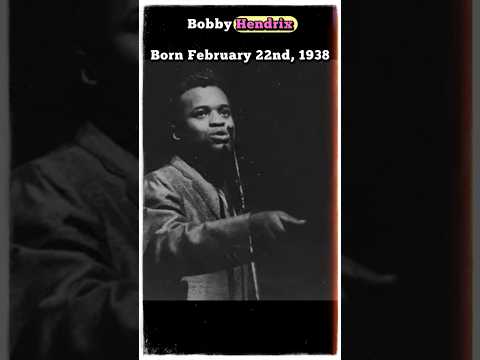 1:53
1:53Bobby Hendricks
 16:59
16:59Bobby Hendricks
 4:14
4:14Bobby Hendricks
 5:05
5:05Bobby Hendricks
 42:15
42:15Bobby Hendricks
Bobby Hendricks' voice crackled with a raw intensity that cut through the din of the early 1960s R&B scene like a switchblade on a summer night. His was a sound forged in the fiery crucible of post-war America, where the blues and gospel traditions merged with the emerging sounds of rock 'n' roll to create something altogether new.
In the clip "Chills and Fever" (1958), Hendricks' vocals are a masterclass in emotional restraint, conveying the anguish and longing that lies beneath the song's lilting melody. His voice is a instrument, capable of coaxing forth a world of feeling from the simplest of phrases. Listen closely as he navigates the song's dramatic turns, his phrasing a perfect balance of subtlety and power.
Hendricks' career was marked by a series of fleeting successes, but two songs in particular stand out as testaments to his artistry: "Chills and Fever" (1958) and "Itchy Twitchy Feeling" (1959). Both hits demonstrate Hendricks' ability to tap into the raw emotions that lay just beneath the surface of 1950s R&B. His voice is a conduit for the anxieties, fears, and desires of his generation.
In an era dominated by slicker, more polished vocalists like Sam Cooke and Ray Charles, Hendricks stood out for his rough-around-the-edges style. He was a true original, unafraid to push the boundaries of what was considered acceptable in popular music. His influence can be heard in later R&B and soul singers who followed in his footsteps.
Hendricks' significance extends beyond his own recordings, however. As one of the first African American artists to achieve mainstream success in the late 1950s, he helped pave the way for future generations of black musicians. In an era marked by racial tension and segregation, Hendricks' music served as a powerful reminder that black culture was not only worthy of recognition but also capable of producing some of the most innovative and exciting sounds of the time.
Despite his relatively short career, Hendricks left an indelible mark on the development of R&B. His influence can be heard in later artists like Otis Redding and James Brown, who built upon the foundations laid by Hendricks and other pioneers of the genre. Today, Hendricks' music remains a vital part of the R&B canon, continuing to inspire new generations of musicians and fans alike.
In the clip "Itchy Twitchy Feeling" (1959), Hendricks' voice is at its most expressive, conveying the sense of urgency and desperation that lies beneath the song's driving rhythm. His phrasing is economical yet effective, drawing upon a deep wellspring of emotional intensity to convey the song's themes of love and longing.
Throughout his career, Hendricks remained true to himself, refusing to compromise his art in order to fit into the prevailing styles of the day. In an era marked by homogenization and commercialism, Hendricks' commitment to his own unique vision is a testament to his enduring legacy as one of the most innovative and influential vocalists of the 1950s.
As we look back on Hendricks' remarkable career, it's clear that he played a crucial role in shaping the course of R&B history. His influence can be heard in later artists who followed in his footsteps, from Otis Redding to James Brown. Today, Hendricks' music remains a vital part of the R&B canon, continuing to inspire new generations of musicians and fans alike.
In the end, it's not just Hendricks' music that lingers – it's the sense of raw emotion, of unbridled passion, that he brought to every performance. His legacy is one that will continue to resonate for years to come, a reminder of the power of music to transcend time and touch our hearts in ways both deep and profound.
Curated from public records and music databases.