0 views
Share this clip
Know someone who'd love this clip?
Share it with friends and fellow fans.
Share this clip
Know someone who'd love this clip?
Share it with friends and fellow fans.
A Brilliant look at Maxwell Street back in 1964 as shown in the brilliant documentary 'And This Is Free'. Thanks to the brilliant Livin the Blues channel for the original black & white upload, check and subscribe to their brilliant channel here: https://www.youtube.com/@livintheblues202 James Brewer: Vocal & Guitar Mother Mary Northern: Vocal & Tamborine Carrie Robinson: Vocal Amos Gilmore: Tambourine Albert Holland: Guitar I don't make anything colourising & putting these videos together so please support the channel with the link here if you can its greatly appreciated! https://www.paypal.com/paypalme/bluesincolour James Brewer, also known as Blind Jim Brewer (although Brewer did not like this additive: "My mother didn't name me "Blind", she named me "Jim"), was an American blues singer and guitarist. One of the last acoustic blues guitarists in Chicago, Jim Brewer was born in Brookhaven, Mississippi on October 3, 1920. The oldest of seven children (five boys and two girls), Brewer lost his sight at an early age. Brewer chose the guitar early as a means of survival. His father wanted him to play blues as the most likely means of earning a living, while his mother demanded he play only religious music. For 40 years as a street singer in Chicago, he shifted constantly between the demon and the saint, playing gospel when weary of the blues’ wild street craziness and playing blues in club and festival performances. While playing on the streets and in the stores of Brookhaven in the 1930s, he learned most of the religious songs that he continued to perform for the rest of his life. As he grew older, Brewer started performing at play parties, playing blues he had learned from store records. Following the death of Jim’s mother, the family moved to Chicago; Jim followed a year later and began playing on 43rd and 47th streets near his family’s home. By the late 1940s he was playing on Maxwell Street. Originally an open-air market for Russian and Polish immigrants who came to Chicago at the turn of the century, by the 1930s Maxwell Street had become a showcase for blues and gospel singers on Chicago’s South Side. Except for a short period when he left the city, Brewer was a regular on Maxwell Street for nearly 40 years. In the early 1950s Jim Brewer decided to travel, he lived in St. Louis for three years, where he played on streetcars, in taverns, and on the streets. During that time he also joined a washboard band for a while. By the mid-1950s he had returned to Chicago and was introduced by a mutual friend to Fannie, who became his wife. Brewer’s new mother-in-law bought him a good electric guitar and amplifier, the first decent equipment he ever owned. Returning to Maxwell Street, Brewer decided to devote himself exclusively to singing religious songs. He wanted to separate himself from the lifestyle of trouble that surrounded blues musicians there, and he realized that many people had a low opinion of the blues. But in 1962, two white college students found him on Maxwell Street and asked him if he could sing the blues. He answered that he could and two weeks later he found himself scheduled to give a concert at Northwestern University. Before the concert, Brewer was taken to Chicago’s No Exit Café, and the manager, Joe Moore, asked him to audition. That successful debut resulted in a regular job at the No Exit coffeehouse that continued for three decades. In his later years Brewer played at major festivals and clubs throughout the Midwest, the East, Canada and Europe. Jim Brewer’s major influences included Big Bill Broonzy and Tommy Johnson. Other influences included Big Joe Williams, Big Maceo, Teddy Darby, Lonnie Johnson, and Tampa Red; musicians Brewer heard on records and radio in Chicago. Jim Brewer was a powerful singer and guitarist; his style clearly conveying his roots in the Mississippi Delta blues. He played an acoustic Martin six-string guitar, and in his later years he also played a Gretch electric guitar, autoharp and paino. Aswell as playing songs he learned from others over the years, Jim was also an accomplished songwriter known to make up songs on the spot concerning his mood, the events of the day, or his immediate surroundings. He made only two albums, Jim Brewer on Philo Records, now out of print, and Tough Luck for Earwig Music Company. His manager from the late 1970s through his death was Michael Frank, CEO of Earwig Music Company. Various tracks of Jim’s also appeared on compilation albums issued during the 1960s through the 1980s. He died at home of heart failure June 3, 1988. He had recently returned from his only European tour, and the promoter wanted him back, but Jim was afraid of flying and declined the offer. https://linktr.ee/blues.in.colour #colourised #bluesincolour #blueslegend #blues #bluesmusic #bluesmusician #bluessinger #bluessongsofalltime #bluessong #chicagoblues #bluesguitar #bluesguitarist #bluesguitars #deltablues #mississippiblues
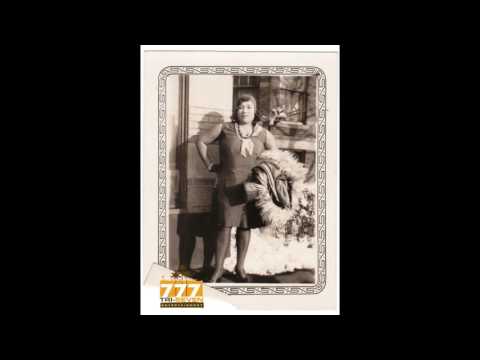
Theodore Roosevelt Darby, better known as Blind Teddy Darby, was an American blues singer and guitarist.
More about Teddy Darby→Added
 1:34:19
June Carter Cash
 31:08
31:08June Carter Cash
 28:31
28:31June Carter Cash
 0:16
0:16June Carter Cash
 2:36
2:36Teddy Darby
 6:50
6:50Teddy Darby
 2:50
2:50Teddy Darby
 3:16
3:16Teddy Darby