0 views
Share this clip
"Don't Think Twice, It's All Right " - "Baby, Let Me Lay It On You." - Travis Moody 1-31-12
Know someone who'd love this clip?
Share it with friends and fellow fans.
Share this clip
Know someone who'd love this clip?
Share it with friends and fellow fans.
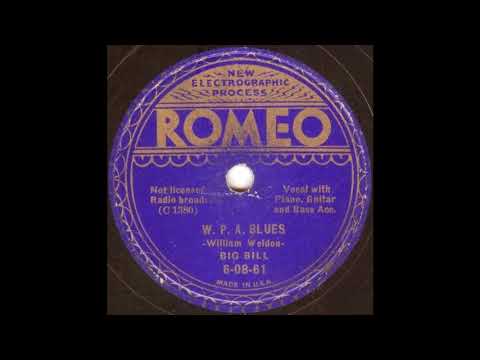
Travis Moody performs at Elm Bar, in New Haven, CT. Dylan once introduced "Don't Think Twice, It's All Right" as "a statement that maybe you can say to make yourself feel better... as if you were talking to yourself." The song, written around the time that Suze Rotolo indefinitely prolonged her stay in Italy, is based on a melody taught to Dylan by folksinger Paul Clayton. As well as the melody, a couple of lines were taken from Clayton's "Who's Goin' to Buy You Ribbons When I'm Gone?" which was recorded in 1960, two years before Dylan wrote "Don't Think Twice." Lines taken word-for-word or slightly altered from the Clayton song are, "T'ain't no use to sit and wonder why, darlin'," and, "So I'm walkin' down that long, lonesome road." On the first release of the song, instead of "So I'm walkin' down that long, lonesome road babe, where I'm bound, I can't tell" Dylan sings "So long, honey babe, where I'm bound, I can't tell". The lyrics were changed when Dylan performed live versions of the song and on cover versions recorded by other artists. Both Clayton's song and Dylan's song were based on the public domain traditional song "Who's Gonna Buy Your Chickens When I'm Gone". Is has been argued that the original album version of the song is played in a fast, fingerstyle manner by Bruce Langhorne. However, Eyolf Østrem, the creator of the website dylanchords, argues it was Bob Dylan himself who played the guitar track. In live performances, Dylan often strummed the chords, or flatpicks, albeit in a similar, fast-paced manner. However, the 'Witmark demos' (The Bootleg Series, Vol. 9: The Witmark Demos: 1962-1964) reveils a demo version, with Bob Dylan fingerpicking, very similar to the later recording. Furthermore, a recording of an april 1963 concert in New York (Bob dylan - Town Hall, NEW YORK CITY, New York 1963 [Bootleg]) also contains a live version of Don't think twice, fingerpicked in a very similar way as the original recording. Therefore, it is clear that Bob Dylan could play the version as recorded and did so in a demo and live in april 1963. "Baby, Let Me Lay It On You." ---The song was adapted by Eric Von Schmidt, a blues-guitarist and singer-songwriter of the folk revival in the late 1950s. Von Schmidt was a well-known face in the east coast folk scene and was reasonably well-known across the United States. His chronicles of the Cambridge Folk era, also called "Baby, Let Me Follow You Down," describes the evolution of the song. Eric had first heard a song by Blind Boy Fuller called "Baby, Let Me Lay It On You." Eric von Schmidt credits Reverend Gary Davis for writing "three quarters" of this song (the melody is very similar to Davis' "Please Baby"). The first known recording, titled "Mama, Let Me Lay It On You," was made by Walter Coleman in 1936; however, Tony Russell claims that Memphis Minnie recorded and released a duet version (with her husband Joe McCoy) as early as 1930, with the arrangement reused by McCoy and his band The Harlem Hamfats in a Jazz song titled "Let Your Linen Hang Low". The title was changed to "Baby, Let Me follow You Down" around 1959, and became a feature in the coffee houses of Greenwich Village in the early 1960s. The song was sung by local musicians such as Dave Van Ronk. The song was later picked up by the young, up and coming folk singer Bob Dylan, who made the song famous on his Columbia Records debut. The Animals's "Baby Let Me Take You Home" (1964), is said to be an adaptation of "Baby, Let Me Follow You Down". An alternative history of the song is given on Arnold Ryens' site "The Originals". He claims that the earliest version was by the "State Street Boys" (featuring Big Bill Broonzy). It was issued in 1935 under the title "Don't You Tear My Clothes" (with Lyrics credited to Sam Hopkins). Washboard Sam apparently recorded it under the same title in 1936. -WIKI
Robert Clifford Brown, known professionally as Washboard Sam, was an American blues musician and singer.
More about Washboard Sam→Added
 2:38
2:38 2:48
2:48Lonzo and Oscar
 5:19
5:19Lonzo and Oscar
 2:45
2:45Lonzo and Oscar
 21:17
21:17Elvis Costello
 25:41
25:41Hans Raj Hans
 0:06
0:06Buddy Holly
 3:01
3:01Callista Clark