0 views
Share this clip
Know someone who'd love this clip?
Share it with friends and fellow fans.
Share this clip
Know someone who'd love this clip?
Share it with friends and fellow fans.
This is part of our new short video series for 594 Miles From Chicago, called "3 Questions with". Each artist we interview will have 3 questions to answer at the end of their interview! In this video we have Bob Stroger who joins us at Buddy Guy's Legends in Chicago, IL. ______________________________ About Bob Stroger: After moving to Chicago as a teen in 1955, the great blues bassist Bob Stroger didn't even have to get out of bed in order to hear the music he would wind up spending the rest of his life playing. He lived in the back of a night club on the Windy City's West Side. Not just any night club, either, this was one that happened to book some blues artists, along the lines of Howlin' Wolf and Muddy Waters. It probably makes sense that the bass is what he heard first, as it always is the sound of the electric bass which carries the furthest distance, disturbing the most people. Peeking in at the action at the club encouraged Stroger further. Depite the melancholy association of the blues, to Stroger "it looked like they were having a lot of fun and I made up my mind that what I wanted to do was play music," he wrote in a little autobiography on his own website. His older brother in law happened to be Johnny Ferguson, who played alongside blues legend J.B. Hutto in group called the Twisters. While not as important as playing bass, Stroger's first taste of the music business was performing a task that is certainly a foundation of doing a gig: he would drive the Twisters to the club. Improving on his own through steady practice, Stroger got an enthusiastic family band project going with harmonica blowing cousin Ralph Ramey and brother John Stroger, a drummer. A few months later an audition landed this new group a club job, with one little problem. The owner wanted the band in uniforms, so the typically broke and busted bluesmen showed up in black tams with red circles scrawled on the top, announcing that the combo was now officially the Red Tops. Remey was out of the picture as soon as the new band became in demand for touring work, as his wife would allow no such drifting. Willie Kent was the replacement, and the new group was called Joe Russel and the Blues Hustlers. As for Russel, this was simply a stage name adopted by John Stroger. From here Bob Stroger got into a bit of jazz, working sporadically with Rufus Forman for three years. Meeting guitarist Eddie King in 1969 was the next big development, as the ensuing collaboration became very dear to Stroger, to the point where he stopped playing bass completely for two years following King's decision to relocate. This was after Eddie King and the King Men had been together off and on for about 15 years, followed a few years later by a shorter stint as Eddie King and Babee May and the Blues Machine. All of this firmly established the leader as yet another gripping string choker named King, just what the blues world needed as it has almost as many Kings as the English Empire. Morris Pejo was one of the bandleaders that got Stroger going again, leading to a 1980's bass assignment backing up the great guitarist Otis Rush. In the following decade the bassist worked with pianist Sunnyland Slim and Mississippi Heat in what has become much more of a freelance career. Stroger and drummer Odie Payne became the rhythm section for European promoter Horst Lippman, whose productions include the American Blues Folk Festivals. Stroger's discography resembles a stuffed New York deli sandwich, beginning with the first Eddie King single, "Love You Baby," in 1965. He has also recorded with Rush, Jimmy Rogers, Eddie Taylor, Eddie Clearwater, Sunnyland Slim, Lousiana Red, Buster Benton, Homesick James and Snooky Pryor, among others. Blues rhythm section enthusiasts should enjoy Stroger's personal list of great drummer sidekicks: Odie Payne Jr., Fred Below, S.P. Leary, Ted Harvey, K.C. Jones, Robert Covington, Sam Lay, Jessie Green, Willie "Big Eye" Smith, Jim Telmin and Billy Davenport. https://www.earwigmusic.com/earwig-artists/robert-stroger https://www.facebook.com/groups/177812042264/ https://music.youtube.com/channel/UCmdmrcRkJnC3wJccmWpZOew Song Used: - Talk To Me Mama by Bob Stroger and Dominic Schoemaker Listen/Buy music here: https://www.discogs.com/artist/1004950-Bob-Stroger https://open.spotify.com/artist/1JjFeW5yiXLb18bozbG1pe **I DO NOT OWN ANY RIGHTS TO THIS MUSIC** ---------------------------------- Follow us on Facebook: https://www.facebook.com/594MilesFromChicago Follow us on Instagram: @594milesfromchicago Film MERCH: http://www.tinyurl.com/14nug9yj Donate to the film: Paypal: Connor@bluesbirdtalentagency.com http://www.Bluesbirdtalent.com ©BLUESBIRD TALENT AGENCY LLC.
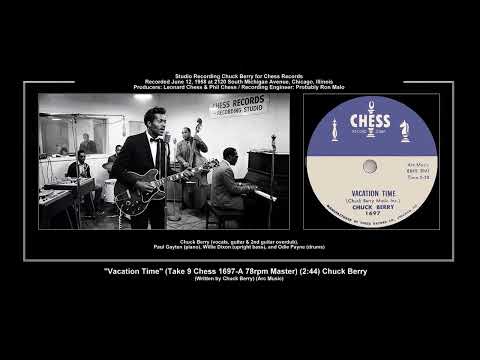
Chicago blues drummer. Born in Chicago on August 27, 1926. Played with the cream of Chicago bluesmen, including Elmore James, Magic Sam, Otis Rush, Muddy Waters and Buddy Guy. Died March 1, 1989. Son of Odie and Lena Payne, father of musicians [a3708888] and (Dr.) Odie Payne, III
More about Odie Payne→Added
 2:38
2:38 2:48
2:48Lonzo and Oscar
 5:19
5:19Lonzo and Oscar
 2:45
2:45Lonzo and Oscar
 2:49
2:49Odie Payne
 3:04
3:04Odie Payne
 8:30
8:30Odie Payne
 6:09
6:09Odie Payne