0 views
Share this clip
Know someone who'd love this clip?
Share it with friends and fellow fans.
Share this clip
Know someone who'd love this clip?
Share it with friends and fellow fans.
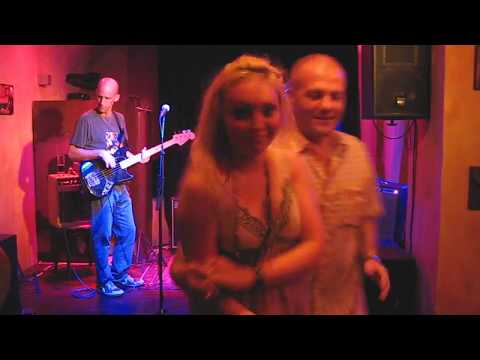
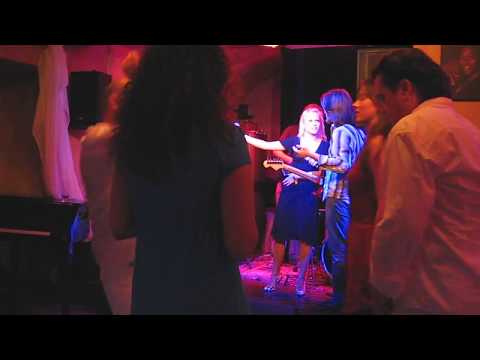
War at Wetlands, N.Y. 1992 Part 12 ---------------------------------------------------------------------------------- One of the most popular funk groups of the '70s, War were also one of the most eclectic, freely melding soul, Latin, jazz, blues, reggae, and rock influences into an effortlessly funky whole. Although War's lyrics were sometimes political in nature (in keeping with their racially integrated lineup), their music almost always had a sunny, laid-back vibe emblematic of their Southern California roots. War kept the groove loose, and they were given over to extended jamming -- in fact, many of their studio songs were edited together out of longer improvisations. Even if the jams sometimes got indulgent, they demonstrated War's truly group-minded approach: no one soloist or vocalist really stood above the others (even though all were clearly talented), and their grooving interplay placed War in the top echelon of funk ensembles. All Day Music, which spawned their first Top 40 hits in "All Day Music" and "Slippin' Into Darkness"; the album itself was a million-selling Top 20 hit. War really hit their stride on the follow-up album, 1972's The World Is a Ghetto; boosted by a sense of multicultural harmony, it topped the charts and sold over three million copies, making it the best-selling album of 1973. It also produced two Top Ten smashes in "The Cisco Kid" (which earned them a fervent following in the Latino community) and the title ballad. 1973's Deliver the Word was another million-selling hit, reaching the Top Ten and producing the Top Ten single "Gypsy Man" and another hit in "Me and Baby Brother." However, it had less of the urban grit that War prided themselves on; while taking some time to craft new material and rethink their direction, War consolidated their success with the double concert LP War Live, recorded over four nights in Chicago during 1974. Released in 1975, Why Can't We Be Friends returned to the sound of The World Is a Ghetto with considerable success. The bright, anthemic title track hit the Top Ten, as did "Low Rider," an irresistible slice of Latin funk that became the group's first (and only) R&B chart-topper, and still stands as their best-known tune. 1976 brought the release of a greatest-hits package featuring the new song "Summer," which actually turned out to be War's final Top Ten pop hit; the same year, Oskar released his first solo album, backed by members of Santana. A double-LP compilation of jams and instrumentals appeared on the Blue Note jazz label in 1977, under the title Platinum Jazz; it quickly became one of the best-selling albums in Blue Note history, and produced an R&B-chart smash with an edited version of "L.A. Sunshine." Yet disco was beginning to threaten the gritty, socially aware funk War specialized in. Later in 1977, the band switched labels, moving to MCA for Galaxy; though it sold respectably, and the disco-tinged title track was a hit on the R&B charts, it fizzled on the pop side, and proved to be the last time War would hit the Top 40. After completing the Youngblood soundtrack album in 1978, the original War lineup began to disintegrate. Dickerson left during the recording of 1979's The Music Band (which featured new female vocalist Alice Tweed Smith), and not long after, Charles Miller was murdered in a robbery attempt. After The Music Band was released, the remaining members attempted to refashion their image to fit the glitz of the era, and added some new personnel: bassist Luther Rabb, percussionist Ronnie Hammon, and saxophonist Pat Rizzo (ex-Sly & the Family Stone). The Music Band 2 flopped, and the group was thrown into disarray; Smith exited, and the follow-up took an uncharacteristic three years to prepare. Released in 1982, Outlaw was a moderate success; the title track was a Top 20 R&B hit, and "Cinco de Mayo" became a Latino holiday standard. Yet it didn't restore War's commercial standing. Rizzo left later in the year; Harold Brown followed in 1983, after Life Is So Strange flopped; and Rabb was replaced with Ricky Green in 1984. In the years that followed, War was essentially a touring outfit and nothing more. Papa Dee Allen collapsed and died on-stage of a brain aneurysm in 1988, leaving Jordan, Hammon, Oskar, and Scott as the core membership (Oskar would finally leave in 1992).
Added
 0:49
0:49Pat Rizzo
 4:11
4:11Pat Rizzo
 6:41
6:41Pat Rizzo
 1:23
1:23Pat Rizzo