1 view
Share this clip
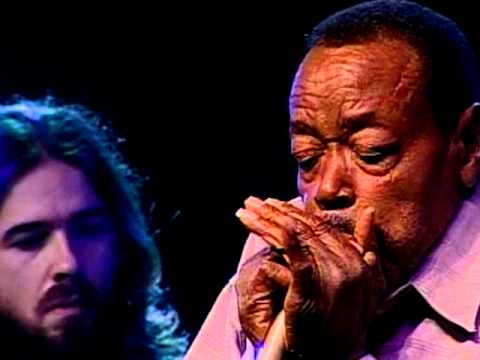
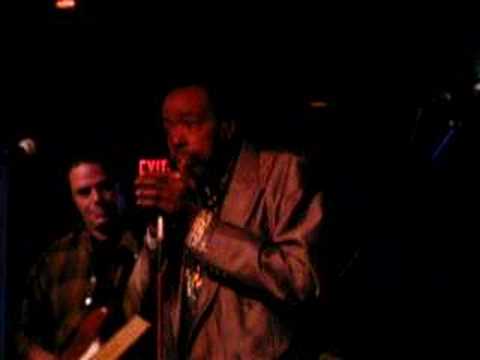
Carey Bell ~ Laundromat Blues (Living Chicago Blues #1) #harmonica #chicagoblues #laundromat #blues
Know someone who'd love this clip?
Share it with friends and fellow fans.
Share this clip
Know someone who'd love this clip?
Share it with friends and fellow fans.
‘Laundromat Blues’ (Sandy Jones Jr) was first made famous by the legendary blues guitarist Albert King in 1966. Here is a delightful, melancholy, harmonica rendition by another blues legend, Carey Bell. CAREY BELL, Harmonica, Vocals LURRIE BELL, Guitar BOB RIEDY, Piano ARON BURTON, Bass ODIE PAYNE, JR., Drums This was released on Alligator Records ‘Living Chicago Blues’ series Volume 1. This compilation features ‘The Jimmy Johnson Blues band, Eddie Shaw & the Wolf Gang, Left Hand Frank & His Blues Band, and of course Carey Bell’s Blues Harp Band. This compilation was released by Bruce Iglauer in 1978 & remastered by Tom Coyne in 1991. Carey Bell has brought the art of Chicago blues harmonica into the 1970s. Carey was once just another student of Little Walter, the genius whose classic ‘50s sounds revolutionized blues harmonica playing. And Carey’s style today still owes much to Walter. But imitation and adulation haven’t trapped Carey Bell; he’s free and fresh in his playing, charging forward with his little Hohner instrument. His constant growth, both as an instrumentalist and singer, continued to be one of the joys of Chicago, but sadly died in 2007. Carey’s infatuation with blues harp began as a teenager in Meridian, Mississippi, where he heard the early records of Little Walter and Sonny Boy Williamson (Rice Miller). He knew enough harp then to play blues with his stepfather, pianist Lovie Lee, and country & western with a local white band. Carey, whose full is name is Carey Bell Harrington, was born November 14, 1936, in Macon, Mississippi, a town that also produced other blues-playing Harringtons, including Eddy “Clearwater” Harrington (a second cousin) and violinist Houston H. Harrington. Carey arrived in Chicago in 1955 with the Lovie Lee band. Work, musical or otherwise, wasn’t easy to find at first. Carey finally got a job at a car wash, staying in Chicago with Lovie, and gave the rest of the band enough money to take the bus back to Mississippi. Lovie formed a new band, keeping Carey on harmonica, and found gigs in the South and West Side taverns. Carey was also learning guitar from Honeyboy Edwards, and through Honeyboy he met the two men who most shaped his harp playing, Little Walter and Big Walter Horton. He took lessons form both, but became an excellent bass player as well, and bass turned out to be his main instrument through the late ‘50s and ‘60s. Picking up slide guitar from Honeyboy and Hound Dog Taylor, Carey had his own band for a while. But usually he played bass for artists such as Honeyboy, Big Walter, Sonny Boy Williamson, Johnny Young, Eddie Taylor, Willie Williams and Earl Hooker. He still played harmonica on occasion, and during his stint with Hooker in 1968, Carey’s harp blowing started to make news. He recorded that year for the first time, singing and playing harp on Earl’s first Arhoolie LP. Carey’s own debut album, Carey Bell’s Blues Harp, on Delmark followed. Within an 18-month period in 1968-70, Carey toured Europe five times, in between jobs on the West Side with Eddie Taylor and others, and appearances at blues festivals in the U.S. He toured for a year with Muddy Waters, went on the road once with Howlin’ Wolf, worked with Willie Dixon’s Chicago Blues All Stars for three years, and is now a prominent fixture in the Bob Riedy Blues Band. When record producers needed blues harp for a session, they began to call on Carey. He has recorded with Muddy, Dixon, Riedy, Jimmy Rogers, Buster Benton, Willie Williams, Sleepy John Estes, Big Walter, Eddie C. Campbell, and others--even the Staple Singers. Carey had a 1973 album on BluesWay, made albums for Delmark and T.K. (which remain unissued), and took an occasional vocal on LPs by the Riedy and Dixon bands. Yet the local blues taverns never lost Carey to the better-paying studio dates and road gigs, because Carey just loves to play, and when he’s not busy elsewhere, he may pop in to play with Eddie Taylor, Willie Williams, Buster Benton, Eddie C. Campbell, or other friends. Carey has received more exposure and acclaim than most of the artists in the Living Chicago Blues series. But this status within the blues field hasn’t thrust him into the big time, or even to top billings on blues gigs. It’s been five years since he was featured in anything more than a guest spot or accompanying role on a record. Carey has more to say, to sing and to play. Copyright Disclaimer under section 107 of the Copyright Act 1976, allowance is made for “fair use” for purposes such as criticism, comment, news reporting, teaching, scholarship, education, and research.
Born : November 14, 1936 in Macon, Mississippi. Died : May 06, 2007 in Chicago, Illinois. He started playing with his stepfather, piano player and vocalist Lovie Lee in Mississippi. In 1956 at age 19, came to Chicago with the Lovey Lee Blues Band. Played harmonica and bass guitar for other blues musicians from the late 1950s to the early 1970s before embarking on a solo career. Played with Muddy Waters on and off at least between late 1970 and 1974, and later with Willie Dixon's Chicago Blues A...
More about Carey Bell→Added
 4:12
4:12Habib Wahid
 3:17
3:17Don Thomas
 4:06
4:06Don Thomas
 3:18
3:18Don Thomas