0 views
Share this clip
Know someone who'd love this clip?
Share it with friends and fellow fans.
Share this clip
Know someone who'd love this clip?
Share it with friends and fellow fans.
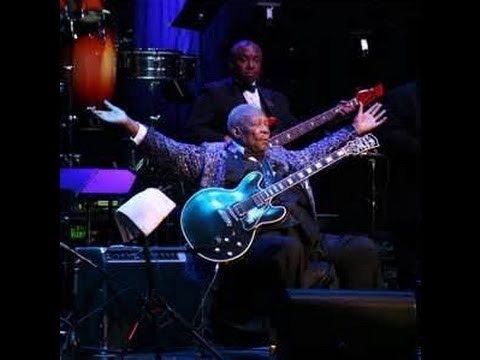
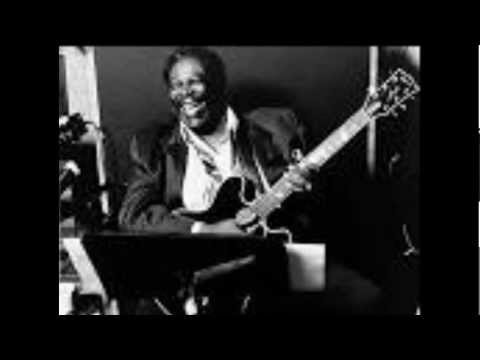
#Blues / #bbking / #lucille / #slowblues Album: All Blues, B.B. King Buy: https://amzn.to/3dlBCT9 _________________________ Edward's Jazz & Blues Channel: http://bit.ly/2vlXAFk _____ 1 Hour Whiskey Blues Compilations: http://bit.ly/2Sv5tQw _____ Keep Walking Playlist: http://bit.ly/31E7G0h1233 _____ Ladies Got The Blues Playlist: http://bit.ly/2Sil0EF _____ Recent Uploads: http://bit.ly/2Hh4kH6 __________________________ Lyrics: Rock me baby, rock me all night long Rock me baby, honey, rock me all night long I want you to rock me baby, like my back ain't got no bone Roll me baby, like you roll a wagon wheel Honey, roll me baby, like you roll a wagon wheel Want you to roll me baby, you don't know how it make me feel Rock me baby, honey, rock me slow Hey, rock me pretty baby, baby rock me slow Want you to rock me baby Till I want no more The video is with promotional purpose. All visual and audio elements belong to their respective owners. For copyright issues, please contact me. __________________________ Performing with his famous guitar, Lucille King assembled his own band; the B.B. King Review, under the leadership of Millard Lee. The band initially consisted of Calvin Owens and Kenneth Sands (trumpet), Lawrence Burdin (alto saxophone), George Coleman (tenor saxophone), Floyd Newman (baritone saxophone), Millard Lee (piano), George Joyner (bass) and Earl Forest and Ted Curry (drums). Onzie Horne was a trained musician elicited as an arranger to assist King with his compositions. By his own admission, he cannot play chords well and always relies on improvisation. This was followed by tours across the USA with performances in major theaters in cities such as Washington, D.C., Chicago, Los Angeles, Detroit and St. Louis, as well as numerous gigs in small clubs and juke joints of the southern US states. In the winter of 1949, King played at a dance hall in Twist, Arkansas. In order to heat the hall, a barrel half-filled with kerosene was lit, a fairly common practice at the time. During a performance, two men began to fight, knocking over the burning barrel and sending burning fuel across the floor. The hall burst into flames, which triggered an evacuation. Once outside, King realized that he had left his guitar inside the burning building. He entered the blaze to retrieve his beloved instrument, a Gibson hollow electric. The next day, King learned that the two men were fighting over a woman named Lucille. King named that first guitar Lucille, as well as every one he owned since that experience, as a reminder never again to do something as stupid as run into a burning building for a replaceable guitar. King meanwhile toured the entire "Chitlin' circuit" and 1956 became a record-breaking year, with 342 concerts booked. The same year he founded his own record label, #Blues Boys Kingdom, with headquarters at Beale Street in Memphis. There, among other projects, he produced artists such as Millard Lee and Levi Seabury. In the 1950s, B.B. King became one of the most important names in R&B music, amassing an impressive list of hits including "3 O'Clock #Blues", "You Know I Love You," "Woke Up This Morning," "Please Love Me," "When My Heart Beats like a Hammer," "Whole Lotta Love," "You Upset Me Baby," "Every Day I Have the #Blues", "Sneakin' Around," "Ten Long Years," "Bad Luck," "Sweet Little Angel", "On My Word of Honor," and "Please Accept My Love." King was extremely busy during this period and made 342 appearances and 3 recording sessions in 1956 alone. In 1962, King signed to ABC-Paramount Records, which was later absorbed into MCA Records, and this hence into his current label, Geffen Records. In November 1964, King recorded the Live at the Regal album at the Regal Theater in Chicago, Illinois. King won a 1970 Grammy Award for the song "The Thrill Is Gone"; his version became a hit on both the pop and R&B charts, which was rare during that time for an R&B artist. It also gained the number 183 spot in Rolling Stone magazine's 500 Greatest Songs of All Time. He gained further visibility among rock audiences as an opening act on The Rolling Stones' 1969 American Tour. King's mainstream success continued throughout the 1970s with songs like "To Know You is to Love You" and "I Like to Live the Love". BB King was inducted into the #Blues Hall of Fame in 1980, and into the Rock and Roll Hall of Fame in 1987. In 2004 he was awarded the international Polar Music Prize, given to artists "in recognition of exceptional achievements in the creation and advancement of music." #quarantine blues #rhythm and blues #modern electric blues #blues history #how blue can you get
Added
 9:02
9:02Floyd Newman
 3:17
3:17Floyd Newman
 3:04
3:04Floyd Newman
 2:48
2:48Floyd Newman
9:02Floyd Newman
3:17Floyd Newman
 0:31
0:31Floyd Newman
3:04Floyd Newman