0 views
Share this clip
Chuck Willis - I Feel So Bad (1954)
Parental AdvisoryExplicit ContentKnow someone who'd love this clip?
Share it with friends and fellow fans.
Share this clip
Know someone who'd love this clip?
Share it with friends and fellow fans.
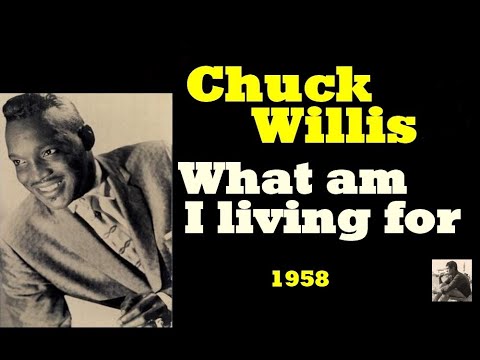
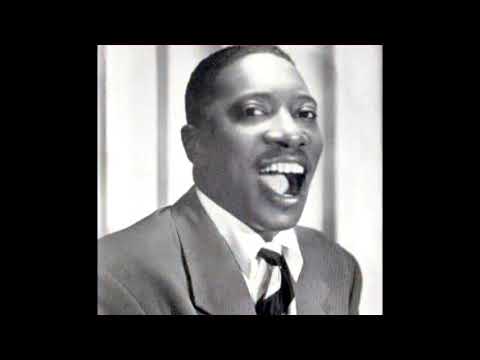
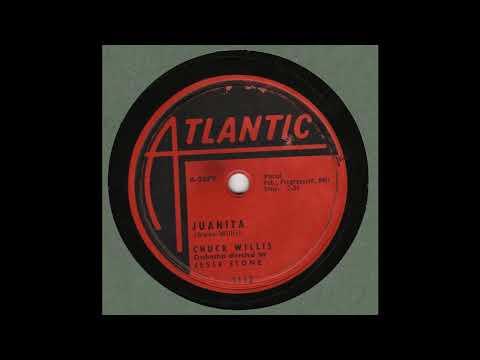
US R&B No. 8 (10.07.1954) 4 Weeks Harold "Chuck" Willis (January 31, 1926 – April 10, 1958) was an American blues, rhythm and blues, and rock and roll singer and songwriter. His biggest hits, "C. C. Rider" (1957) and "What Am I Living For" (1958), both reached No.1 on the Billboard R&B chart. He was known as The King of the Stroll for his performance of the 1950s dance the stroll. Willis was born in Atlanta, Georgia, in 1926. He was spotted at a talent contest by Atlanta radio disc jockey Zenas Sears, who became his manager and helped him to sign with Columbia Records in 1951. After one single, Willis began recording on a Columbia subsidiary, Okeh. During his stay at Okeh, he established himself as a popular R&B singer and songwriter, performing material that he wrote himself. In 1956, he moved to Atlantic Records where he had immediate success with "It's Too Late", "Juanita" and "Love Me Cherry". His most successful recording was "C.C. Rider", which topped the US Billboard R&B chart in 1957 and also crossed over and sold well in the pop market. Jerry Wexler said it was Willis's surprising idea to "do an old standard" instead of one of his own songs. "C.C. Rider" was a remake of a twelve-bar blues, performed by Ma Rainey in Atlanta before Willis was born. Its relaxed beat, combined with a mellow vibraphone backing and chorus, inspired the emergence of the popular dance, The Stroll. D**k Clark played "C. C. Rider" on American Bandstand, and "The Stroll" became a popular dance. Willis's follow-up was "Betty and Dupree", another "stroll" song and a similar "old standard", which also did well. Wexler said that D**k Clark used "Betty and Dupree" on American Bandstand to accompany "The Stroll," and that is how Willis became known as "King of The Stroll." Willis' single "Going to the River", a song by Dave Bartholomew and Fats Domino, was a prototype for his "stroll" sound, reaching No.4 on the R&B chart. Willis performed wearing a turban (a gimmick suggested to him by his friend Screamin' Jay Hawkins) and was also known as the "Sheik of Shake." In the early 1950s he hosted and performed on a weekly Saturday night television show in Atlanta, which featured guest artists such as Ray Charles and Sam Cooke who were passing through town. Zenas Sears said that Willis was a better songwriter than a performer, but also said, "On the TV show ... Chuck would do five or six different numbers every week. He moved very well, he handled himself very well and put everyone at ease." He was a solid, if not spectacular, performer on the road as well, and "was one of the few artists who would treat a band properly," according to Roy Gaines, who was Willis's bandleader and guitarist. Willis had suffered from stomach ulcers for many years. He was known to drink a lot.[7] During surgery in Chicago, Willis died of peritonitis on April 10, 1958, at the age of 32. His untimely death occurred while at the peak of his career, just after the release of his last single, "What Am I Living For", backed by "Hang Up My Rock and Roll Shoes". "Hang Up My Rock & Roll Shoes" was actually the A-side of the single but, upon his death, "What Am I Living For" became the more popular of the two songs. "What Am I Living For" sold over one million copies, and was awarded a gold disc. It was also the top R&B disc of 1958. This was the first rock and roll record released in stereo, "engineered by Tom Dowd of Atlantic Records". When Willis died, he owed a lot of money to the US government, because, according to Zenas Sears, "he paid the band out of his own pocket without ever deducting taxes. ... When he died, his wife had the house, she had the fur coats and the Cadillac, but there was no money." Harold „Chuck“ Willis (* 31. Januar 1928 in Atlanta, Georgia; † 10. April 1958 ebenda) war ein US-amerikanischer Blues- und Rhythm-and-Blues-Sänger und Songwriter. Willis sang zunächst bei einigen lokalen Bands, bevor er 1951 einen Vertrag bei Columbia Records unterschrieb. Erste Erfolge in der R&B-Hitparade hatte er mit den Coverversionen von Fats Dominos Goin' to the River. Von ihm stammt das Original von I Feel So Bad, das 1961 ein Hit für Elvis Presley wurde. Er selbst erreichte 1954 Platz 8 der R&B-Charts. Ab 1956 veröffentlichte Willis bei Atlantic Records. 1957 erfolgte seine erfolgreichste Aufnahme, ein Cover von Gertrude „Ma“ Raineys C. C. Rider, das Position eins der R&B- und Platz zwölf der Popcharts erreichte. 1958 starb er an einer Peritonitis im Alter von 30 Jahren. Seine Version des Songs C. C. Rider wurde von der Rock and Roll Hall of Fame in die Liste der 500 Songs, die den Rock and Roll geprägt haben aufgenommen. Später coverten viele Bands seine Songs, unter anderem The Band, Charlie Rich, Otis Redding, Buddy Holly, Roy Orbison und Derek and the Dominos.
Harold "Chuck" Willis (January 31, 1926 – April 10, 1958) was an American blues, rhythm and blues, and rock and roll singer and songwriter. His biggest hits, "C. C. Rider" (1957) and "What Am I Living For" (1958), both reached No. 1 on the Billboard R&B chart.
More about Chuck Willis→Added
The 1954 TV appearance by Chuck Willis in "I Feel So Bad" is a rare and notable piece of footage that offers a glimpse into the early days of rock and roll and rhythm and blues music. As one of the pioneers of this genre, Willis's performance showcases his unique blend of blues, R&B, and early rock influences.
The clip itself is a brief 2:52 minutes long, but it provides valuable insight into Willis's stage presence and musical style. At the time, Willis was already an established artist, having released several singles on Columbia Records' Okeh subsidiary since 1951. His music had gained popularity among R&B fans, and his unique voice and songwriting skills were beginning to make waves in the industry.
Willis's biggest hits, "C.C. Rider" (1957) and "What Am I Living For" (1958), both reached No. 1 on the Billboard R&B chart, cementing his status as a leading figure in the genre. However, what sets this footage apart is its rarity – it is one of the few surviving TV appearances by Willis from the mid-1950s.
The fact that this clip has been preserved and made available through YouTube is a testament to the efforts of archivists and music historians who work tirelessly to uncover and share rare and forgotten musical artifacts. For fans of early rock and roll, R&B, and blues, this footage is a treasure trove of information, offering a unique glimpse into the lives and performances of some of the genre's most influential figures.
One of the most interesting aspects of Willis's music was his ability to blend traditional blues influences with modern production techniques. As evident in "C.C. Rider," which topped the US Billboard R&B chart in 1957, Willis had a knack for taking classic standards and reworking them into contemporary hits. This approach not only showcased his songwriting skills but also helped pave the way for future generations of artists who would draw upon traditional blues and R&B influences to create new sounds.
The fact that "C.C. Rider" was a remake of a twelve-bar blues performed by Ma Rainey before Willis was born adds another layer of significance to this piece of music history. Willis's decision to revisit and reinterpret classic material not only demonstrated his respect for the genre's roots but also highlighted his innovative approach to songwriting and arrangement.
In conclusion, the 1954 TV appearance by Chuck Willis in "I Feel So Bad" is a rare and fascinating piece of footage that offers a unique glimpse into the early days of rock and roll and R&B music. As one of the pioneers of this genre, Willis's performance showcases his unique blend of blues, R&B, and early rock influences, making this clip an essential watch for fans of early rock and roll, R&B, and blues.
However, as we delve deeper into the facts surrounding this clip, it becomes clear that there is more to the story than initially meets the eye. The fact that Willis was known as "The King of the Stroll" for his performance of the 1950s dance, the stroll, adds another layer of significance to this piece of music history. His music and performances not only influenced the emergence of new dances but also helped shape the sound of early rock and roll.
Ultimately, the preservation and sharing of rare footage like this clip serve as a reminder of the importance of preserving our musical heritage. By making these artifacts available to fans and researchers alike, we can gain a deeper understanding of the evolution of music genres and the artists who helped shape them.
Curated from public records and music databases.
 2:19
2:19L.A.B., Queen, LaVern Baker, Y&T, Sting
![Thumbnail for Margie Singleton - On The Cross (Starday SEP-127) [1959 gospel bopper] by Margie Singleton](https://img.youtube.com/vi/XhBd7Wbv7T8/hqdefault.jpg) 2:43
2:43Margie Singleton
![Thumbnail for Margie Bowes - Poor Old Heartsick Me (Hickory 1094) [1959 country bopper] by Margie Bowes](https://img.youtube.com/vi/7GhGUkooIm8/hqdefault.jpg) 2:16
2:16Margie Bowes
![Thumbnail for Margie Bowes - One Time Too Many (Hickory 1087) [1958 country bopper] by Margie Bowes](https://img.youtube.com/vi/8joOPK9Uazo/hqdefault.jpg) 2:21
2:21Margie Bowes