About This Footage
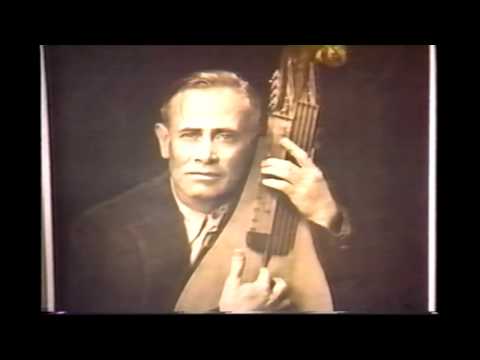
In the dimly lit nave of Eglise St Eustache in Paris, June 2012, John Jacob Niles stands tall, his voice soaring through the cavernous space. The footage, captured by Elie Girard and produced by Le Phar & Ombeline, is a rare gem that showcases Niles' mastery over traditional ballads. This particular performance, "Arlt l Jesus (John Jacob Niles) l Festival 36h St Eustache," clocks in at 3:36 minutes, but its impact lingers long after the final note fades.
At the time of this recording, Niles was an American composer and singer who had already left an indelible mark on the folk music revival of the 1950s and 1960s. His songs were staples in the repertoire of iconic artists like Odetta, Joan Baez, Burl Ives, Peter, Paul and Mary, and Bob Dylan – a testament to his influence on American folk music. Niles' own compositions, often rooted in traditional Appalachian ballads, added depth and nuance to the genre.
What makes this clip so remarkable is its context: Niles performing one of his own arrangements, "Jesus," at a festival in Paris. The setting is almost surreal – an American folk icon singing about Christmas in a centuries-old French church. Yet, it's precisely this juxtaposition that highlights the universality of Niles' music. His arrangement of "Jesus" weaves together traditional Appalachian themes with a distinctly modern sensibility.
The performance itself is nothing short of breathtaking. Niles' voice, weathered from years of singing in smoky bars and coffeehouses, has taken on a rich, gravelly quality that adds depth to the lyrics. As he sings about Jesus' manger bed and the evil folk who sleep in feathers at birth, his voice rises and falls with an effortless ease that belies the complexity of the arrangement.
This clip is significant not only because it showcases Niles' artistry but also because it highlights the interconnectedness of American and European folk traditions. The fact that this performance took place in a Parisian church, surrounded by a French audience, underscores the idea that music can transcend borders and cultural divides.
Watching "Arlt l Jesus (John Jacob Niles) l Festival 36h St Eustache" is to experience a moment of timelessness – a fleeting glimpse into a world where traditional music meets modern sensibility. It's an opportunity to witness a master at work, his voice soaring through the ages like a beacon of hope and humanity. As the final notes fade away, one can't help but be struck by the enduring power of Niles' music – a testament to its ability to transcend time, space, and cultural boundaries.
The image that lingers long after the clip ends is not just Niles himself but the Eglise St Eustache itself – its stone walls bearing witness to centuries of history, its vaulted ceiling stretching up towards the heavens like a sacred canopy. It's an image that speaks to the enduring power of music to bring people together across cultures and continents – an idea that Niles' own life and work embodied in ways both subtle and profound.
Curated from public records and music databases.