0 views
Share this clip
Girl Groups Part 1 - The Story Of A Sound
Know someone who'd love this clip?
Share it with friends and fellow fans.
Share this clip
Know someone who'd love this clip?
Share it with friends and fellow fans.
As the rock era began, close harmony acts like the Chordettes, the Fontane Sisters, the McGuire Sisters and the DeCastro Sisters remained popular, with the first three acts topping the pop charts and the last reaching number two, at the end of 1954 to the beginning of 1955. Also, the Lennon Sisters were a mainstay on the Lawrence Welk Show from 1955 on. In early 1956, doo-wop one-hit wonder acts like the Bonnie Sisters with "Cry Baby" and the Teen Queens with "Eddie My Love" showed early promise for a departure from traditional pop harmonies. With "Mr. Lee", the Bobbettes lasted for 5 1⁄2 months on the charts in 1957, building momentum and gaining further acceptance of all-female, all-black vocal groups. However, it was the Chantels' 1958 song "Maybe" that became "arguably, the first true glimmering of the girl group sound." The "mixture of black doo-wop, rock and roll, and white pop" was appealing to a teenage audience and grew from scandals involving payola and the perceived social effects of rock music. However, early groups such as the Chantels started developing their groups' musical capacities traditionally, through mediums like Latin and choir music. The success of the Chantels and others was followed by an enormous rise in girl groups with varying skills and experience, with the music industry's typical racially segregated genre labels of R&B and pop slowly breaking apart. This rise also allowed a semblance of class mobility to groups of people who often could not otherwise gain such success, and "forming vocal groups together and cutting records gave them access to other opportunities toward professional advancement and personal growth, expanding the idea of girlhood as an identity across race and class lines." The group often considered to have achieved the first sustained success in girl group genre is the Shirelles, who first reached the Top 40 with "Tonight's the Night", and in 1961 became the first girl group to reach number one on the Hot 100 with "Will You Love Me Tomorrow",written by songwriters Gerry Goffin and Carole King at 1650 Broadway. The Shirelles solidified their success with five more top 10 hits, most particularly 1962's number one hit "Soldier Boy", over the next two and a half years. "Please Mr. Postman" by the Marvelettes became a major indication of the racial integration of popular music, as it was the first number one song in the US for African-American owned label, Motown Records. Motown would mastermind several major girl groups, including Martha and the Vandellas, the Velvelettes, and the Supremes. Other songwriters and producers in the US and UK quickly recognized the potential of this new approach and recruited existing acts (or, in some cases, created new ones) to record their songs in a girl-group style. Phil Spector recruited the Crystals, the Blossoms, and the Ronettes, while Goffin and King penned two hit songs for the Cookies. Phil Spector made a huge impact on the ubiquity of the girl group, as well as bringing fame and notoriety to new heights for many girl groups. Phil Spector's so-called Wall of Sound, which used layers of instruments to create a more potent sound allowed girl groups to sing powerfully and in different styles than earlier generations. Jerry Leiber and Mike Stoller would likewise foster the Exciters, the Dixie Cups, and the Shangri-Las. The Shangri-Las' hit single, "Leader of the Pack," exemplified the "'death disc' genre" adopted by some girl groups. These songs usually told the story of teenage love cut short by the death of one of the young lovers. The Paris Sisters had success from 1961 to 1964, especially with "I Love How You Love Me". The Sensations, the Chiffons, the Angels, and the Orlons were also prominent in the early 1960s. In early fall 1963 one-hit wonder the Jaynetts' "Sally Go 'Round the Roses" achieved a mysterious sound[31] quite unlike that of any other girl group. In 1964, the one-hit wonder group the Murmaids took David Gates' "Popsicles and Icicles" to the top 3 in January, the Carefrees' "We Love You Beatles" scraped the top 40 in April, and the Jewels' "Opportunity" was a small hit in December. The girl group sound also extended to existing acts backed by studio musician girls performing without label credit. Examples are too numerous to mention. Source : Wikipedia 2021
R.E.M. was an American rock band formed in Athens, Georgia, in 1980 by drummer Bill Berry, guitarist Peter Buck, bassist Mike Mills, and lead vocalist Michael Stipe, who were students at the University of Georgia. R.E.M. was noted for Buck's arpeggiated "jangle" guitar playing; Stipe's distinctive vocal style, unique stage presence, and cryptic lyrics; Mills's countermelodic bass lines and backing vocals; and Berry's tight, economical drumming. In the early 1990s, other alternative rock acts suc...
More about R.E.M.→Added
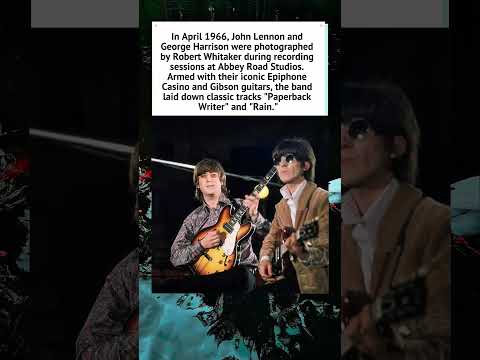
John Lennon
 8:57
8:57Mark Dolfen
 6:42
6:42Mark Dolfen
 15:59
15:59Mark Dolfen