0 views
Share this clip
Know someone who'd love this clip?
Share it with friends and fellow fans.
Share this clip
Know someone who'd love this clip?
Share it with friends and fellow fans.
Music: 1966 Scarborough Fair | Simon & Garfunkel Video: 1967 The Graduate 4 | Benjamin regretful smitten banished | Elaine returns to Berkeley 1960s playlist: https://t.ly/AHKD "Anna Maria Louisa Italiano (September 17, 1931 – June 6, 2005), known professionally as Anne Bancroft, was an American actress, director, screenwriter and singer. Respected for her acting prowess and versatility, Bancroft was the recipient of an Academy Award, three BAFTA Awards, two Golden Globe Awards, two Tony Awards, and two Primetime Emmy Awards. She is one of only 24 people to achieve the Triple Crown of Acting. Associated with the method acting technique, having studied under Lee Strasberg at the Actors Studio, Bancroft made her film debut in the noir thriller Don't Bother to Knock (1952). Following a string of repetitive and glamorous supporting roles, her film career took a toll with executives reluctant to cast her in prestige roles. In 1958, Bancroft made her Broadway debut with the play Two for the Seesaw, winning a Tony Award. The following year she portrayed Anne Sullivan in the original Broadway production of The Miracle Worker, winning the Tony Award for Best Actress in a Play. Following her continued success on stage, Bancroft's film career was revived when she was cast in the acclaimed film adaptation of The Miracle Worker (1962), winning the Academy Award for Best Actress. Her film career further progressed with Oscar nominated performances in The Pumpkin Eater (1964), The Graduate (1967), The Turning Point (1977), and Agnes of God (1985). Bancroft was widely known during this period for her role as Mrs. Robinson in The Graduate (1967), for which she received a third Academy Award nomination. Bancroft was ambivalent about her appearance in The Graduate; she said in several interviews that the role overshadowed her other work. Despite her character becoming an archetype of the 'older woman' role, Bancroft was only six years older than Hoffman. Bancroft continued to act in the later half of her life, with prominent roles in The Elephant Man (1980), Garbo Talks (1984), To Be or Not to Be (1983), 84 Charing Cross Road (1987), Home for the Holidays (1995), Dracula: Dead and Loving It (1995), G.I. Jane (1997), and Great Expectations (1998). She received multiple Primetime Emmy Award nominations, including for the television films Broadway Bound (1992), Deep in My Heart (1999), for which she won, and The Roman Spring of Mrs. Stone (2003). Bancroft died on June 6, 2005, at the age of 73, following her battle with uterine cancer. She was married to actor and comedian Mel Brooks, with whom she had a son named Max." (Wikipedia) * * * "'Scarborough Fair' (Roud 12) is a traditional English ballad. The song lists a number of impossible tasks given to a former lover who lives in Scarborough, North Yorkshire. The earliest commercial recording of the ballad was by actor/singers Gordon Heath and Lee Payant, Americans who ran a cafe and nightclub, L'Abbaye, on the Rive Gauche in Paris. They recorded the song on the Elektra album Encores From The Abbaye in 1955. The song was also included on A. L. Lloyd's 1955 album The English And Scottish Popular Ballads, using Kidson's melody. The version using the melody later used by Simon & Garfunkel in 'Scarborough Fair/Canticle' was first recorded on a 1956 album, English Folk Songs, by Audrey Coppard. It was included by Ewan MacColl on Matching Songs For The British Isles And America (1957), and by MacColl and Peggy Seeger on The Singing Island (1960). MacColl wrote a book of Teesdale folk songs after hearing Mark Anderson sing in the late 1940s. The book included Anderson's rendition of a little-known song called 'Scarborough Fair'. In April 1966, Marianne Faithfull recorded and released her own take on 'Scarborough Fair' on her album North Country Maid about six months prior to Simon & Garfunkel's release of their single version of the song in October 1966. Paul Simon learned the song in London in 1965 from Martin Carthy, who had picked up the tune from the songbook by Ewan MacColl and Peggy Seeger and included it on his eponymous 1965 album. Simon & Garfunkel set it in counterpoint with 'Canticle' – a reworking of the lyrics from Simon's 1963 anti-war song, 'The Side of a Hill', set to a new melody composed mainly by Art Garfunkel. 'Scarborough Fair/Canticle' was the lead track of the 1966 album Parsley, Sage, Rosemary and Thyme, and was released as a single after being featured on the soundtrack to The Graduate in 1968. The copyright credited only Simon and Garfunkel as the authors, causing ill-feeling on the part of Carthy, who felt the 'traditional' source should have been credited. This rift remained until Simon invited Carthy to perform the song with him as a duet at a London concert in 2000." (Wikipedia)
A musician is someone who composes, conducts, or performs music. According to the United States Employment Service, "musician" is a general term used to designate a person who follows music as a profession. Musicians include songwriters, who write both music and lyrics for songs; conductors, who direct a musical performance; and performers, who perform for an audience. A music performer is generally either a singer (also known as a vocalist), who provides vocals, or an instrumentalist, who plays...
More about The Sound→Added
 5:22
5:22 5:41
5:41Lonzo and Oscar
 4:37
4:37Lonzo and Oscar
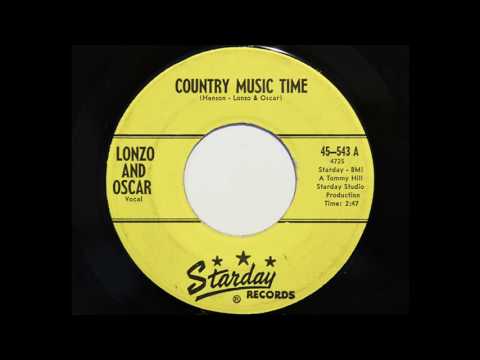 2:51
2:51Lonzo and Oscar
 23:28
23:28The Sound, The Band, Concert
 0:21
0:21J.O.E., The Sound
 5:46
5:46The Sound, Ween, Concert
 0:59
0:59The Sound