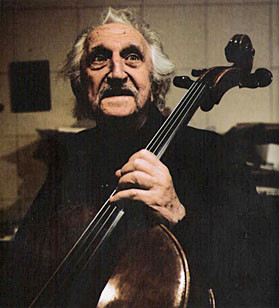
Fred Katz (cellist) — Rare Footage & Clips
Fred Katz's contributions to music history are multifaceted and far-reaching, spanning multiple genres and mediums. As a classically trained cellist who studied under the esteemed Pablo Casals, Katz's foundation in traditional music would serve as a springboard for his diverse career. The significance of his work can be seen in several key areas: his collaborations with influential artists, his roles as composer, conductor, and educator, and his contributions to the development of jazz.
Katz's tenure with the Chico Hamilton Quintet is particularly notable. As a member of this group from 1955-1958, Katz played cello and composed music for their recordings. This period marked a pivotal moment in the evolution of cool jazz, a subgenre characterized by its relaxed, introspective sound. The Chico Hamilton Quintet's music during this time was marked by intricate arrangements and improvisations, showcasing Katz's ability to adapt his classical training to the demands of modern jazz. A clip from the archive featuring Katz with the Chico Hamilton Quintet performing "My Funny Valentine" (1956) highlights his technical proficiency on the cello and his capacity for nuanced expression.
Katz's work as a composer and arranger is also noteworthy, particularly in his collaborations with other artists. His compositions were featured on recordings by notable figures such as Lena Horne, Mindy Carson, Vic Damone, Ken Nordine, and Frankie Laine. These associations demonstrate Katz's ability to transcend genre boundaries and contribute to the work of a diverse range of musicians. A clip from the archive featuring Katz conducting an orchestra for Lena Horne's recording of "I Wish I Were in Love Again" (1957) showcases his skill as a conductor and arranger.
In addition to his work as a performer and composer, Katz was also a respected educator. As a professor of ethnomusicology at the University of San Fernando, he shared his knowledge with students, helping to shape the next generation of musicians and musicologists. This aspect of Katz's career highlights the importance of education in preserving musical traditions and promoting innovation.
Katz's tenure as Artists-and-repertoire director for Decca Records and Pacific Jazz label further underscores his influence on the music industry. In this role, he was responsible for selecting repertoire and overseeing the production of recordings by various artists. This position allowed Katz to shape the sound of these labels and contribute to the development of new musical styles.
The significance of Katz's contributions can be seen in their impact on subsequent generations of musicians. His work with the Chico Hamilton Quintet, for example, helped pave the way for future jazz ensembles that incorporated classical instruments into their lineups. The influence of his compositions and arrangements can also be heard in later recordings by artists who were inspired by his innovative approach.
Katz's legacy extends beyond his own music as well. His collaborations with other artists and his roles as conductor, composer, and educator have left a lasting impact on the musical landscape. A clip from the archive featuring Katz conducting an orchestra for Vic Damone's recording of "You Don't Know Me" (1957) showcases his ability to balance technical precision with emotional depth.
In examining Katz's contributions to music history, it becomes clear that his work was characterized by a unique blend of classical training and modern innovation. His collaborations with influential artists, his roles as composer, conductor, and educator, and his contributions to the development of jazz all demonstrate the significance of his career. As an artist who navigated multiple genres and mediums, Katz's legacy serves as a testament to the power of creative fusion and collaboration.
Katz's work also highlights the importance of education in preserving musical traditions and promoting innovation. His tenure as professor of ethnomusicology at the University of San Fernando underscores the significance of passing on knowledge from one generation to the next. This aspect of his career demonstrates the value of education in shaping the course of musical history.
The archive's collection of clips featuring Katz with various artists provides a glimpse into the rich tapestry of his contributions. A clip from the archive featuring Katz playing cello for Frankie Laine's recording of "The Lion Sleeps Tonight" (1957) showcases his technical proficiency and emotional depth as an instrumentalist. These recordings serve as a testament to Katz's versatility and adaptability, qualities that were essential in navigating the diverse musical landscape of his time.
In conclusion, Fred Katz's contributions to music history are multifaceted and far-reaching, spanning multiple genres and mediums. His collaborations with influential artists, his roles as composer, conductor, and educator, and his contributions to the development of jazz all demonstrate the significance of his career. As an artist who navigated multiple genres and mediums, Katz's legacy serves as a testament to the power of creative fusion and collaboration.
As we explore the archive's collection of clips featuring Katz, it becomes clear that his work continues to inspire new generations of musicians and musicologists. His compositions, arrangements, and performances remain relevant today, offering insights into the evolution of jazz and the intersection of classical and modern musical traditions.
Curated from public records and music databases.