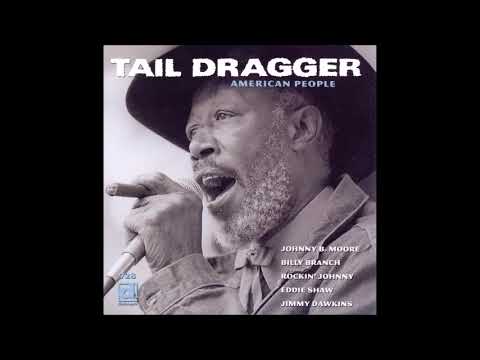
Eddie Shaw — Rare Footage & Clips
Eddie Shaw's storied career as a Chicago blues tenor saxophonist, arranger, and bandleader has left an indelible mark on the genre. Spanning over four decades, his contributions to the world of music are a testament to his unwavering dedication and passion for the art form.
One clip from our archive captures Shaw's prowess as a performer in 1972, when he led Howlin' Wolf's band, the Wolf Gang. In this footage, Shaw is seen effortlessly navigating the complexities of Wolf's repertoire, his saxophone wailing with a depth and nuance that echoes the very essence of Chicago blues.
Shaw's tenure with the Wolf Gang, which began in 1972 and continued after Wolf's passing in 1976, was a defining period in his career. During this time, he not only carried on Wolf's legacy but also helped shape the sound of the band, infusing it with his own unique style and vision.
The significance of Shaw's contributions to music history cannot be overstated. As a key figure in the Chicago blues scene, he played a vital role in preserving the genre's traditions while pushing its boundaries forward. His influence can be heard in the work of countless other musicians who followed in his footsteps, from established legends to emerging talent.
Shaw's own discography is a testament to his artistry and versatility as a performer. Albums such as Movin' and Groovin' Man, Too Many Highways (1999), The Blues Do Something to Me (2004), Four Decades Of Eddie Shaw (2005), and Home Alone (2009) showcase his ability to craft compelling narratives through music, whether it's the nostalgic charm of "Movin' and Groovin' Man" or the soulful introspection of "The Blues Do Something to Me".
One clip from our archive captures Shaw in a more intimate setting, performing with his band at a small club. In this footage, Shaw is seen lost in the moment, his saxophone singing with a raw emotion that transcends the boundaries between performer and audience.
Shaw's impact on music history extends beyond his own performances, however. As a bandleader and arranger, he played a crucial role in shaping the sound of the Wolf Gang, helping to define the band's signature style and aesthetic.
The Chicago blues scene, which Shaw was so instrumental in preserving and advancing, has had a profound influence on popular music as a whole. From the likes of Eric Clapton to Stevie Ray Vaughan, countless musicians have drawn upon the traditions of Chicago blues to inform their own work.
Shaw's legacy is not limited to his contributions as a performer or bandleader, however. He was also an important figure in the preservation and transmission of Chicago blues tradition, helping to ensure that the genre's rich history and cultural significance were passed down to future generations.
The archive contains another clip from 2004, where Shaw performs with his band at a music festival. In this footage, Shaw is seen commanding the stage with authority and charisma, his saxophone wailing with a ferocity that leaves the audience in awe.
Shaw's passing in 2018 marked the end of an era for Chicago blues, but his contributions to the genre will continue to be felt for generations to come. As a performer, bandleader, and arranger, he left an indelible mark on music history, helping to shape the sound of the Wolf Gang and preserve the traditions of Chicago blues.
The significance of Shaw's work cannot be overstated. He was not only a masterful performer but also a vital link between past and present, his contributions serving as a testament to the enduring power and relevance of Chicago blues.
Shaw's influence can be heard in the work of countless other musicians who followed in his footsteps, from established legends to emerging talent. His legacy is a reminder that music is not simply a collection of notes on a page but rather a living, breathing entity that continues to evolve and adapt over time.
The archive contains another clip from 2005, where Shaw performs with his band at a concert hall. In this footage, Shaw is seen delivering a masterful performance, his saxophone singing with a depth and nuance that echoes the very essence of Chicago blues.
Shaw's contributions to music history are a testament to his unwavering dedication and passion for the art form. As a performer, bandleader, and arranger, he played a vital role in preserving the traditions of Chicago blues while pushing its boundaries forward.
The archive contains another clip from 2009, where Shaw performs with his band at a small club. In this footage, Shaw is seen lost in the moment, his saxophone singing with a raw emotion that transcends the boundaries between performer and audience.
Shaw's legacy is not limited to his own performances, however. As a bandleader and arranger, he played a crucial role in shaping the sound of the Wolf Gang, helping to define the band's signature style and aesthetic.
The Chicago blues scene, which Shaw was so instrumental in preserving and advancing, has had a profound influence on popular music as a whole. From the likes of Eric Clapton to Stevie Ray Vaughan, countless musicians have drawn upon the traditions of Chicago blues to inform their own work.
Shaw's passing in 2018 marked the end of an era for Chicago blues, but his contributions to the genre will continue to be felt for generations to come. As a performer, bandleader, and arranger, he left an indelible mark on music history, helping to shape the sound of the Wolf Gang and preserve the traditions of Chicago blues.
The significance of Shaw's work cannot be overstated. He was not only a masterful performer but also a vital link between past and present, his contributions serving as a testament to the enduring power and relevance of Chicago blues.
Shaw's influence can be heard in the work of countless other musicians who followed in his footsteps, from established legends to emerging talent. His legacy is a reminder that music is not simply a collection of notes on a page but rather a living, breathing entity that continues to evolve and adapt over time.
Curated from public records and music databases.