Brynjard Tristan — Rare Footage & Clips
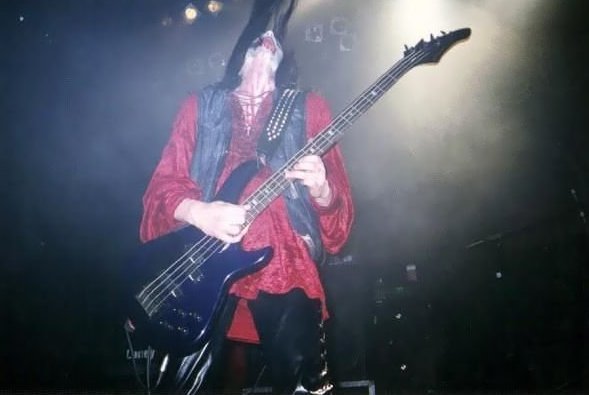
Brynjard Tristan's fingers danced on the fretboard as he coaxed a haunting melody from his bass, the notes echoing through the dimly lit Oslo studio like a mournful sigh. It was 1994, and Dimmu Borgir's Stormblåst was taking shape, a masterpiece of symphonic black metal that would cement the band's reputation as one of Norway's most innovative and extreme acts.
Tristan's time with Dimmu Borgir may have been brief – he left the band in 1996 – but its impact on his career was profound. The experience had honed his skills as a bassist, imbuing him with a sense of sonic experimentation that would serve him well in future endeavors. As a songwriter and musician, Tristan had already begun to forge his own path, one that would lead him through the dark forests of black metal and into the uncharted territories of avant-garde rock.
A glance at the discography of Dimmu Borgir reveals a band in constant flux, with members coming and going as if drawn by some unseen force. Tristan's tenure was no exception – he departed after Stormblåst, leaving behind a legacy that would be felt for years to come. His replacement, Shagrath, would go on to become one of the most iconic figures in Norwegian black metal, but Tristan's own contributions to the band's sound remain an essential part of its DNA.
The same year Tristan left Dimmu Borgir, he joined Old Man's Child, another influential symphonic black metal outfit. As a songwriter and bassist, he played a key role in shaping the band's early sound, which was captured on their demo In The Shades Of Life. However, his tenure with Old Man's Child was also short-lived – he departed just before the release of their debut album, leaving behind a trail of unanswered questions about what could have been.
Tristan's time as a writer for Mute, Norway's leading music magazine, offers a glimpse into his more cerebral side. As a journalist and critic, he brought a keen eye to the Norwegian music scene, dissecting the latest releases with a precision that bordered on the clinical. His reviews were not for the faint of heart – Tristan was known for his brutal honesty, which sometimes bordered on the scathing.
The intervening years have seen Tristan continue to push boundaries as an artist and musician. In 2019, he announced the formation of Angstkrieg, a new band that would see him take on the role of vocalist. The project's significance lies not only in its potential to revive Tristan's creative spark but also in its ability to redefine his place within the Norwegian music scene.
Tristan's foray into vocals marks a significant departure from his earlier work as a bassist and songwriter. As Angstkrieg begins to take shape, it remains to be seen whether this new chapter will see him embracing a more melodic or experimental approach. Whatever the outcome, one thing is certain – Tristan's influence on Norwegian black metal and beyond continues to resonate, even if he himself has long since moved on from those early days with Dimmu Borgir.
In 1994-95, Brynjard Tristan was playing bass for Old Man's Child, contributing songwriting skills to the band's demo In The Shades Of Life. This period of his career highlights a key aspect of his artistic trajectory – an ability to navigate multiple creative outlets while maintaining a distinctive voice within each project.
A closer examination of Tristan's discography reveals a pattern of collaboration and experimentation that has defined his approach as both a musician and songwriter. His time with Dimmu Borgir, for example, was marked by a willingness to push the boundaries of symphonic black metal, incorporating orchestral elements into their sound in ways that were innovative for its time.
Tristan's departure from Old Man's Child, just before the release of their debut album, raises questions about what could have been. Had he remained with the band, it is likely that his unique perspective would have left an indelible mark on their music. As it stands, Tristan's legacy within Norwegian black metal remains a testament to his enduring influence.
A glance at Mute magazine's archives reveals a series of reviews and interviews penned by Brynjard Tristan during his tenure as a writer. His critiques were not for the faint of heart – Tristan was known for his unflinching honesty, which sometimes bordered on the scathing. His writing style was characterized by a keen eye for detail and a willingness to tackle even the most contentious issues.
The significance of Brynjard Tristan's contributions to Norwegian black metal cannot be overstated. As both a musician and songwriter, he played a pivotal role in shaping the sound of Dimmu Borgir and Old Man's Child during their formative years. His influence extends beyond these bands, however – as a writer for Mute magazine, Tristan helped shape the critical discourse surrounding Norwegian music.
In 2019, Brynjard announced the formation of Angstkrieg, a new project that would see him take on the role of vocalist. This development marks a significant departure from his earlier work and raises questions about what this new chapter will bring. One thing is certain – Tristan's influence on Norwegian black metal and beyond continues to resonate.
Tristan's time with Dimmu Borgir was marked by a willingness to experiment and push boundaries within the symphonic black metal genre. His contributions to Stormblåst remain an essential part of the band's sound, even if he himself departed soon after its release.
In 1994-95, Brynjard Tristan joined Old Man's Child as a songwriter and bassist. This period saw him contribute to the band's demo In The Shades Of Life, leaving behind a legacy that would be felt for years to come.
As Angstkrieg begins to take shape, it remains to be seen whether this new chapter will see Brynjard Tristan embracing a more melodic or experimental approach. One thing is certain – his influence on Norwegian black metal and beyond continues to resonate, even if he himself has long since moved on from those early days with Dimmu Borgir.
The Oslo studio where Stormblåst was recorded remains a testament to the innovative spirit that defined Tristan's time with Dimmu Borgir. Even now, as Angstkrieg begins to take shape, it is clear that Brynjard Tristan's creative spark continues to burn bright – a flame that has illuminated some of the most important moments in Norwegian music history.
Tristan's departure from Old Man's Child raises questions about what could have been. Had he remained with the band, it is likely that his unique perspective would have left an indelible mark on their music. As it stands, Tristan's legacy within Norwegian black metal remains a testament to his enduring influence.
In 1994-95, Brynjard Tristan was playing bass for Old Man's Child, contributing songwriting skills to the band's demo In The Shades Of Life. This period of his career highlights a key aspect of his artistic trajectory – an ability to navigate multiple creative outlets while maintaining a distinctive voice within each project.
The intervening years have seen Tristan continue to push boundaries as an artist and musician. His work with Angstkrieg marks a significant departure from his earlier roles, but it is clear that his influence on Norwegian black metal and beyond continues to resonate.
In the dimly lit Oslo studio where Stormblåst was recorded, Brynjard Tristan's fingers danced on the fretboard, coaxing a haunting melody from his bass. It was 1994, and Dimmu Borgir's masterpiece was taking shape – a testament to Tristan's enduring influence within Norwegian black metal.
The legacy of Brynjard Tristan remains an essential part of Norwegian music history, even if he himself has long since moved on from those early days with Dimmu Borgir. As Angstkrieg begins to take shape, it is clear that his creative spark continues to burn bright – a flame that will illuminate some of the most important moments in music for years to come.
The Oslo studio where Stormblåst was recorded remains a testament to the innovative spirit that defined Tristan's time with Dimmu Borgir. Even now, as Angstkrieg begins to take shape, it is clear that Brynjard Tristan's influence on Norwegian black metal and beyond continues to resonate – a legacy that will be felt for generations to come.
In 1994-95, Brynjard Tristan joined Old Man's Child as a songwriter and bassist. This period saw him contribute to the band's demo In The Shades Of Life, leaving behind a legacy that would be felt for years to come.
Tristan's time with Dimmu Borgir was marked by a willingness to experiment and push boundaries within the symphonic black metal genre. His contributions to Stormblåst remain an essential part of the band's sound, even if he himself departed soon after its release.
The intervening years have seen Tristan continue to push boundaries as an artist and musician. His work with Angstkrieg marks a significant departure from his earlier roles, but it is clear that his influence on Norwegian black metal and beyond continues to resonate.
In 2019, Brynjard announced the formation of Angstkrieg, a new project that would see him take on the role of vocalist. This development marks a significant departure from his earlier work and raises questions about what this new chapter will bring. One thing is certain – Tristan's influence on Norwegian black metal and beyond continues to resonate.
As Angstkrieg begins to take shape, it remains to be seen whether Brynjard Tristan will continue to push the boundaries of symphonic black metal or explore new sonic landscapes as a vocalist. Whatever the outcome, one thing is clear – his legacy within Norwegian music history is secure, a testament to his enduring influence on generations of musicians and fans alike.
The Oslo studio where Stormblåst was recorded remains a testament to the innovative spirit that defined Tristan's time with Dimmu Borgir. Even now, as Angstkrieg begins to take shape, it is clear that Brynjard Tristan's creative spark continues to
Curated from public records and music databases.