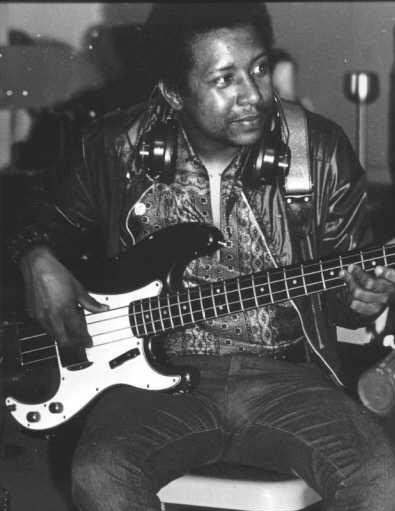
Billy Cox — Rare Footage & Clips
Billy Cox's fingers danced across the fretboard, his bass lines weaving in and out of Jimi Hendrix's psychedelic tapestry at Woodstock '69. The clip from the archive captures a fleeting moment of musical history, one that would be forever etched in the annals of rock 'n' roll. As the only living musician to have regularly played with Hendrix, Cox's significance extends far beyond his tenure as the bassist for the legendary guitarist.
Cox's journey began in 1941, when he was born in the United States. Little did he know that a lifetime of music lay ahead, one that would see him rubbing shoulders with some of the most iconic figures of the time. His early years are shrouded in mystery, but it is clear that his musical talents were honed during his formative years. By 1969, Cox had already established himself as a versatile bassist, capable of navigating the complexities of rock, blues, and psychedelia.
One of the most pivotal moments in Cox's career came when he joined Hendrix for the Gypsy Sun and Rainbows set at Woodstock. The clip from the archive shows Cox's fluid bass lines providing the perfect counterpoint to Hendrix's virtuosic guitar playing. It is a testament to their musical chemistry, one that would be further refined during their subsequent collaborations. The Band of Gypsys album, recorded live in 1970, remains one of the most iconic recordings in rock history, with Cox's bass work providing the foundation for Hendrix's innovative sound.
But Cox's association with Hendrix was not limited to just a few fleeting moments. He continued to perform and record with the guitarist until his untimely death in 1970. The Band of Gypsys Experience, which Cox still performs with today, is a testament to their enduring musical legacy. Even decades after Hendrix's passing, Cox's music continues to inspire new generations of fans.
Cox's work extends far beyond his association with Hendrix, however. He has played and recorded with an impressive array of artists, including Sam Cooke, Slim Harpo, Joe Simon, Charlie Daniels, John McLaughlin, Rufus Thomas, Carla Thomas, Lou Rawls, Etta James, Jackie Wilson, and Little Richard. These collaborations not only demonstrate Cox's versatility as a musician but also underscore his importance within the musical landscape of the 1960s and 1970s.
One notable album in Cox's discography is Nitro Function (1971), which showcases his ability to navigate the complexities of rock and psychedelia. While it may not be as well-known as some of Hendrix's other works, Nitro Function remains an important part of Cox's oeuvre, one that demonstrates his continued growth and development as a musician.
In recent years, Cox has revisited the music of his past with The Band of Gypsys Return (2006). This album, which features reworked versions of classic tracks, serves as a poignant reminder of the enduring power of Hendrix's music. Even decades after its initial release, The Band of Gypsys remains one of the most influential albums in rock history, and Cox's continued association with it is a testament to his dedication to preserving the legacy of his former bandmate.
Cox's influence extends beyond his own music, however. As one of the few remaining links to Hendrix's inner circle, he has become an important figure within the Experience Hendrix Tour. This ongoing tribute to Hendrix's music continues to inspire new generations of fans, and Cox's participation serves as a reminder of the enduring power of their musical partnership.
As we delve into the archive, it becomes clear that Billy Cox is more than just a footnote in the history of rock 'n' roll. He is a living link to one of the most pivotal moments in music history, and his continued dedication to preserving Hendrix's legacy serves as a testament to the enduring power of their musical partnership.
Curated from public records and music databases.