DeepCutsArchive
BrowseArtistsTimelineMapDecadesSubmit

DeepCutsArchive

Preserving the footage that shaped music history. Rare clips, studio sessions, and moments lost to time.

BrowseArtistsGenresDecadesLocationsSubmit a ClipAboutContactEditorial PolicyArticles

© 2026 DeepCutsArchive. All footage remains the property of its original creators.

Privacy PolicyTerms of UseSupport

Developed with love as a personal project by Jamie McDonnell

ui-ux-design.comai-consultancy.company
B.B. King — Rare Clips — DeepCutsArchive — DeepCutsArchive
B.B. King

B.B. King

1925–2015United States2020s1960s1970s2010s1980s1990s

About B.B. King

American blues singer, guitarist, and songwriter born September 16, 1925 near Itta Bena, Mississippi and died May 14, 2015, Las Vegas, Nevada. B.B. is an abbreviation for 'Blues Boy'. King is one of the most influential blues musicians of all time, earning the nickname "The King of the Blues." He is considered one of the "Three Kings of the Blues Guitar" (along with Albert King and Freddie King, none of whom are related). Since he started recording in the 1940s, he released over fifty albums. He previously worked as a tractor driver. In his youth, he played on street corners for dimes, and would sometimes play in as many as four towns a night. In 1947, he hitchhiked to Memphis, TN, to pursue his music career. In Memphis, B.B. stayed with his cousin Bukka White, one of the most celebrated blues performers of his time, who B.B. credits as one of his earliest mentors and teachers. King's first big break came in 1948 when he performed on Sonny Boy Williamson’s radio program on KWEM out of West Memphis. This radio performance led to steady engagements at the Sixteenth Avenue Grill in West Memphis and later to a ten-minute spot on the Memphis radio station WDIA. King's radio spot become so popular, it was expanded and became the “Sepia Swing Club.” As King worked at WDIA as a singer and disc jockey, he was given the catchy radio nickname "Beale Street Blues Boy", later shortened to "Blues Boy", and finally to "B.B." In the late 1940s and early 1950s, King was a part of the blues scene on Beale Street. "Beale Street was where it all started for me", King said. He performed with Bobby Bland, Johnny Ace, and Earl Forest in a group known as The Beale Streeters. In 1949, King made his recording debut on Bullet (2) (Bullet Recording & Transcription Co.) by issuing the single "Miss Martha King", which did not chart well. Later that year, he began a recording contract with Los Angeles-based RPM Records (5). Many of King's early recordings were produced by Sam Phillips (2) (who later founded Sun Record Company). King's recording contract was followed by tours across the US, with performances in big city theatres as well as gigs in small clubs and juke joints in the southern United States. During one show in Twist, Arkansas, a fight broke out between two men and caused a fire. King evacuated with the rest of the crowd, but realizing he left his acoustic guitar inside, rushed back inside the burning building to retrieve it. He later discovered the two men were fighting over a woman named Lucille. Ever since, each one of B.B.’s trademark Gibson guitars has been called Lucille, as a reminder not to fight over women or run into any more burning buildings. In 1952, B.B. had a number one hit with “Three O’Clock Blues,” and began touring nationally soon after. 1956 became a record-breaking year, with 342 concerts booked and three recording sessions. That same year he founded his own record label, Blues Boys Kingdom, with headquarters at Beale Street in Memphis. In 1962, King signed to ABC-Paramount Records, which was later absorbed into MCA Records. In November 1964, King recorded the [m=107099] album, considered to be one of his finest recordings. In 1968, B.B. played at the Newport Folk Festival and at Bill Graham (2)’s Fillmore West on bills with the hottest contemporary rock artists of the day who idolized B.B. and helped to introduce him to a young white audience. In 1969, B.B. was chosen by The Rolling Stones as the opening act for their American tour. He won a 1970 Grammy Award for his version of the song "The Thrill Is Gone", which was a hit on both the Pop and R&B charts. It also gained the number 183 spot in Rolling Stone magazine's 500 Greatest Songs of All Time. From the 1980s until his death in 2015, he maintained a highly visible and active career, appearing on numerous television shows and performing as much as 300 nights a year. B.B. was inducted into the Blues Foundation Hall of Fame in 1984 and into the Rock And Roll Hall of Fame in 1987 (Performer).

Formed

1925 – 2015

Origin

United States

Discography

Singin’ the Blues (1957)

The Blues (1958)

B.B. King Sings Spirituals (1959)

King of the Blues (1960)

Compositions of Duke Ellington and Others (1960)

My Kind of Blues (1961)

More B. B. King (1961)

Easy Listening Blues (1962)

Blues in My Heart (1963)

The Soul of B.B. King (1963)

Mr. Blues (1963)

Blues on Top of Blues (1968)

Lucille (1968)

His Best – The Electric B.B. King (1968)

Live & Well (1969)
B.B. King by Type

RareAcousticLiveStudioInterview

Featured

Thumbnail for Los  Van  Van  ‐ B.B. King  NYC ‐ by B.B. King, BB King14:00

Los Van Van ‐ B.B. King NYC ‐

B.B. King, BB King

Rare

B.B. King by Decade

1960s1970s1980s1990s2010s

Keep Exploring

2010sAll ArtistsAll GenresAll DecadesBrowse by Tag
Read more on Wikipedia →
Thumbnail for BB King Tribute "You Don't Know" - Susan Tedeschi, Derek Trucks by B.B. King, Derek Trucks, BB King1:21

BB King Tribute "You Don't Know" - Susan Tedeschi, Derek Trucks

B.B. King, Derek Trucks, BB King

2020sRare

Rare12 clips

View all rare→
  • Thumbnail for Los  Van  Van  ‐ B.B. King  NYC ‐ by B.B. King, BB King14:00

    Los Van Van ‐ B.B. King NYC ‐

    B.B. King, BB King

    Rare
  • Thumbnail for BB King Tribute "You Don't Know" - Susan Tedeschi, Derek Trucks by B.B. King, Derek Trucks, BB King1:21

    BB King Tribute "You Don't Know" - Susan Tedeschi, Derek Trucks

    B.B. King, Derek Trucks, BB King

    2020sRare
  • Thumbnail for B.B. King on Django Reinhardt by B.B. King, BB King

    B.B. King on Django Reinhardt

    B.B. King, BB King

    Rare
  • Thumbnail for JOHNNY WINTER & B.B. KING VERY RARE JAM 1969 FOOTAGE by B.B. King, BB King

    JOHNNY WINTER & B.B. KING VERY RARE JAM 1969 FOOTAGE

    B.B. King, BB King

    1960sRare

Acoustic2 clips

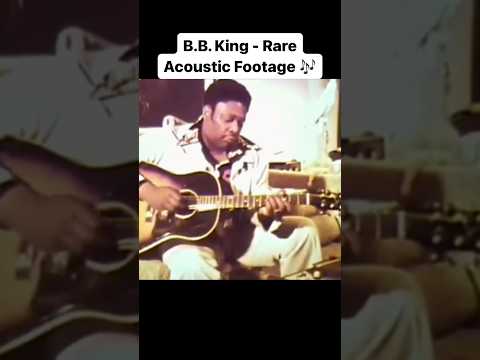
  • Thumbnail for Acoustic Rare Footage of B.B. King 🎶🔥 #bbking #bluesguitar #blues #guitar #guitarplayer #shorts by B.B. King, BB King

    Acoustic Rare Footage of B.B. King 🎶🔥 #bbking #bluesguitar #blues #guitar #guitarplayer #shorts

    B.B. King, BB King

    AcousticRare
  • Thumbnail for B.B King Playing Acoustic Guitar (rare) by B.B. King, BB King

    B.B King Playing Acoustic Guitar (rare)

    B.B. King, BB King

    1970sAcousticRare

Interview2 clips

  • Thumbnail for B.B. King Dr Pepper Recording Session by B.B. King, BB King

    B.B. King Dr Pepper Recording Session

    B.B. King, BB King

    InterviewStudio
  • Thumbnail for B.B. King - Interview 1995 by B.B. King, BB King

    B.B. King - Interview 1995

    B.B. King, BB King

    1990sInterviewRare

More Clips1 clip

  • Thumbnail for B.B. King - The Thrill Is Gone - The Best Studio Backing Track ( B minor ) by B.B. King, BB King

    B.B. King - The Thrill Is Gone - The Best Studio Backing Track ( B minor )

    B.B. King, BB King

    StudioRare
2020s
More from 2020s

B.B. King — Rare Footage & Clips

The King of the [Blues](/genre/blues): Unpacking B.B. King's Enduring Legacy

B.B. King, one of the most influential blues musicians of all time, left an indelible mark on the genre that continues to reverberate through generations of artists and fans alike. With a career spanning over seven decades, King's impact on music history is nothing short of profound. As we delve into the archives at DeepCutsArchive, we're reminded of the significance of his contributions, which are as much a testament to his artistry as they are to his unwavering dedication to the blues.

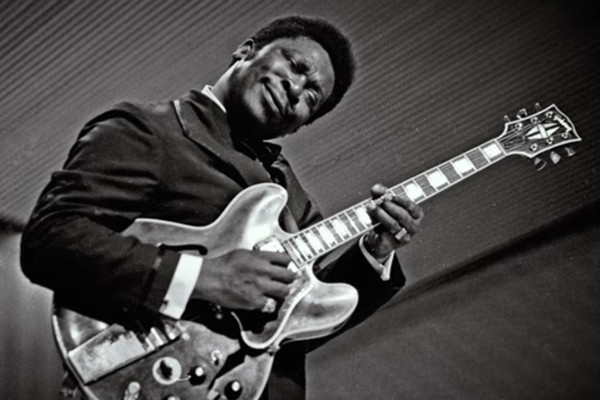
One of the earliest and most enduring images of King can be found in our archive's collection of rare footage. In a clip from 1956, King is seen performing on stage, his iconic guitar slung low, as he delivers a mesmerizing rendition of "Three O'Clock Blues." This song, which would go on to become one of his signature hits, marked a turning point in King's career, catapulting him to national fame and cementing his status as the "King of the Blues."

But King's influence extends far beyond his own music. As a mentor and teacher, he played a pivotal role in shaping the careers of countless other artists. His cousin Bukka White, with whom he stayed in Memphis during the 1940s, is often cited as one of King's earliest influences. White's own legacy as a celebrated blues performer only underscores the significance of King's early exposure to the genre.

King's formative years on Beale Street were instrumental in shaping his sound and style. As he himself recalled, "Beale Street was where it all started for me." It was here that he honed his craft alongside other notable musicians, including Bobby Bland, Johnny Ace, and Earl Forest, as part of the group known as The Beale Streeters.

The archives at DeepCutsArchive contain a wealth of footage from King's early days on Beale Street. In one clip, King is seen performing with The Beale Streeters in a small club setting. The raw energy and camaraderie that pervades this performance only serves to underscore the importance of these formative years in shaping King's artistic vision.

King's recording debut on Bullet Records in 1949 marked an important milestone in his career, but it was not without its challenges. As he recalled in later interviews, "I didn't do too well with my first record." However, this setback only served to fuel his determination, and he went on to sign with Los Angeles-based RPM Records soon after.

The partnership between King and producer Sam Phillips would prove to be a defining moment in his career. Phillips, who would later found Sun Record Company, played a key role in shaping King's early sound, and their collaboration yielded some of the most enduring recordings of King's early years.

One of the most fascinating aspects of King's story is the origins of his iconic guitar, Lucille. According to legend, King named the instrument after a woman who sparked a fight between two men during one of his performances in Twist, Arkansas. The incident, which nearly resulted in tragedy when King rushed back into the burning building to retrieve his guitar, serves as a poignant reminder of the power of music to transcend even the most trying circumstances.

As we explore the archives at DeepCutsArchive, it becomes clear that B.B. King's impact on music history extends far beyond his own remarkable career. His influence can be heard in the work of countless other artists, from Albert King and Freddie King (with whom he was often grouped as one of the "Three Kings of the Blues Guitar") to modern-day musicians who continue to draw inspiration from his legacy.

In 1956, King's recording output reached new heights, with three sessions yielding some of his most enduring work. That same year, he founded his own record label, Blues Boys Kingdom, which would go on to become a hub for blues music in Memphis.

As we reflect on the significance of B.B. King's legacy, it becomes clear that his impact extends far beyond the realm of music itself. He was a true pioneer, who helped to shape not only the sound of the blues but also its very fabric. His story serves as a testament to the power of art to transcend even the most trying circumstances, and to the enduring legacy of one of the greatest musicians of all time.

In the words of King himself, "The blues is a way of life." And for B.B. King, that way of life was one that he lived with passion, dedication, and an unwavering commitment to his art. As we continue to explore the archives at DeepCutsArchive, we're reminded of the profound impact that this remarkable artist had on music history, and of the enduring legacy that will continue to inspire generations to come.

Curated from public records and music databases.