A II Z — Rare Footage & Clips
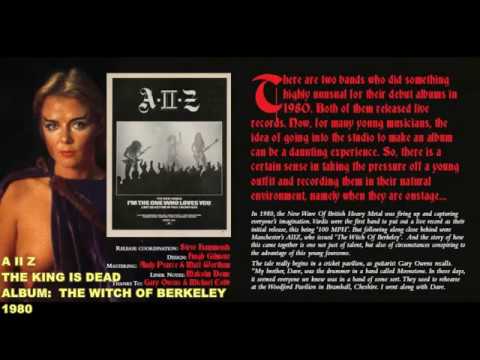
In a cramped rehearsal room on Manchester's Oxford Road, 1979 was shaping up to be a pivotal year for local music. Amidst the DIY ethos and post-punk fervor, a nascent sound began to take hold – one that would soon give birth to a new wave of British heavy metal). At its epicenter was A II Z, an outfit formed by guitarist Gary Owens with a shared vision: to create something raw, unbridled, and uniquely English.
Their early days are well-documented in the archives, where grainy footage captures the band's frenetic energy. In one clip, David Owens' vocals soar above the din of Cam Campbell's thumping bassline and Karl Reti's pounding drums, as Gary Owens' guitar work weaves a complex tapestry of riffs. The raw power is almost overwhelming – a testament to the band's unpolished yet instinctual approach.
A II Z's significance lies not just in their contribution to the NWOBHM movement but also in their role as precursors to the genre's more refined, commercial incarnations. By pushing the boundaries of what was considered acceptable in British metal at the time, they paved the way for future innovators like Iron Maiden and Judas Priest.
Gary Owens' guitar work, in particular, warrants attention. His innovative use of harmonics and chromaticism added a layer of sophistication to A II Z's sound, setting them apart from their NWOBHM contemporaries. This is evident in the band's live performances, where Owens' mastery of his instrument was matched only by his stage presence.
Despite their influence, A II Z's own trajectory was short-lived. Internal conflicts and creative differences eventually led to the band's demise, leaving behind a scattered discography and whispers of what could have been. Their legacy, however, endures through the countless bands they inspired – a testament to the power of raw talent and unwavering dedication.
In the annals of metal history, A II Z occupy a unique space – one that is both nostalgic and forward-thinking. As we revisit their early days in Manchester, it becomes clear that their impact extends far beyond the confines of NWOBHM. They were part of a larger movement, one that sought to redefine the boundaries of heavy music and push its creative possibilities.
The band's influence can be seen in the work of later metal acts, who drew upon A II Z's innovative spirit and willingness to experiment. This is particularly evident in the guitar work of bands like Diamond Head and Angel Witch, both of whom cited A II Z as a key inspiration.
Despite their relatively brief existence, A II Z left an indelible mark on British heavy metal. Their influence can be heard in the more refined, commercial incarnations of the genre – from Iron Maiden's epic song structures to Judas Priest's soaring vocal harmonies. By pushing the boundaries of what was considered acceptable at the time, they helped shape the sound of a generation.
In the years since their demise, A II Z has become something of a cult phenomenon – a band whose influence is felt but rarely acknowledged. Their music remains a staple of underground metal circles, where it's cherished for its raw energy and innovative spirit. As we revisit their early days in Manchester, it becomes clear that A II Z's significance extends far beyond the confines of NWOBHM.
Their legacy serves as a reminder that even the most fleeting moments can have a profound impact on the course of music history. In the case of A II Z, their influence is a testament to the power of raw talent and creative vision – a shining example of what can be achieved when individuals come together with a shared purpose.
Curated from public records and music databases.