0 views
Share this clip
Know someone who'd love this clip?
Share it with friends and fellow fans.
Share this clip
Know someone who'd love this clip?
Share it with friends and fellow fans.
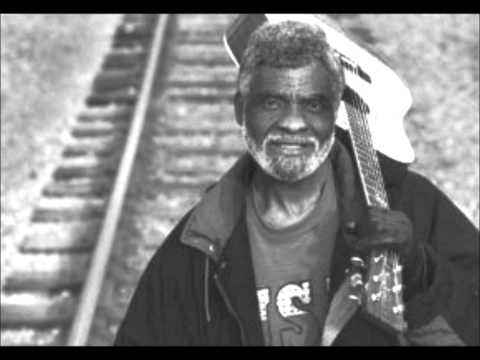
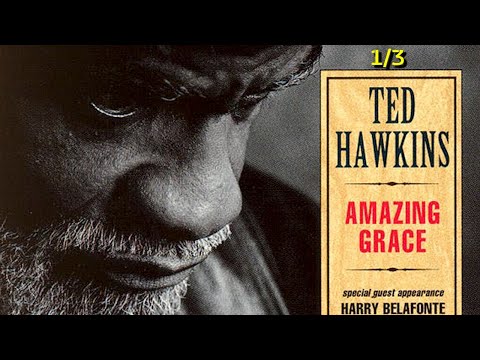
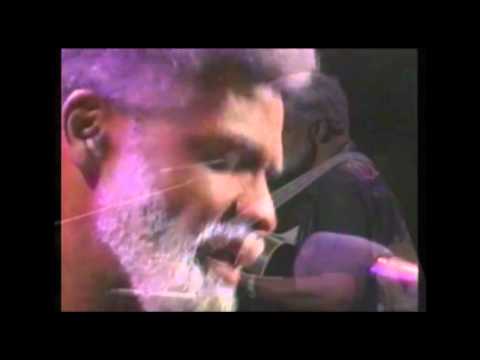
Ted Hawkins (October 28, 1936 -- January 1, 1995) was an American singer-songwriter. He was born in Biloxi, Mississippi, United States. Hawkins was an enigmatic figure through most of his career; he split his time between his adopted hometown of Venice Beach, California where he was a mostly anonymous street performer, and Europe, where he and his songs were better known and well received in clubs and small concert halls. Life and career Born into a poor family in Mississippi, Hawkins lived a difficult early life, ending up at a reform school by age 12, and drifting, hitching, and stealing his way across the country for the next dozen years, earning several stays in prison including a three-year stint for stealing a leather jacket as a teenager. Along the way, he picked up a love of music and a talent for the guitar. "I was sent to a school for bad boys called Oakley Training School in 1949", he wrote in a brief piece of autobiography . "There I developed my voice by singing with a group that the superintendent's wife had got together". After reform school, he ended up in the state penitentiary and was released at 19. "Then I heard a singer whose name was Sam Cooke. His voice did something to me." For the next ten years or so he drifted in and out of trouble around the country, living in Chicago, Buffalo, Philadelphia, and Newark. In the middle of the mid 1960s folk music boom Hawkins set out for California to try for a professional singing career. He recorded several tunes without commercial success, worked at odd jobs, and took up busking along the piers and storefronts of Venice Beach as a way to supplement his income. Hawkins made ends meet by developing a small following of locals and tourists who would come to hear this southern black man, sitting on an overturned milk-crate, play blues and folk standards as well as a few original tunes in his signature open guitar tuning and raspy vocal style. Hawkins claimed the rasp in his voice came from the damage done by years of singing in the sand and spray of the boardwalk. A series of record producers and promoters would "discover" Hawkins over the years, only to be thwarted by circumstance and Hawkins' unconventional approach to life. The first of these was musicologist and blues producer Bruce Bromberg who approached Hawkins about a recording contract in the early 1970s. Hawkins tentatively agreed and recorded some dozen songs for Bromberg but again got into trouble and spent much of the next decade in jail and addicted to heroin. Bromberg lost contact until 1982, when he re-located Hawkins and got him to agree to release the previously-recorded songs as an album, Watch Your Step, which was released on Rounder Records. This debut album was a commercial failure but received rave reviews (notably a rare 5-star rating in Rolling Stone). Following the release of the album, Hawkins dropped out of sight again for a time, re-uniting with Bromberg in 1985 for a second album, entitled Happy Hour. This album featured more original tunes from Hawkins and was again ignored in the U.S.; however it won acclaim and sales in Europe. Andy Kershaw encouraged Hawkins to come to the United Kingdom, and he moved to Bridlington in 1986 and enjoyed his first taste of real musical success, touring Europe and Asia. During this period Hawkins stayed largely out of trouble and refined his musical style: a mixture of folk, country, deep southern spirituals, and soul music. Hawkins' music was informed by but did not resemble blues music (Hawkins himself claimed he could not play the blues because his damaged fretting hand—he wore a leather glove to protect his fingers—would not allow him to bend notes). Despite his recognition and fame in Europe, Hawkins was restless and moved back to California in the early 1990s and again took on the role of a street performer. Several musicians and promoters encouraged Hawkins to record, but he did so only on occasion and without much enthusiasm, until he agreed to record a full album for Geffen Records and producer Tony Berg. For this first major-label release, titled The Next Hundred Years, Berg added session musicians to Hawkins' typical solo guitar-and-vocal arrangmements for the first time, and brought national attention and respectable sales to Hawkins (though Hawkins, in typically contrary fashion, claimed to dislike the result, preferring his unaccompanied versions). Hawkins began to tour on the basis of this success, commenting that he had finally reached an age where he was glad to be able to sing indoors, out of the weather, and for an appreciative crowd. Hawkins, however, died of a stroke at the age of 58, just a few months after the release of his breakthrough recording. http://www.the-bunker.org/ted/ted.html fan website
Ted Hawkins was an American singer-songwriter born in Biloxi, Mississippi. He split his time between his adopted hometown of Venice Beach, California, where he was a mostly anonymous street performer, and Europe and Australia, where he and his songs were better known and well received in clubs and small concert halls.
More about Ted Hawkins→Added
 5:22
5:22 5:41
5:41Lonzo and Oscar
 4:37
4:37Lonzo and Oscar
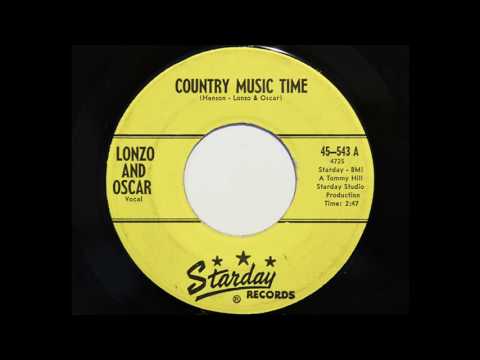 2:51
2:51Lonzo and Oscar