0 views
Share this clip
Know someone who'd love this clip?
Share it with friends and fellow fans.
Share this clip
Know someone who'd love this clip?
Share it with friends and fellow fans.
RIP!! Sarah Jordan Powell Last Interview Before Her Death Sara Jordan Powell stands as one of gospel music’s towering figures, though her legacy has often been overlooked in major histories of the genre. Despite releasing classic albums in the 1970s under the guidance of gospel patriarch James Cleveland, performing at the White House for two presidents, and even recording a remarkable duet with Ray Charles, her name is missing from the works of several major gospel historians. Only Bil Carpenter’s Uncloudy Days fully acknowledges her iconic status within the COGIC denomination, praising her semi-operatic soprano and soaring vocal gymnastics that made her beloved nationwide. Born in Houston, Texas, on 6 October 1938, Sara grew up deeply rooted in church life. Her father pastored Turner Memorial COGIC, and by age two she was already singing publicly, performing “I Need Thee, O I Need Thee.” That same year, Bishop C. H. Mason lifted her in his arms and prayed a prayer of dedication over her life—an anointing she believed stayed with her forever. Her father later formed a ministry group called the Jordan Family, traveling across Texas in an unusually long limousine that embarrassed the children but made their ministry unforgettable. After finishing high school, Powell attended Texas Southern University, majoring in English and minoring in history and drama. Once she graduated, she spent a summer in Chicago with her sister and brother-in-law, eventually accepting a position at Inglewood High School. During her time in Chicago, she sang at various churches, quickly earning a reputation for her extraordinary soprano voice. Word of her talent spread through the city’s gospel network. Her rising acclaim soon caught the attention of Sallie Martin, the legendary gospel pioneer who had worked closely with Thomas A. Dorsey and composer Kenneth Morris. Martin invited Sara to visit, asked her to sing, and was immediately impressed. When the school year ended, Martin invited her to join her touring group. During the 1964–65 season, Powell toured the East Coast in a station wagon with the Sallie Martin Singers, which included pianist Kenneth Wood and singers Eugene Smith and Cora Martin. Despite Sallie Martin’s famously sharp tongue, Powell had no difficulty working with her. Drawing on lessons from her pastor father about adapting to different personalities, Sara formed a smooth and respectful working relationship with the outspoken gospel matriarch. After her time with Martin, she joined the Chicago-based Voices of Melody under the direction of Dr. Charles Clency, further deepening her presence within the city’s vibrant gospel community. While living in Chicago, Sara met and married her husband, but family responsibilities soon pulled them back to Houston. After her father fell ill and passed away, Powell returned home to help her mother manage the church’s affairs. She resumed teaching in the Houston school system, but her vocal gift quickly made her a local sensation. A student who heard her sing in church requested she perform at their school’s graduation, and after that performance, invitations poured in from across the city—so many that Powell eventually considered leaving teaching to focus on her growing ministry in gospel music. Rest in power queen
Thomas Andrew Dorsey was an American musician, composer, and Christian evangelist influential in the development of early blues and 20th-century gospel music. He penned 3,000 songs, a third of them gospel, including "Take My Hand, Precious Lord" and "Peace in the Valley". Recordings of these sold millions of copies in both gospel and secular markets in the 20th century.
More about Thomas A. Dorsey→Added
 0:29
0:29Elvis Costello
 30:46
30:46Elvis Costello
 3:34
3:34Elvis Costello
![Thumbnail for Elvis Costello • Lip Service • 1977 [Reelin' In The Years Archive] by Elvis Costello](https://img.youtube.com/vi/f3wwWhRpNjk/hqdefault.jpg) 3:04
3:04Elvis Costello
 3:15
3:15Thomas A. Dorsey
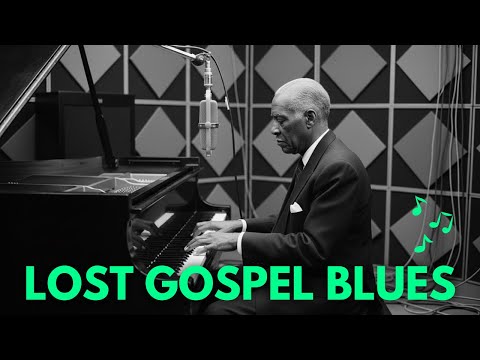 49:12
49:12Thomas A. Dorsey
 2:39
2:39Thomas A. Dorsey
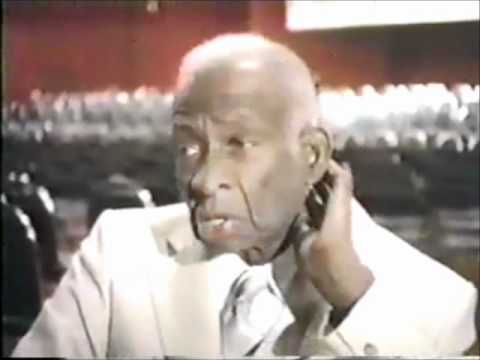 3:06
3:06Thomas A. Dorsey