0 views
Share this clip
Janet Jackson - The Pleasure Principle (5.1 surround sound mix)
Know someone who'd love this clip?
Share it with friends and fellow fans.
Share this clip
Know someone who'd love this clip?
Share it with friends and fellow fans.
I created this 5.1 mix from lossless multi-tracks/stems. Like all other online platforms, YouTube streams surround sound music at a low bitrate so that the file size is usually 10-times smaller than the original lossless audio. If you would like to hear my surround mixes as lossless and/or a more immersive format, such as 7.1 or Dolby TrueHD Atmos, you can join my free Telegram here: https://t.me/SweetDiscreteMusic/188 ___ "The Pleasure Principle" is a song recorded by American singer Janet Jackson for her third studio album, Control (1986). A&M Records released it as the sixth single from Control on May 12, 1987. Written and produced by Monte Moir, with co-production by Jackson and Steve Wiese, the song is an "independent woman" anthem about taking control of a personal relationship by refusing to settle for loveless materialism. Musically, "The Pleasure Principle" is an R&B song built around a dance-pop beat. The photograph for the single cover was shot by David LaChapelle. The song has been included in two of Jackson's greatest hits albums, Design of a Decade: 1986–1996 (1995) and Number Ones (2009). After arranging a recording contract with A&M Records in 1982 for a then 16-year-old Jackson, her father Joe oversaw the entire production of her eponymous debut studio album and its follow-up, Dream Street (1984). In 1985, Jackson subsequently fired her father as her manager and hired John McClain, then A&M's senior vice president of artists and repertoire and general manager. Commenting on the decision, Jackson stated, "I just wanted to get out of the house, get out from under my father, which was one of the most difficult things that I had to do, telling him that I didn't want to work with him again." McClain subsequently introduced her to the songwriting and production duo Jimmy Jam and Terry Lewis, former Prince associates and ex-members of The Time. "The Pleasure Principle" was the only song not to be written or produced by Jam and Lewis. Instead, it was penned by Monte Moir, The Time's keyboardist. At the time, he was working with his old band colleagues at Flyte Tyme recording studios in Minneapolis when they were offered the project for the album with Jackson, and Moir was asked to come up with some demos. He did not have a concept or title for the song at first, which was not uncommon for the producer. According to Moir, "As verses started to take shape, I had to figure out what it was I was trying to say, I just stumbled into the title and Freudian concept (of the pleasure principle) and realized it fit." After songwriting was done, Moir recorded it "fairly quickly" as there were a lot of projects going on at one studio. Written and produced by Moir, "The Pleasure Principle" is lyrically about the singer taking control of a personal relationship by refusing to settle for loveless materialism, while Jackson sings, "What I thought was happiness was only part time bliss". The song parallels a fleeting love affair with a ride in a limousine. It mentions a "Big Yellow Taxi", alluding to the 1970 Joni Mitchell song, which Jackson would later sample on her single "Got 'til It's Gone" from her sixth studio album The Velvet Rope (1997). Sal Cinquemani from Slant Magazine noted that musically "synths bump like busted shock absorbers and the electric guitar screeches like rubber on pavement". "The Pleasure Principle" received positive reviews from music critics and was a modest commercial success. In the United States, it peaked at number 14 on the Billboard Hot 100, becoming her first single to not reach the top-ten since "What Have You Done for Me Lately". However, the single peaked at number one on the Dance Club Songs and Hot R&B/Hip-Hop Songs charts.
In mathematics, sine and cosine are trigonometric functions of an angle. The sine and cosine of an acute angle are defined in the context of a right triangle: for the specified angle, its sine is the ratio of the length of the side opposite that angle to the length of the longest side of the triangle (the hypotenuse), and the cosine is the ratio of the length of the adjacent leg to that of the hypotenuse. For an angle θ {\displaystyle \theta } , the sin...
More about Sine→Added
 5:01
5:01lovin', Midnight, Somebody to Love
 3:51
3:51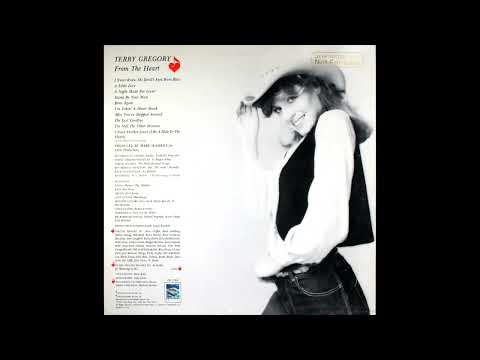 2:14
2:14Terry Gregory
 2:19
2:19Terry Gregory