0 views
Share this clip
The Mills Brothers with Louis Armstrong - The Old Folks At Home (1937)
Know someone who'd love this clip?
Share it with friends and fellow fans.
Share this clip
Know someone who'd love this clip?
Share it with friends and fellow fans.
Performed by: The Mills Brothers with Louis Armstrong Full Song Title: The Old Folks At Home Recorded in: New York, June 29, 1937 Flip side of: https://youtu.be/2kkxeyNbHPc The Mills Brothers, John Charles (b. Oct. 19, 1910, Piqua, Ohio, U.S.—d. Jan. 24, 1936, Bellefontaine, Ohio), Herbert (b. April 2, 1912, Piqua—d. April 12, 1989, Las Vegas, Nev.), Harry (b. Aug. 19, 1913, Piqua—d. June 28, 1982, Los Angeles, Calif.), and Donald (b. April 29, 1915, Piqua—d. Nov. 13, 1999, Los Angeles), American vocal quartet that was among the most unique and influential in the history of both jazz and mainstream popular music. The Mills Brothers began as a barbershop quartet—which was perhaps only natural, as their father, John H. Mills (1882–1967), owned a barbershop. They gave their first public performances in variety shows on the radio in Cincinnati, Ohio. In about 1930 they moved to New York City, where they became the first African American singers to have their own national radio show. Billed as “Four Boys and a Guitar” and accompanied only by brother John’s guitar, they could sound like a full jazz band, particularly on such numbers as “Tiger Rag,” “St. Louis Blues,” and “Bugle Call Rag.” Each brother specialized in an “instrument”: they imitated two trumpets, a trombone, and a tuba. They were also a hit on records and in live performances, and they appeared in several films, including The Big Broadcast (1932) and Broadway Gondolier (1935). John C. Mills’s sudden death in 1936 was a blow to the close-knit siblings, and they almost dissolved the act. Fortunately, their father took over his son’s role, and the group continued without any loss in popularity (although it was necessary to employ an outside guitarist). They continued mostly in the hot-jazz style, with a strong emphasis on scat singing and instrumental imitations, and made records with such artists as Louis Armstrong, Duke Ellington, Ella Fitzgerald, and the Boswell Sisters. The Mills Brothers had their biggest hit in 1943 with “Paper Doll,” which sold more than six million records and was also a best seller as sheet music. In the mid-1940s they dropped the instrumental imitations and became a more-conventional vocal group, backed by a regular rhythm section or an orchestra. Their later hits included “You Always Hurt the One You Love” (1944), “Glow Worm” (1952), and “Opus One” (1952). John H. Mills retired in 1956, and the brothers continued as a trio, recording and performing regularly into the 1970s. The act came to an end after Harry’s death in 1982, but Donald Mills in his last years performed the group’s hits with his son, John H. Mills II. Their sound became identified with an era, and many of their recordings were later used on the sound tracks of movies, including Raging Bull (1980), Pearl Harbor (2001), and Being Julia (2004). Louis Daniel Armstrong (born August 4, 1901 — died July 6, 1971) was a masterful trumpet player and beloved entertainer in the 20th century. He rose above the hardship and challenges of poverty from a young age and the racism he was subjected to throughout his life to become one of the most influential musicians of his genre. He played a key role in the development of one of the early 20th century's most important new styles of music: jazz. Though he mostly kept quiet about racial discrimination, much to the disapproval of fellow Black Americans, Armstrong sparked controversy when he spoke out publicly against segregation in Little Rock, Arkansas, in 1957. Armstrong's inventiveness and improvisational techniques—along with his energetic, dazzling style—have influenced generations of musicians. One of the first to perform scat-style singing, he is also well-known for his distinctive, gravelly singing voice. Armstrong wrote two autobiographies, becoming the first Black jazz musician to write an autobiography, and appeared in more than 30 films. I hope you enjoy this as much as I have. Best wishes, Stu ______________________ Please Note: I do not claim copyright or ownership of the song played in this video. All copyrighted content remains property of their respective owners.
Originating in vocal jazz, scat singing or scatting is vocal improvisation with wordless vocables, nonsense syllables or without words at all. In scat singing, the singer improvises melodies and rhythms using the voice solely as an instrument rather than a speaking medium. This is different from vocalese, which uses recognizable lyrics that are sung to pre-existing instrumental solos.
More about Scat singing→Added
 0:29
0:29Elvis Costello
 30:46
30:46Elvis Costello
 3:34
3:34Elvis Costello
![Thumbnail for Elvis Costello • Lip Service • 1977 [Reelin' In The Years Archive] by Elvis Costello](https://img.youtube.com/vi/f3wwWhRpNjk/hqdefault.jpg) 3:04
3:04Elvis Costello
 13:06
13:06Red (band), Live (band), Jazz band, The La's, Scat singing
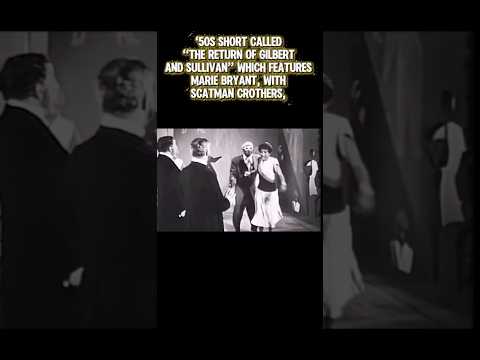 0:31
0:31Scat singing
 1:50
1:50Scat singing
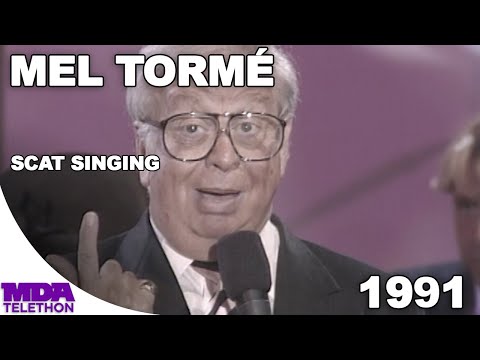 6:37
6:37Scat singing