0 views
Share this clip
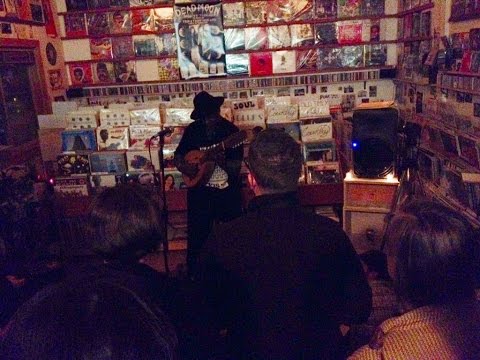
Ural Thomas - "Pain is the Name of Your Game" - Feels Like Home #38
Know someone who'd love this clip?
Share it with friends and fellow fans.
Share this clip
Know someone who'd love this clip?
Share it with friends and fellow fans.
Intothewoods.tv Directed by Matthew Gamlen Audio by Jeff Hylton Simmons Produced by Hannah Gregg Camera by Rodrigo Melgarejo and Hannah Gregg Words by Matt Stangel Photos by Hannah Gregg and Rodrigo Melgarejo I don't know it, walking through the living room's dim television light. At the end of the tunnel is The House of Entertainment. What I do know is that this is old-time R&B singer Ural Thomas' place, and that Into The Woods was called here by local history buffs and cultural visionaries the Dill Pickle Club. The plan is to film Ural playing "Pain Is The Name of Your Game," a big band, deep soul cut originally recorded back in the 1960s. Ural and his wife show us through the muted front house. Exiting the kitchen, we arrive in a long back room full of instruments. A shower curtain with a photo-realistic beach scene hangs over the windows. Oddball decorations mingle with furniture and scattered gear. What looks like a velvet painting of Napoleon overlooks an unironic motivational poster of a lion prowling twin mountain peaks. An image of the Beatles is bordered by one of Bruce Lee. Nearby, a string of white lights corral a display of unframed photographs. After we load in, details of our session are ironed on the fly. "I can play it on guitar," offers Ural, "or I could do it on keyboard." The keyboard version is briefly weighed against an a cappella rendition, and Ural settles on guitar and voice. He wipes the dust from an old acoustic and corrects the strings by ear, bending the notes into a slightly imperfect, traditional tuning. Antique stage lights point from the ceiling to the stool that Ural will later perform from. Audio cables hang from exposed beams and nest on the floor. Ural is quick to tell us about the room's history. It's the aforementioned House of Entertainment, a practice space and social center, as well as stage to weekly Sunday jam sessions that've been happening since the 60s, back when Ural first moved in. To understand the significance of such a room, you have to imagine a time when venue real estate was limited, local record labels were few, and getting your music in front of people-- especially as an R&B or soul artist-- was no small feat. Ural knew the realities of the music industry better than most. After singing in churches and street-performing line-ups "as a kid," as he puts it, he recorded a few songs with a doo-wop group called the Montereys in the 1950s, and soon after left Portland's limited opportunities for greener, urban pastures. A good handful of 45s were recorded in the post-Montereys years (mostly under other artist's names), and Ural began sharing studio sessions with members of The Supremes, Quincy Jones' band, and others, while opening for international names like Mick Jagger, Stevie Wonder, and Otis Redding. Things were on the up and up. In Seattle circa the late 1960s, Ural was posed to make his break, but a longtime friend and collaborator by the name of Ron Buford took his recordings "down to Hollywood" and sold them as his own. There was no recourse, no way to claim ownership of the songs. With a stabbed back, Ural worked the national circuit-- doing stints in cities from LA to New York-- and after opening for Otis Redding at the Apollo Theater, he met his manager in Cincinnati. Things got weird, the aforementioned manager got greedy, and Ural headed back West on a borrowed train ticket. He landed in the same North Portland neighborhood he'd lived in since 1955, quietly tending industry wounds. The House of Entertainment, a name originally given to a club in Seattle back in the 20s, took new roots and launched into full swing. The Sunday free sessions became a popular cornerstone. People of all sorts found their way to the room. Ural tells stories about dropping acid with Owsley Stanley (the famed Grateful Dead sound engineer and instrumental figure of the even more famed "Acid Tests") and describes it as a place where "nobody ever fought, like the Garden of Eden." It's unclear as to who all played music in the room or crashed in the house, and the reel-to-reel recordings that captured the happenings have been gone since 1974, when the original space burned down in a mysterious fire. The current House of Entertainment has been in a state of construction ever since, and the rebuilding efforts are nothing short of incredible. The brief details: After working days as a bellhop downtown, Ural collected discarded building materials on his walks home. The scraps accumulated to a living space, but in 1977 the city bulldozed The House for code violations. A back and forth ensued-- bulldozing and rebuilding and bulldozing again-- until 1979, when Ural was granted building and plumbing permits, as well as a deed. From the piecemeal drum kit down to the recycled concrete floors, it's a salvaged landscape. Continued at Intothewoods.tv
Ural Thomas is an American soul music singer. While Thomas has made music for over fifty years, his public performances span two eras: the 1950s through the 1960s, and from 2013 through the present as Ural Thomas and the Pain.
More about Ural Thomas→Added

John Lennon
 8:57
8:57Mark Dolfen
 6:42
6:42Mark Dolfen
 15:59
15:59Mark Dolfen