About This Footage
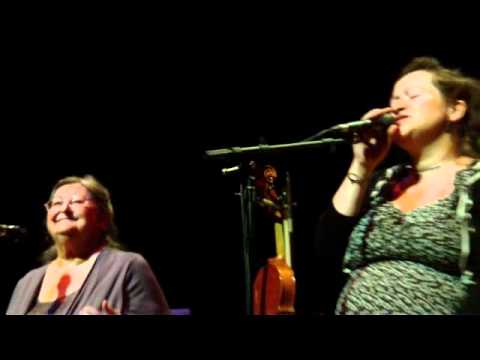
In the dimly lit confines of McCabe's, a legendary music venue in Santa Monica, California, Eliza Carthy stood poised on stage, her fiddle at the ready. It was April 4th, 2015, and she was about to deliver a performance that would leave an indelible mark on those who witnessed it. "Died for Love" is not just any song; it's a traditional English folk ballad, one that Carthy has made her own with her unique fiddle-singing style.
At the time of this recording, Eliza Carthy was already an established figure in the British folk scene. As the daughter of Martin Carthy and Norma Waterson, she had grown up surrounded by music, learning from some of the most respected names in the genre. Her own career, marked by a string of critically acclaimed albums and tours, had cemented her status as a leading light in contemporary folk. Yet, despite her reputation, "Died for Love" remains a rare gem in Carthy's live discography.
This footage is significant because it captures Eliza Carthy at the height of her powers. The performance is a masterclass in nuance and restraint, with Carthy coaxing every last drop of emotion from the traditional melody. Her fiddle playing is characterized by its precision and expressiveness, perfectly complemented by her clear, soaring vocals. As she sings, her voice rises above the accompaniment like a gentle breeze on a summer's day, imbuing the song with a sense of longing that's impossible to shake.
What makes this clip truly remarkable, however, is the context in which it was recorded. McCabe's has been a hub for folk music enthusiasts since the 1960s, and its intimate setting allows artists to connect with their audience on a deeply personal level. The video itself, captured by Wayne Griffith and Sam Epstein, captures every moment of Carthy's performance, from her initial hesitation to the final notes of the song. It's a testament to the enduring power of folk music, which continues to inspire new generations of musicians and fans alike.
Watching "Died for Love" is like stepping into a time capsule, one that transports you to a world where traditional music was still at the forefront of popular culture. As Carthy's voice soars through the song's soaring melody, it becomes clear why she's been hailed as a fiddle-singing pioneer. Her unique blend of folk and classical influences has created something entirely new, yet utterly authentic.
This clip is more than just a live performance; it's a snapshot of Eliza Carthy at her creative peak. It's a reminder that even in the digital age, there's still a place for traditional music to thrive. And as the final notes fade away, leaving only the echoes of Carthy's haunting vocals, you're left with an indelible impression – one that will linger long after the video has ended.
Curated from public records and music databases.