0 views
Share this clip
Know someone who'd love this clip?
Share it with friends and fellow fans.
Share this clip
Know someone who'd love this clip?
Share it with friends and fellow fans.
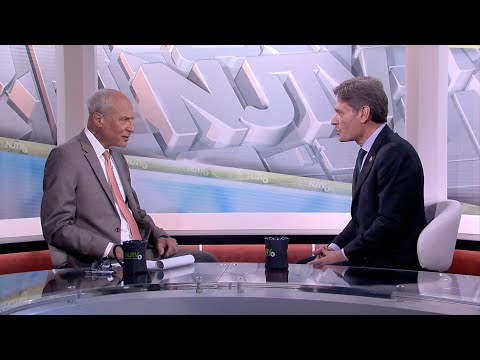
Big Think Interview with Tom Malinowski New videos DAILY: https://bigth.ink/youtube Join Big Think Edge for exclusive videos: https://bigth.ink/Edge ---------------------------------------------------------------------------------- A conversation with the Washington Advocacy Director for Human Rights Watch. ---------------------------------------------------------------------------------- Tom Malinowsk: Tom Malinowski, Washington advocacy director for Human Rights Watch and an expert in United States foreign policy, is responsible for the organization's overall advocacy efforts with the US government. He frequently appears as a radio, television, and op-ed commentator on US human rights policy. Before joining Human Rights Watch, Malinowski was special assistant to President Bill Clinton and senior director for foreign policy speechwriting at the National Security Council. Before working in the White House, he was a speechwriter for Secretaries of State Christopher and Albright and a member of the State Department's policy planning staff. Malinowski holds degrees in political science from the University of California, Berkeley and Oxford University. ---------------------------------------------------------------------------------- TRANSCRIPT: Question: Why did Obama renege on his promise of transparency on torture? Tom Malinowski: Well we had transparency on some things and none on others. I think, very importantly, on the positive side, the administration released a number of Justice Department memos that laid out in awful, vivid excruciating detail the kinds of torture techniques that the Bush justice department thought were within the law. How many times you could water board someone? How many hours and days you could keep somebody awake before it constituted in their minds, “Torture”, and I think, substantially, those were the most important things to reveal. The pictures were a very difficult decision. You have a new President but an old national security establishment in which a lot of folks make very powerful and very scary arguments to the President of the United States about the damage that may be done by releasing something, those photos in that case. And you know the President is in charge in some ways, but he has to take into account the views of this giant ship of state that he is trying to manage and steer forward and so he made a decision in that case not to release those photo,s which I thought was not the right decision. But again, I think it’s too early to say that they are absolutely committed to transparency and it’s too early to say that they’ve broken their promise. They’ve made some interesting decisions on both sides of the line. Question: Does classifying the photos legitimately save us from embarrassment? Tom Malinowski: Well, I don’t think that anything should be classified solely to protect the government or even the country from embarrassment. In other words, if something was done that was wrong, that most people around the world would consider wrong, it shouldn’t be classified simply to avoid getting people angry at us. That’s under the law, it’s not just my opinion—I think under the law that’s not a sufficient reason to classify something. Now, President Obama, if he were here, would probably argue that it’s more than just anger; what he feared was the kind of anger that leads to violence against the American troops in places that are already tremendously dangerous for them, including Iraq and Afghanistan. And I respect that judgment: it was the view of many people in the military. I don’t think that it was correct, though. I don’t think there’s anything that in those photos that people haven’t seen in the photos that were originally released after the Abu-Ghraib scandal. I think the reaction among those people in Iraq would have been, “Well we’ve seen that already and what matters is what is the United States doing about this.” And so in a way that most important question in their minds is what ought to be the most important question in our minds. What are we doing about these abuses that happened in the past? Is there going to be a sense of closure? Is there going to be any accountability? Going forward, can we be certain that these things will never happen again? Those are the right questions substantively—they’re also the main questions that need to be answered to win back the good will of people around the world. Question: What are the chances that innocent people are in Guantanamo? Read the full transcript at https://bigthink.com/videos/big-think-interview-with-tom-malinowski/
Tomasz Pobóg Malinowski ( MAL-in-OW-skee, Polish: [ˈtɔmaʂ ˈpɔbuk maliˈnɔfskʲi]; born September 23, 1965) is an American politician and former diplomat who served from 2019 to 2023 as the U.S. representative from New Jersey's 7th congressional district. A Democrat, he served as Assistant Secretary of State for Democracy, Human Rights, and Labor in the Obama administration. A vocal opponent of Donald Trump, Malinowski was first elected in 2018, defeating Republican incumbent Leonard Lance by five ...
More about Tom Malinowski→Added