0 views
Share this clip
Know someone who'd love this clip?
Share it with friends and fellow fans.
Share this clip
Know someone who'd love this clip?
Share it with friends and fellow fans.
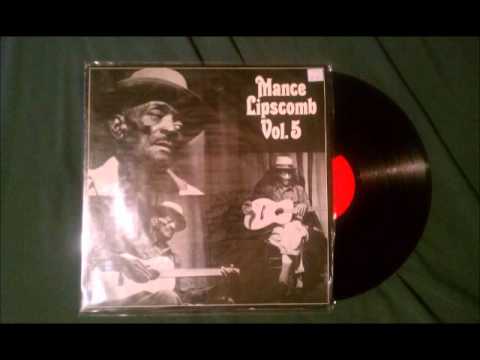
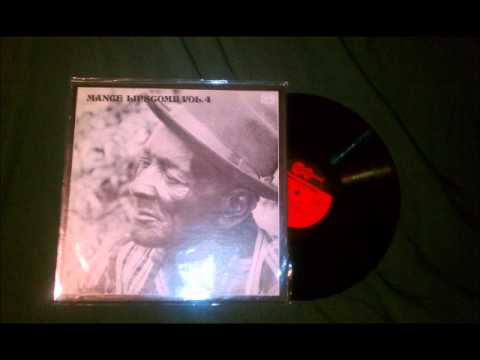
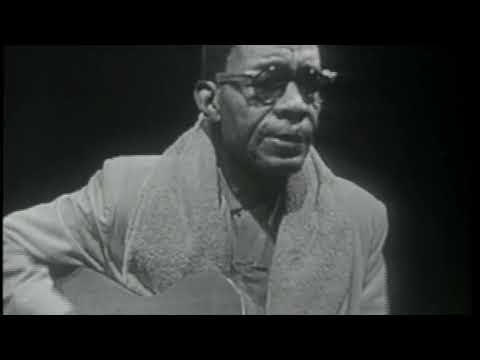
Edward James "Son" House Jr. (March 21, 1902 – October 19, 1988) was an American delta blues singer and guitarist, noted for his highly emotional style of singing and slide guitar playing. After years of hostility to secular music, as a preacher and for a few years also working as a church pastor, he turned to blues performance at the age of 25. He quickly developed a unique style by applying the rhythmic drive, vocal power and emotional intensity of his preaching to the newly learned idiom. In a short career interrupted by a spell in Parchman Farm penitentiary, he developed his musicianship to the point that Charley Patton, the foremost blues artist of the Mississippi Delta region, invited him to share engagements and to accompany him to a 1930 recording session for Paramount Records. Issued at the start of the Great Depression, the records did not sell and did not lead to national recognition. Locally, House remained popular, and in the 1930s, together with Patton's associate Willie Brown, he was the leading musician of Coahoma County. There he was a formative influence on Robert Johnson and Muddy Waters. In 1941 and 1942, House and the members of his band were recorded by Alan Lomax and John W. Work for the Library of Congress and Fisk University. The following year, he left the Delta for Rochester, New York, and gave up music. In 1964, a group of young record collectors discovered House, whom they knew of from his records issued by Paramount and by the Library of Congress. With their encouragement, he relearned his repertoire and established a career as an entertainer, performing for young, mostly white audiences in coffeehouses, at folk festivals and on concert tours during the American folk music revival, billed as a "folk blues" singer. He recorded several albums, and some informally taped concerts have also been issued as albums. House died in 1988.In 2017, his single "Preachin' the Blues" was inducted in to the Blues Hall of Fame. Mance Lipscomb (April 9, 1895 – January 30, 1976) was an American blues singer, guitarist and songster. He was born Beau De Glen Lipscomb near Navasota, Texas. As a youth he took the name Mance (short for emancipation) from a friend of his oldest brother, Charlie. His father was an ex-slave from Alabama; his mother was half Native American (Choctaw).Lipscomb spent most of his life working as a tenant farmer in Texas. He was discovered and recorded by Mack McCormick and Chris Strachwitz in 1960, during revival of interest in the country blues. He recorded many albums of blues, ragtime, Tin Pan Alley and folk music (most of them released by Strachwitz's Arhoolie Records),singing and accompanying himself on acoustic guitar. Lipscomb had a "dead-thumb" finger-picking guitar technique and an expressive voice. He honed his skills by playing in nearby Brenham, Texas, with a blind musician, Sam Rogers. His first release was the album Texas Songster (1960). Lipscomb performed songs in a wide range of genres, from old songs like "Sugar Babe" (the first he ever learned) to pop numbers like "Shine On, Harvest Moon" and "It's a Long Way to Tipperary". He died in Navasota in 1976, two years after suffering a stroke.
American blues guitarist, singer and songster. He was born near Navasota, Texas on April 09, 1895. Took the name Mance (short for emancipation) from a friend of his oldest brother, Charlie as a young man. Died January 30, 1976 in Navasota, Texas after suffering a stroke two years prior.
More about Mance Lipscomb→Added
 5:22
5:22 5:41
5:41Lonzo and Oscar
 4:37
4:37Lonzo and Oscar
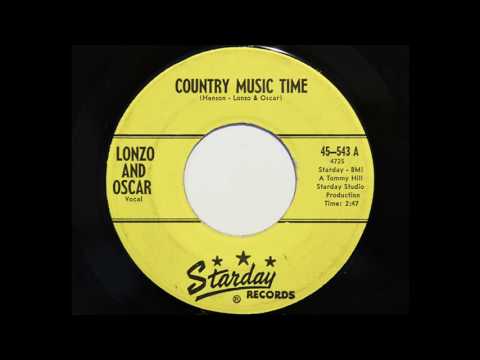 2:51
2:51Lonzo and Oscar