0 views
Share this clip
Know someone who'd love this clip?
Share it with friends and fellow fans.
Share this clip
Know someone who'd love this clip?
Share it with friends and fellow fans.
The Supremes were an American female singing group and the premier act of Motown Records during the 1960s. Founded as the Primettes in Detroit, Michigan, in 1959, the Supremes were the most commercially successful of Motown's acts and are, to date, America's most successful vocal Group with 12 number one singles on the Billboard Hot 100.Most of these hits were written and produced by Motown's main songwriting and production team, Holland–Dozier–Holland. At their peak in the mid-1960s, the Supremes rivaled the Beatles in worldwide popularity, and their success made it possible for future African American R&B and soul musicians to find mainstream success. During the mid-1960s, the Supremes achieved mainstream success with Ross as lead singer. In 1967, Motown president Berry Gordy renamed the group Diana Ross & the Supremes, and replaced Ballard with Cindy Birdsong. Ross left to pursue a solo career in 1970 and was replaced by Jean Terrell, at which point the group's name reverted to the Supremes. After 1972, the lineup changed more frequently; Lynda Laurence, Scherrie Payne, and Susaye Greene all became members of the group during the mid-1970s. The Supremes disbanded in 1977 after an 18-year run. Works inspired by the Supremes Several fictional works have been published that are based in part on the career of the group. The 1976 film Sparkle features the story of a Supremes-like singing trio called "Sister & the Sisters" from Harlem, New York. The film's score was composed by Curtis Mayfield, and the soundtrack album by Aretha Franklin was a commercial success. A remake of Sparkle was in development in the early 2000s with R&B singer Aaliyah as the lead, but the project was shelved when Aaliyah died in 2001. A remake of Sparkle eventually was released to film theaters in August 2012. The remake starred Jordin Sparks and Whitney Houston, in her final film role before her death (The film was produced and directed by Salim Akil ). On December 21, 1981, the Tony Award-winning musical Dreamgirls opened at the Imperial Theatre on Broadway and ran for 1,522 performances. The musical, loosely based on the history of The Supremes, follows the story of The Dreams, an all-female singing trio from Chicago who become music superstars. Several of the characters in the play are analogues of real-life Supremes/Motown counterparts, with the story focusing upon the Florence Ballard Effie White. While influenced by the Supremes' and Motown's music, the songs in the play are a broader mix of R&B/soul and Broadway music. Mary Wilson loved the musical, but Diana Ross was reportedly angered by it and refused to see it.The album cover seen in the 2006 film Dreamgirls, left, strongly resembles the 1969 album cover for Diana Ross & the Supremes' Cream of the Crop, right. A film adaptation of Dreamgirls was released by DreamWorks and Paramount Pictures in December 2006. The film contains more overt references to Motown and the Supremes than does the play that inspired it: for example, in the film, many of the Dreams' album covers are identical in design to Supremes album covers, and the Dreams themselves hail from Detroit – not Chicago, as do their Broadway counterparts. AWARDS AND FOLLOWERS The Supremes were twice nominated for a Grammy Award,for Best Rhythm & Blues Recording ("Baby Love", 1965) and Best Contemporary Rock & Roll Group Vocal Performance ("Stop! In the Name of Love", 1966), but never won an award in competition .Three of their songs have been named to the Grammy Hall of Fame: "Where Did Our Love Go" and "You Keep Me Hangin' On" (both 1999) and "Stop! In the Name of Love" (2001). The group's songs "Stop! In the Name of Love" and "You Can't Hurry Love" are among the Rock and Roll Hall of Fame's 500 Songs that Shaped Rock and Roll. The Ross-Wilson-Ballard lineup was inducted into the Rock and Roll Hall of Fame in 1988, received a star on the Hollywood Walk of Fame in 1994, and entered into the Vocal Group Hall of Fame in 1998. In 2004, Rolling Stone placed the group at number 97 on their list of the "100 Greatest Artists of All Time".The Supremes are notable for the influences they have had on the black girl groups who have succeeded them in popular music, such as The Three Degrees, The Emotions, The Pointer Sisters, En Vogue, TLC, Destiny's Child and Cleopatra.
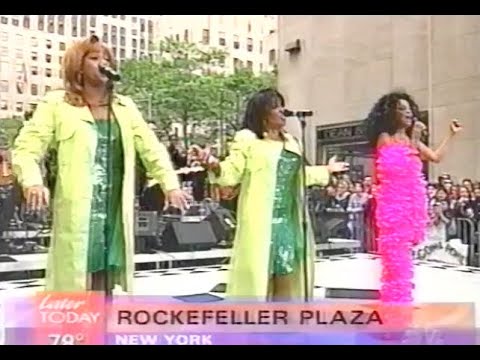
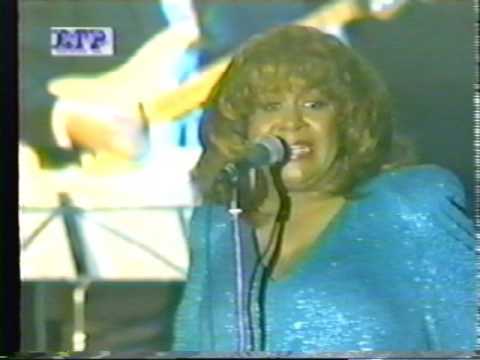
Lynda Laurence (also spelled Lawrence, born Lynda Cheryl Tucker; February 20, 1949) is an American singer. The youngest daughter of Louise and Ira Tucker, a gospel songwriter, producer, and singer, Laurence's siblings are Sundray Tucker and Ira Tucker Jr. Laurence is best known for being a part of two Motown acts: Stevie Wonder's backup group The Third Generation, and a member of the Supremes from April 1972 through October 1973, performing alongside lead singer Jean Terrell and founding member ...
More about Lynda Laurence→Added
 5:22
5:22 5:41
5:41Lonzo and Oscar
 4:37
4:37Lonzo and Oscar
 2:51
2:51Lonzo and Oscar
 3:46
3:46Lynda Laurence
 3:33
3:33Lynda Laurence
 2:45
2:45Lynda Laurence
 1:05
1:05Lynda Laurence