0 views
Share this clip
Know someone who'd love this clip?
Share it with friends and fellow fans.
Share this clip
Know someone who'd love this clip?
Share it with friends and fellow fans.
Far down, down through the city’s great gaunt gut The gray train rushing bears the weary wind; In the packed cars the fans the crowd’s breath cut, Leaving the sick and heavy air behind. And pale-cheeked children seek the upper door To give their summer jackets to the breeze; Their laugh is swallowed in the deafening roar Of captive wind that moans for fields and seas; Seas cooling warm where native schooners drift Through sleepy waters, while gulls wheel and sweep, Waiting for windy waves the keels to lift Lightly among the islands of the deep; Islands of lofty palm trees blooming white That led their perfume to the tropic sea, Where fields lie idle in the dew-drenched night, And the Trades float above them fresh and free. -Claude McKay 12/9/18 Performed by Joshua Rubin: Bass Clarinet Lizzie Burns: Double Bass Sharon Harms: Soprano Voice Thank you George Lewis, Ashkan Behzadi and Sam Yulsman
Added
 11:57
11:57The Red Clay Strays
 5:51
5:51 3:55
3:55Elvis Costello
 1:19
1:19Walker Hayes
This 2018 clip of Dylan DelGiudice's "Subway Wind" is a rare gem that offers a glimpse into the underground music scene at Columbia University. Recorded in 2018, it features an ensemble performance by students Joshua Rubin on bass clarinet, Lizzie Burns on double bass, and Sharon Harms on soprano voice. What makes this footage significant is its documentation of emerging talent in an academic setting.
At the time of filming, DelGiudice was likely a student at Columbia University's School of the Arts, where he would have been surrounded by like-minded individuals pushing the boundaries of classical music. The clip's inclusion in the "Columbia Undergraduate Composition" series suggests that it was part of a larger effort to showcase innovative and experimental works.
The performance itself is noteworthy for its use of unconventional instruments and vocal techniques. Rubin's bass clarinet provides a haunting, mournful sound that echoes through the subway tunnel, while Burns' double bass adds a sense of tension and release. Harms' soprano voice soars above the ensemble, adding an air of vulnerability to the proceedings.
The clip is also notable for its use of spoken word elements, as it incorporates a reading from Claude McKay's poem "Subway Wind". This choice underscores DelGiudice's interest in exploring the intersections between music and literature. By setting the poem to music, he creates a rich tapestry of sound that draws the listener into the world of the poem.
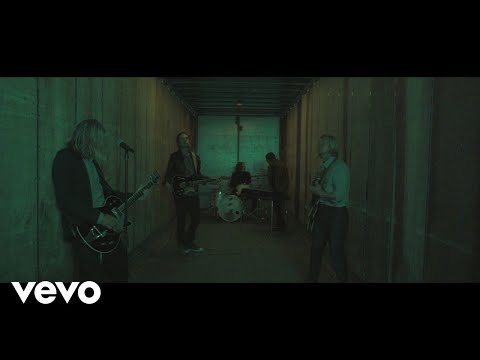
One of the most striking aspects of this clip is its use of space and environment. The performance takes place in a subway tunnel, with the sounds of the city filtering through the walls. This adds an extra layer of depth to the music, as it becomes inseparable from the urban landscape. The camera work is similarly noteworthy, capturing the performers in close-up and long shot, creating a sense of intimacy and immediacy.
What viewers will take away from watching this clip is a sense of the creative possibilities that exist at the intersection of music and academia. DelGiudice's "Subway Wind" is not just a performance, but an experiment in sound and space. By pushing the boundaries of what is possible with classical music, he opens up new avenues for exploration and innovation.
The clip's rarity only adds to its value. As a document of emerging talent, it offers a unique glimpse into the creative process at work. It also highlights the importance of academic institutions as incubators for artistic innovation. By providing a platform for students like DelGiudice to showcase their work, these institutions play a vital role in shaping the future of music.
In watching this clip, viewers will be struck by the raw energy and creativity on display. They will hear a unique blend of classical and experimental influences, with each performer bringing their own distinct voice to the proceedings. And they will see the ways in which DelGiudice uses space and environment to create a rich sonic landscape.
Ultimately, "Subway Wind" is a testament to the power of music to capture the human experience. By setting McKay's poem to music, DelGiudice creates a work that is both deeply personal and universally relatable. It is a reminder that music has the ability to transport us to new places, evoke powerful emotions, and connect us with others in ways that few other art forms can.
The final image of this clip lingers long after the music ends: a shot of the performers standing together, surrounded by the city's soundscape. It is a moment of quiet triumph, a testament to the enduring power of creativity and innovation.
Curated from public records and music databases.
 1:43
1:43J.O.E., Papa Roach, R.E.M., Head, Burns
 5:05
5:05L.A.B., Sine, Burns, Sting
 3:08
3:08L.A.B., Head, Burns
 3:47
3:47R.E.M., T.O.K., Switchfoot, Burns, Jon Foreman, Y&T