DeepCutsArchive
BrowseArtistsTimelineMapDecadesSubmit

DeepCutsArchive

Preserving the footage that shaped music history. Rare clips, studio sessions, and moments lost to time.

BrowseArtistsGenresDecadesLocationsSubmit a ClipAboutContactEditorial PolicyArticles

© 2026 DeepCutsArchive. All footage remains the property of its original creators.

Privacy PolicyTerms of UseSupport

Developed with love as a personal project by Jamie McDonnell

ui-ux-design.comai-consultancy.company
Roots of Blues Kokomo Arnold „Broke Man Blues — DeepCutsArchive
PreviousUse arrow keysNext
0 views
Share this clip

Roots of Blues Kokomo Arnold „Broke Man Blues

Peetie Wheatstraw
1960s1968youtube

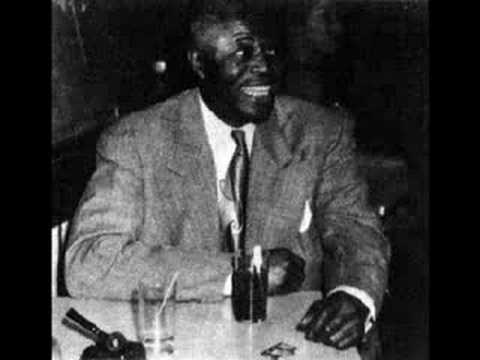
„Broke Man Blues (J. Arnold) Recorded: Chicago, November 3. 1937 Kokomo Arnold (vcl) (g) Peetie Wheatstraw (p) Kokomo Arnold (15 February 1901 — 8 November 1968) was an American blues musician. Born James Arnold in Lovejoy's Station, Georgia, Arnold received his nickname in 1934 after releasing "Old Original Kokomo Blues" for the Decca label; it was a cover of the Scrapper Blackwell blues song about the Kokomo brand of coffee. A left-handed slide guitarist, his intense slide style of playing and rapid-fire vocal style set him apart from his contemporaries. Having learned the basics of the guitar from his cousin, John Wiggs, Arnold began playing in the early 1920s as a sideline while he worked as a farmhand in Buffalo, New York, and as a steelworker in Pittsburgh, Pennsylvania. In 1929 he moved to Chicago and set up a bootlegging business, an activity he continued throughout Prohibition. In 1930 Arnold moved south briefly, and made his first recordings, "Rainy Night Blues" and "Paddlin' Madeline Blues", under the name Gitfiddle Jim for the Victor label in Memphis, Tennessee. He soon moved back to the bootlegging center of Chicago, though he was forced to make a living as a musician after the ratification of the Twenty-first Amendment to the United States Constitution ending Prohibition in 1933. Kansas Joe McCoy heard him and introduced him to Mayo Williams who was producing records for Decca[2]. From his first recording for Decca on 10 September 1934 until his last on 12 May 1938, Arnold made eighty-eight sides, seven of which remain lost. Along with Peetie Wheatstraw and Bumble Bee Slim, he was a dominant figure in Chicago blues circles. His major influence upon modern music is, along with Peetie Wheatstraw, upon the seminal delta blues artist Robert Johnson, a musical contemporary. Johnson turned "Old Original Kokomo Blues" into "Sweet Home Chicago", while another Arnold song, "Sagefield Woman Blues", introduced the terminology "dust my broom", which Johnson used as a song title himself. Arnold's "Milk Cow Blues" was covered by Aerosmith on their 1977 album, Draw the Line; and became "Milk Cow Blues Boogie", as performed by Elvis Presley. In 1938 Arnold left the music industry and began to work in a Chicago factory. Rediscovered by blues researchers in 1962, he showed no enthusiasm for returning to music to take advantage of the new explosion of interest in the blues among young white audiences. He died of a heart attack in Chicago at the age of sixty-seven in 1968, and was buried in the Burr Oak Cemetery in Alsip, Illinois


Know someone who'd love this clip?

Share it with friends and fellow fans.

Share this clip

Keep Exploring

1950s1970sAll ArtistsAll GenresAll Decades

About Peetie Wheatstraw

American blues pianist, guitarist and singer (a.k.a. The Devil's Son In Law, The High Sheriff of Hellborn). Born: December 21, 1902 in Ripley, Tennessee, USA (or Cotton Plant, Arkansas, USA) Died: December 21, 1941 in East St. Louis, Illinois, USA (Car accident) Wheatstraw was a enjoying the crest of his success at the time of his premature death. The car he was sitting in hit a standing freight train on his 39th birthday. He was inducted into Blues Hall of Fame in 2008.

More about Peetie Wheatstraw→

Added 14 Jun 2026

Browse by Tag
More from 1960s

More from the 1960s

View all →
Thumbnail for Little Jimmy King  -  Everybody Wants to Go to Heaven ( Bonus studio track ) by Little Jimmy King6:40

Little Jimmy King - Everybody Wants to Go to Heaven ( Bonus studio track )

Little Jimmy King

1960sStudioTour
Thumbnail for SIDNEY BECHET (Sarrusophonist extraordinaire) Jazz History #12 by Sidney Bechet4:53

SIDNEY BECHET (Sarrusophonist extraordinaire) Jazz History #12

Sidney Bechet

1960sLessonStudio
Thumbnail for Sonny Terry and Brownie Mcghee - Sonny`s Squall by Sonny Terry3:50

Sonny Terry and Brownie Mcghee - Sonny`s Squall

Sonny Terry

1960s
Thumbnail for Sonny Terry & Brownie McGhee by Sonny Terry5:25

Sonny Terry & Brownie McGhee

Sonny Terry

1960sTV Appearance

More from Peetie Wheatstraw

View all →
Thumbnail for Peetie Wheatstraw Block And Tackle (VOCALION 03348) (1936) by Peetie Wheatstraw3:22

Peetie Wheatstraw Block And Tackle (VOCALION 03348) (1936)

Peetie Wheatstraw

Thumbnail for Peetie Wheatstraw Don't Take A Chance (Losing A Good Woman) (VOCALION 03348) (1936) by Peetie Wheatstraw3:12

Peetie Wheatstraw Don't Take A Chance (Losing A Good Woman) (VOCALION 03348) (1936)

Peetie Wheatstraw

Thumbnail for Roots of Blues  Kokomo Arnold „Crying Blues by Peetie Wheatstraw2:59

Roots of Blues Kokomo Arnold „Crying Blues

Peetie Wheatstraw

1960s
Thumbnail for Gangster's Blues (Peetie Wheatstraw Cover) by Peetie Wheatstraw3:36

Gangster's Blues (Peetie Wheatstraw Cover)

Peetie Wheatstraw

RehearsalLive