0 views
Share this clip
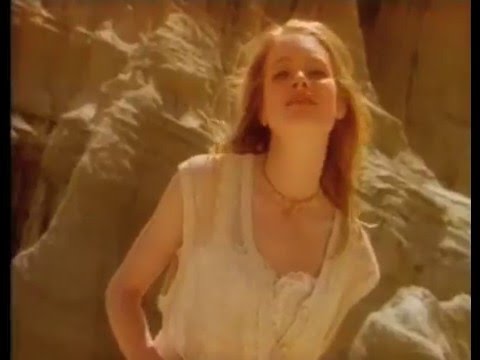
How Was I To Know You Cared DORIS DUKE Video Steven Bogarat
Know someone who'd love this clip?
Share it with friends and fellow fans.
Share this clip
Know someone who'd love this clip?
Share it with friends and fellow fans.
http://www.sirshambling.com/articles/quinvy_9/quinvy_9.html Doris Curry entered the world in 1945 in Sandersville, Georgia, some 40 miles east of Macon. It has been alleged that she featured in a number of gospel groups including the Raymond Rasberry Singers (Chuck Jackson, Carl Hall), the Davis Sisters (Jackie Verdell), the Evangelistic Gospel Singers and the Caravans (Loleatta Holloway). Soulful Kinda Music shows her as part of the Rasberry Singers in 1955-6, along with Chuck Jackson, but, whereas Jackson would have been 18 to 19 years of age, Doris would only have been aged 10 to 11, so I find this hard to believe and perhaps it’s even more unlikely that she could have appeared with so many different major gospel groups while still so young. In New York, between about 1963 and 1967 she worked both as a regular in-demand session singer and as a backing vocalist at Harlem’s famous Apollo Theater. It seems to me most likely that she probably encountered the above gospel groups when they visited the Apollo to feature in its regular gospel concerts. Certainly I have found no evidence that she ever actually recorded with any of them. Her studio back-up duties would embrace sessions by the likes of Aretha, Jackie Wilson, Sinatra, Dean Martin, Sammy Davis and Jerry Butler (his ‘Ice Man’ sessions for Mercury). In 1965 Doris got a job at Motown’s New York office in the company of Herb & Brenda Rooney (The Exciters), George Kerr and Norma Jenkins. Hoping to make it over to the music side of Motown, sadly all Doris ever managed to achieve was the making of a few demos and she duly left the company in 1967. Then Donald Height became her manager and cut her as Doris Willingham on “Running Away From Loneliness” for his Hy Monty label, Willingham being her first married surname. In 1968, she recorded four songs under the direction of Richard Tee. Two tracks, “You Can’t Do That” and “Lost Again” saw release on the newly-launched sister label to President, namely Jay-Boy (No.6001), while two others, “Too Much To Bear” and “Make It On Out”, remained ‘in the can’ at the time. Also in 1968, she toured Europe (including the UK) backing up Nina Simone, whilst, on return to the USA, she migrated chiefly to Philadelphia where she did some back-up work for Gamble & Huff, who were still in their independent-production days. Then in early 1969, she again toured Europe with Simone and sang back-ups on Nina’s live album cut in Germany in April of that year entitled “A Very Rare Evening”, originally issued on German PM Records No. 90053. So it was that, back in the States, a little later in 1969, Doris encountered an old friend, Troy Davis, who was writing songs with (and duly introduced her to) Swamp Dogg, who had recently left his artist/production job at Atlantic Records and was branching out on his own. Swamp says: "at Atlantic I was the square peg struggling to fit in the round hole. Phil Walden was building a studio in Macon, Georgia. I called him and proposed a 75/25 partnership in my new production company. His contribution: studio and rhythm section. We agreed and, after a Little Tommy project, which went unreleased, came the Doris Duke (‘I'm A Loser’) LP”. Troy Davis had brought her to Swamp suggesting he record her. He says: “Three of those songs were already written (and) when I heard Doris sing, all of a sudden song ideas starting coming forth. I damn near lost everything with that (album) though. It was a woman's album; men found it depressing. I walked the streets of New York for six months trying to give it away, then onto Los Angeles. I totally believed in the concept when I walked into Wally Roker's Canyon Records. He played it once and said he had to have it. I damn near paid him. Canyon was damn near out of business (but they) had just enough money left to get it out on the streets.”
George Kerr is a musician and record producer who has worked with a multitude of recording artists during the 1960s and 1970s.
More about George Kerr→Added
![Thumbnail for Skull Snaps - My Hang Up Is You [4:02] [UK GSF GSZ 7] 27 Apr 1973 | HD by George Kerr, Lloyd Price, Composer, lovin', Diplo, L.A.B., The Band, Ween, Rare groove, Y&T](https://img.youtube.com/vi/EdTYyvTULh8/hqdefault.jpg) 4:28
4:28George Kerr, Lloyd Price, Composer, lovin', Diplo, L.A.B., The Band, Ween, Rare groove, Y&T
 5:04
5:04George Kerr
 4:07
4:07George Kerr
 0:32
0:32George Kerr