0 views
Share this clip
Know someone who'd love this clip?
Share it with friends and fellow fans.
Share this clip
Know someone who'd love this clip?
Share it with friends and fellow fans.
Arkansas native Rosetta Nubin Tharpe was one of gospel music’s first superstars, the first gospel performer to record for a major record label (Decca), and an early crossover from gospel to secular music. Tharpe has been cited as an influence by numerous musicians, including Bob Dylan, Little Richard, Elvis Presley, and Arkansan Johnny Cash. Rosetta Tharpe was born in Cotton Plant (Woodruff County) on March 20, 1915, to Katie Bell Nubin Atkins—an evangelist, singer, and mandolin player for the Church of God in Christ (COGIC)—and Willis Atkins. She went by the first names Rosa, Rosie Etta, and Rosabell, and used both her father’s last name and her mother’s maiden name, Nubin. She began performing at age four, playing guitar and singing “Jesus Is on the Main Line.” By age six, she appeared regularly with her mother, performing a mix of gospel and secular music styles that would eventually make her famous. As a youth, she could sing and keep on pitch and hold a melody. Her vocal qualities, however, paled beside her abilities on the guitar—she played individual tones, melodies, and riffs instead of just strumming chords. This talent was all the more remarkable because, at the time, few African-American women played guitar. Tharpe was signed to Decca Records in 1938 and was successful immediately. Versions of Thomas A. Dorsey’s “This Train” and “Hide Me in Thy Bosom,” released as “Rock Me,” were smash hits featuring Tharpe on guitar and Lucky Millinder’s jazz orchestra as accompaniment. These releases started a trend for Tharpe, who recorded both traditional numbers for her gospel fan base and up-tempo, secular-influenced tunes for her growing white audience. The popularity of her singles led to Tharpe’s inclusion in John Hammond’s black music extravaganza, “From Spirituals to Swing,” held in Carnegie Hall in New York City on December 23, 1938. After this well-publicized event, Tharpe went on a concert tour throughout the northeast. She also recorded with Cab Calloway to some success but fared better with “Trouble in Mind,” “Shout, Sister, Shout,” and “That’s All”—all recorded with Lucius “Lucky” Millinder’s jazz orchestra in 1941 and 1942. Tharpe’s popularity was so great that she was only one of two black gospel acts—the other was the Dixie Hummingbirds—to record “V-Discs” for U.S. troops overseas. In the late 1940s, Tharpe returned to more strictly religious songs, recording “Didn’t It Rain” (1947) and “Up Above My Head” (1947) with Marie Knight. From 1944 to 1951, her main accompanist was Samuel “Sammy” Blythe Price, a boogie-woogie pianist from Texas. His trio backed her on “Strange Things Happening Every Day,” a top ten “race record.” Tharpe and Marie Knight parted ways after unsuccessfully trying to enter the blues music market. As a result of the foray into the pop music market, Tharpe’s popularity waned; soon her concert dates dropped off, and she lost her recording contract with Decca. Tharpe kept working and had signed with Mercury Records by the late 1950s. She first toured Europe in 1957 and made return trips in the 1960s, making several live recordings while overseas. Although she never realized her comeback, Tharpe continued to perform. A stroke in 1970 necessitated a leg amputation and caused speech difficulties, but it merely slowed her down. Tharpe continued to tour and perform until her death in Philadelphia, Pennsylvania, on October 9, 1973.
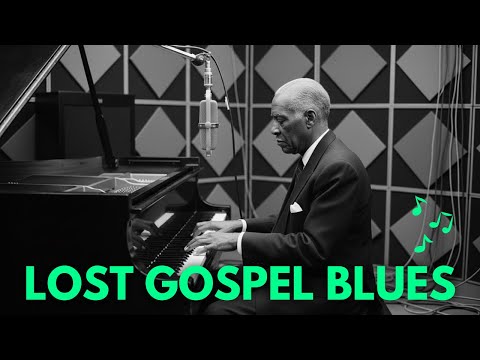
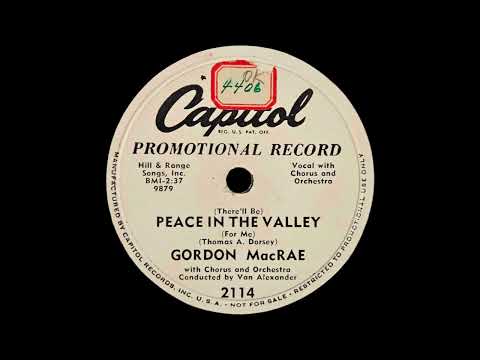
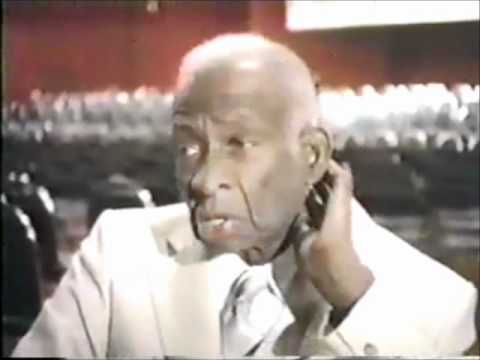
Thomas Andrew Dorsey was an American musician, composer, and Christian evangelist influential in the development of early blues and 20th-century gospel music. He penned 3,000 songs, a third of them gospel, including "Take My Hand, Precious Lord" and "Peace in the Valley". Recordings of these sold millions of copies in both gospel and secular markets in the 20th century.
More about Thomas A. Dorsey→Added
 2:48
2:48Tennessee Ernie Ford
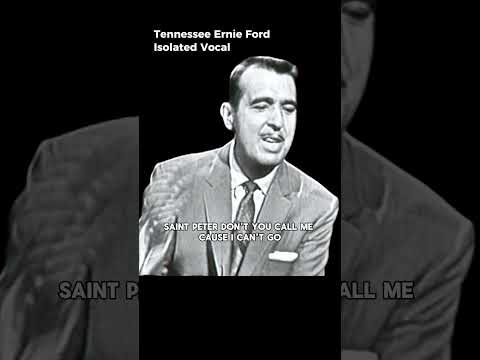 1:00
1:00Tennessee Ernie Ford
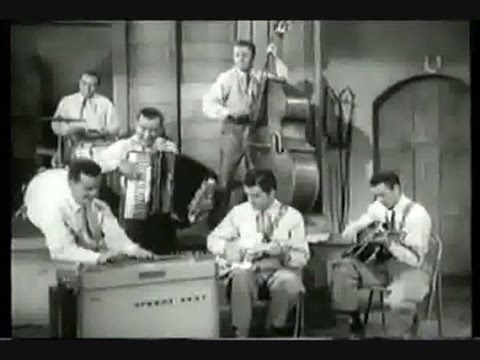 10:06
10:06Tennessee Ernie Ford
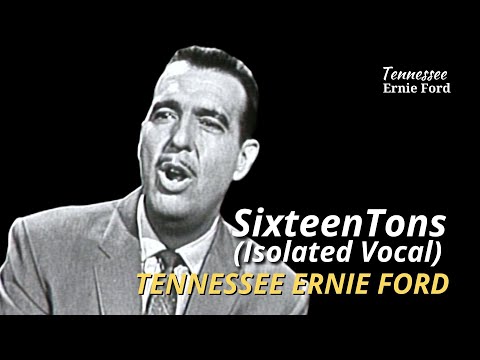 2:33
2:33Tennessee Ernie Ford
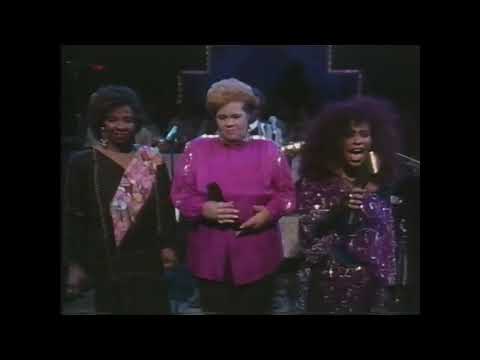 3:15
3:15Thomas A. Dorsey
 49:12
49:12Thomas A. Dorsey
 2:39
2:39Thomas A. Dorsey
 3:06
3:06Thomas A. Dorsey