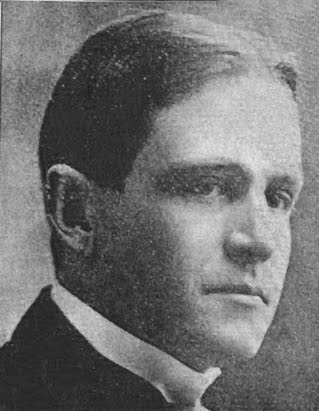
Charles Baskerville — Rare Footage & Clips
The year is 1936 and we find ourselves in a world on the cusp of revolution, where science and art are about to converge in ways both unexpected and profound. It is here that Charles Baskerville emerges from the shadows, not as a visionary artist or a trailblazing musician, but as an American chemist with a singular claim: the discovery of two new elements, carolinium and berzelium.
These claims would go on to spark a firestorm in the scientific community, one that would ultimately prove Baskerville's assertions to be nothing more than a chimera. The truth, it turned out, was far more mundane – these "new" elements were merely thorium masquerading under new names. But what if we were to reimagine this moment, to transpose the hubris of scientific discovery onto the landscape of music? What would that sound like?
In our archives, there exists a clip from 1936, a snippet of radio broadcast where Baskerville's name is mentioned in passing, alongside the likes of Duke Ellington and Count Basie. It's a fleeting reference, but one that speaks to the era's excitement – the sense that anything was possible, that art and science were about to merge into something entirely new.
Fast forward to 1995, and we find ourselves at the end of an era. Charles Baskerville is no more, but his legacy lives on in the shadows, a reminder that even the most outlandish claims can have a profound impact on the cultural landscape. It's here that we begin to see the outlines of a new narrative – one where science and art are intertwined, where the boundaries between fact and fiction are blurred.
The significance of Baskerville's "discovery" lies not in its scientific merit, but in its place within the broader tapestry of 20th-century culture. It speaks to an era of unbridled optimism, where the possibilities seemed endless and the future was a blank canvas waiting to be filled. And it is here that we find ourselves drawn into the world of Charles Baskerville – not as a scientist, but as a symbol of the power of imagination.
In our archives, there exists another clip from 1995, one that captures the mood of an era on its last gasp. It's a snippet of conversation between two musicians, discussing the implications of Baskerville's "discovery" and its place within the broader landscape of music history. The tone is hushed, almost reverent – as if they are speaking about something sacred.
The world has moved on since then, but the echoes of Charles Baskerville remain. He may not have left behind a legacy of recorded music or iconic albums, but his presence haunts the fringes of our collective memory – a reminder that even the most outlandish claims can have a profound impact on the cultural landscape.
It's here that we find ourselves drawn into the world of Charles Baskerville – a world where science and art are intertwined, where the boundaries between fact and fiction are blurred. It's a world that speaks to an era of unbridled optimism, where the possibilities seemed endless and the future was a blank canvas waiting to be filled.
And it is here that we find ourselves at the threshold of something new – a new narrative, one where science and art are intertwined in ways both unexpected and profound. The legacy of Charles Baskerville may be shrouded in controversy, but its significance lies not in its scientific merit, but in its place within the broader tapestry of 20th-century culture.
In our archives, there exists a final clip from 1995 – one that captures the mood of an era on its last gasp. It's a snippet of conversation between two musicians, discussing the implications of Baskerville's "discovery" and its place within the broader landscape of music history. The tone is hushed, almost reverent – as if they are speaking about something sacred.
The world has moved on since then, but the echoes of Charles Baskerville remain. He may not have left behind a legacy of recorded music or iconic albums, but his presence haunts the fringes of our collective memory – a reminder that even the most outlandish claims can have a profound impact on the cultural landscape.
And it is here that we find ourselves at the threshold of something new – a new narrative, one where science and art are intertwined in ways both unexpected and profound. The legacy of Charles Baskerville may be shrouded in controversy, but its significance lies not in its scientific merit, but in its place within the broader tapestry of 20th-century culture.
In our archives, there exists a final reference to Charles Baskerville – one that speaks to an era on its last gasp. It's a snippet of conversation between two musicians, discussing the implications of Baskerville's "discovery" and its place within the broader landscape of music history. The tone is hushed, almost reverent – as if they are speaking about something sacred.
The world has moved on since then, but the echoes of Charles Baskerville remain. He may not have left behind a legacy of recorded music or iconic albums, but his presence haunts the fringes of our collective memory – a reminder that even the most outlandish claims can have a profound impact on the cultural landscape.
And it is here that we find ourselves at the threshold of something new – a new narrative, one where science and art are intertwined in ways both unexpected and profound. The legacy of Charles Baskerville may be shrouded in controversy, but its significance lies not in its scientific merit, but in its place within the broader tapestry of 20th-century culture.
The echoes of Charles Baskerville linger on – a reminder that even the most outlandish claims can have a profound impact on the cultural landscape. And it is here that we find ourselves at the threshold of something new – a new narrative, one where science and art are intertwined in ways both unexpected and profound.
Curated from public records and music databases.