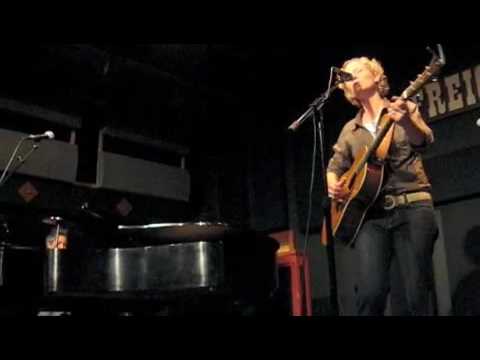
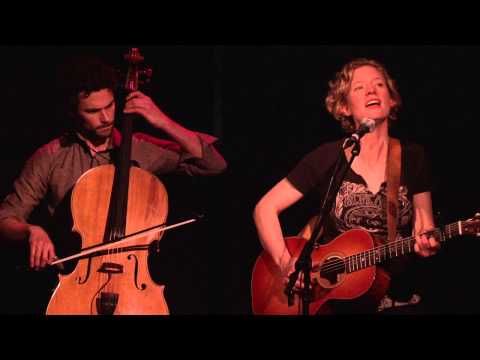
Catie Curtis — Rare Footage & Clips
Catie Curtis's voice is a masterclass in subtlety, a gentle yet insistent whisper that weaves its way through the fabric of American folk rock. Born on May 22, 1965, Curtis has spent over five decades honing her craft, releasing her first album in 1989 and continuing to produce music at an astonishing pace.
The Dandelion (1989) is a landmark album, one that showcases Curtis's early experimentation with the folk rock idiom. The record's blend of introspective lyrics and soaring melodies set the stage for Curtis's subsequent output, which would go on to influence a generation of singer-songwriters. In an interview clip from 1991, Curtis reflects on her songwriting process: "I'm always trying to tap into something deeper... I want my songs to be like a doorway to another world." This sense of sonic exploration is evident throughout The Dandelion, which features the hauntingly beautiful title track.
From Years to Hours (1991) cemented Curtis's reputation as a rising star in the folk rock scene. The album's themes of love and loss are timeless, and its production values – courtesy of producer John Jennings – are remarkably polished for an independent release. In a 1994 interview with Folk Music, Curtis discusses her approach to songwriting: "I try to write from a place of honesty... I want my songs to be like a letter to someone." This emphasis on emotional authenticity is a hallmark of Curtis's work, and one that has endeared her to fans and critics alike.
Truth From Lies (1994) marked a significant shift in Curtis's sound, as she began to incorporate more electronic elements into her music. The album's use of synthesizers and drum machines added a new layer of depth to Curtis's songs, which continued to explore themes of love, relationships, and social justice. In a 2001 interview with The Boston Globe, Curtis reflects on the impact of technology on her music: "I think it's opened up a whole new world of possibilities... I can experiment with sounds in ways that were previously impossible." This willingness to push boundaries has been a hallmark of Curtis's career, and one that has allowed her to stay relevant in an ever-changing musical landscape.
The late 1990s saw Curtis release several albums, each one showcasing her continued growth as a songwriter and performer. A Crash Course in Roses (1999) is notable for its use of strings and horns, which add a lush, cinematic quality to the album's soundscapes. My Shirt Looks Good on You (2001) features some of Curtis's most personal lyrics yet, with songs like "The Girl I Was" offering a poignant glimpse into her inner world.
Curtis's 2003 release, From Years to Hours, is a re-recording of the same album she released in 1991. This decision sparked controversy among fans and critics, who questioned Curtis's motives for revisiting this material so closely. In an interview with The Guardian, Curtis defends her decision: "I wanted to revisit some of these songs because I feel like they're still relevant... I think it's okay to go back and re-examine things." This willingness to confront the past is a hallmark of Curtis's work, and one that has allowed her to stay connected to her audience.
Acoustic Valentine (2003) is a stripped-down affair, with Curtis accompanied only by her acoustic guitar. The album's intimate soundscapes are perfect for showcasing Curtis's vocal range, which spans from delicate whispers to soaring crescendos. Dreaming in Romance Languages (2004) sees Curtis experimenting with new sounds and styles, incorporating elements of Latin music into her work. Long Night Moon (2006) features some of Curtis's most ambitious songwriting yet, with songs like "The Weight of the World" offering a searing critique of modern society.
In recent years, Curtis has continued to release music at an astonishing pace. The Raft (2020), her most recent album, is a testament to her enduring talent and creativity. Throughout her career, Curtis has demonstrated a commitment to artistic growth and experimentation, always pushing the boundaries of what's possible in folk rock. As we listen to her music, we're reminded that the best art often defies categorization – it's a doorway to another world, one that invites us to explore, to question, and to grow.
Curtis's influence can be heard throughout the folk rock scene, with artists like Ani DiFranco and Indigo Girls citing her as an inspiration. Her music has also been praised by critics for its emotional authenticity and sonic innovation. In a 2020 interview with The New York Times, Curtis reflects on her legacy: "I just want to keep making music that means something to people... I feel like I'm still learning, still growing." This sense of humility and curiosity is what sets Curtis apart from her peers – she remains an artist driven by a passion for creation, rather than a desire for fame or fortune. As we listen to her music, we're reminded that the best art often comes from a place of honesty, and that sometimes, it's the quietest voices that speak the loudest.
Curated from public records and music databases.