Carl Palmer — Rare Footage & Clips
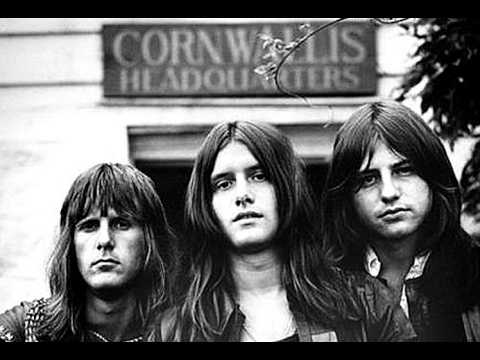
In a cramped London rehearsal space, circa 1968, a young Carl Palmer sat behind his drum kit, locked in a primal groove with Keith Emerson's keyboards and Greg Lake's bass. The embryonic sounds of this trio would soon coalesce into one of the most influential and enduring bands of the progressive rock era: Emerson, Lake & Palmer (ELP). This nascent configuration was merely the beginning for Palmer, whose storied career has spanned over five decades, defying categorization and genre boundaries.
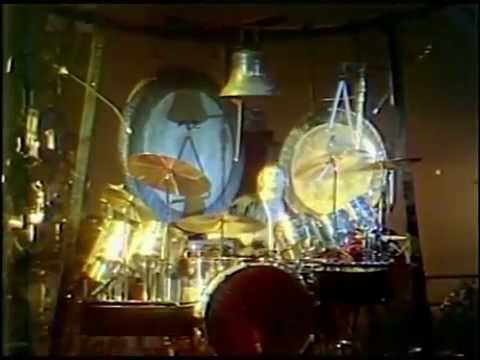
Palmer's tenure with ELP cemented his reputation as a master drummer, capable of navigating the most complex time signatures and polyrhythms. His work on albums like "Tarkus" (1971) and "Brain Salad Surgery" (1973) has been widely studied and emulated by aspiring musicians worldwide. The iconic drum solo in "Tarkus," with its intricate patterns and virtuosic display, remains one of the most revered moments in rock history.
As a member of Atomic Rooster, Palmer further explored the avant-garde and psychedelic territories that would become hallmarks of progressive rock. His work on albums like "Death Walks Behind You" (1970) showcased his ability to adapt to diverse musical settings, from the eerie atmospherics of "The Flamingo" to the driving rhythms of "Tomorrow Night." This period also saw Palmer's collaborations with The Crazy World of Arthur Brown, where he honed his skills as a touring drummer and developed a keen sense of dynamic range.
Palmer's post-ELP endeavors have been marked by an unwavering commitment to progressive rock. With Asia (formed in 1981), he co-founded one of the most successful bands of the era, issuing a string of hit albums that blended art rock with pop sensibilities. His work on "Asia" (1982) and "Alpha" (1996) remains some of the band's most enduring material.
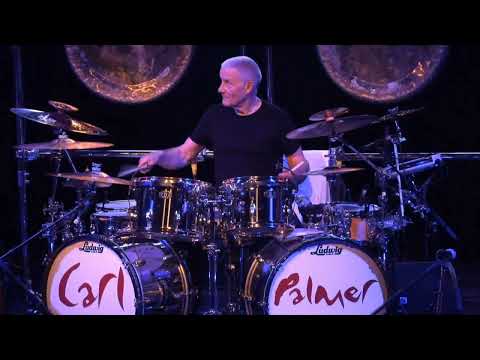
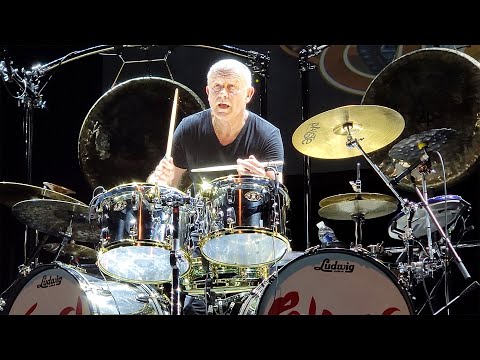
In recent years, Palmer has continued to tour and record with his own ensembles, including the Carl Palmer Band and the ELP Legacy project. These endeavors have allowed him to revisit classic ELP repertoire, reinterpreting timeless tracks like "Jerusalem" and "From the Beginning." His 2017 live album, "Live – Rockin' the Ritz," captures the energy and precision of his current lineup, which has been touring extensively across Europe and North America.
Throughout his career, Palmer has received numerous accolades for his contributions to music. In 1989, he was inducted into the Modern Drummer Hall of Fame, a testament to his enduring influence on generations of drummers. The 2017 Progressive Music Awards recognized him with the Prog God Award, an honor bestowed upon those who have made significant and lasting impacts on the progressive rock genre.
As Palmer's career continues to unfold, it is clear that this English drummer has left an indelible mark on music history. His innovative approach to drumming, coupled with his versatility as a performer and composer, has inspired countless musicians across various genres. The legacy of Carl Palmer serves as a reminder of the transformative power of progressive rock, which continues to shape the musical landscape even in its most experimental and avant-garde forms.
Palmer's discography is replete with milestones that warrant closer examination. Albums like "Do Ya Wanna Play, Carl?" (2001) and "Working Live, Volume 3" (2010) showcase his ability to balance nostalgia with innovation, while the live recordings from the Ritz in New York City (2017) demonstrate his continued mastery of the stage.
The significance of Palmer's work lies not only in its technical proficiency but also in its capacity to evoke a sense of wonder and awe. His drumming has been described as "a symphony of sound" by critics, capturing the essence of progressive rock's most iconic moments. As we delve into the archives, it becomes clear that Carl Palmer's impact on music extends far beyond his own performances – he has inspired a generation of musicians to push the boundaries of what is possible with their instruments.
In the years to come, fans and scholars alike will continue to unravel the complexities of Palmer's artistry. His place within the pantheon of progressive rock legends is secure, yet there remains much to explore in his discography, from the early days of ELP to his current work with the ELP Legacy project. As we embark on this journey through the archives, one thing becomes clear: Carl Palmer's music will continue to resonate with audiences for generations to come.
Curated from public records and music databases.