Blumfeld — Rare Footage & Clips
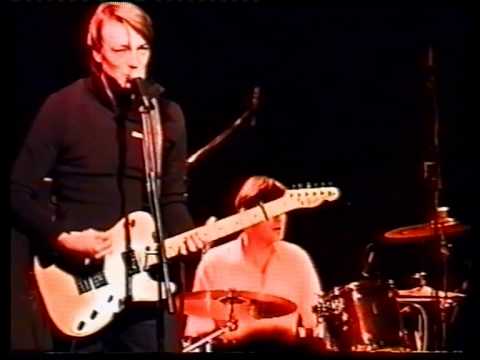
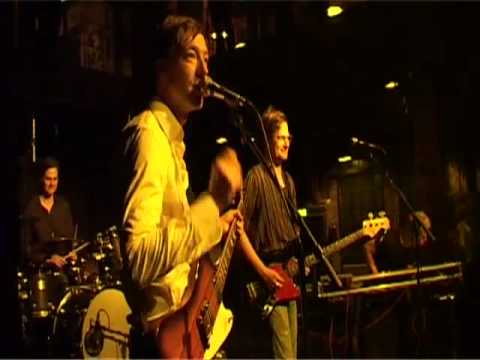
In the dimly lit Ballhaus in Klagenfurt, Austria on April 4th, 1999, Blumfeld took to the stage with a quiet intensity that would become their hallmark. The Hamburg-based indie pop outfit was still finding its footing at this point, but it's clear from the footage that they were already honing in on their unique sound – a blend of witty, observational lyrics and jangly guitars that would come to define their style.
It's worth noting that Blumfeld's significance extends far beyond their local Hamburg scene. Formed in 1990 by singer-songwriter Jochen Distelmeyer, the band is often cited as one of the most successful combos of the German indie scene. But what sets them apart from other bands of their era is their unwavering commitment to exploring the darker corners of human experience.
Their music is characterized by a distinctive disdain for modern consumer society, with lyrics that tackle themes like fear, depression, uncertainty, and love as a main motivator. It's a bleak outlook, but one that resonated deeply with audiences in the 1990s and early 2000s. And yet, despite their morose subject matter, Blumfeld's songs are never maudlin or self-indulgent – they're instead infused with a wry sense of humor and a keen observational eye.
Take, for example, their 1999 album Old Nobody. Recorded in the midst of a tumultuous period in German history, Old Nobody is a deeply personal and introspective work that explores the disillusionment and disorientation of a generation. The album's title track, with its deadpan delivery and loping guitar riff, is a particularly striking example of Blumfeld's ability to distill complex emotions into concise, catchy songwriting.
But what's truly remarkable about Blumfeld is their place within the broader context of German indie rock. As part of the Hamburger Schule (Hamburg School) movement, they're often mentioned alongside other influential bands like Tocotronic and Kante. And yet, while these bands were content to simply replicate the American indie sound, Blumfeld chose a different path – one that was more introspective, more personal, and more deeply rooted in German culture.
This is evident on their 2001 album Testament der Angst (Testament of Fear), which sees the band exploring themes of anxiety, alienation, and social disconnection. The album's lyrics are marked by a sense of desperation and urgency, as if Blumfeld were trying to capture the mood of an entire generation before it slipped through their fingers.
It's a sentiment that's echoed in their 2003 single "Jenseits von Jedem" (Beyond Everyone), which features a haunting melody and lyrics that seem to speak directly to the disillusionment of modern life. The song's title, with its reference to the idea of transcending individual experience, is particularly striking – it suggests a band that's not just content to document their own emotions, but also to explore the broader implications of those feelings.
But what about Blumfeld's later work? Their 2006 album Die Welt ist schön (Drei Singles 1991/92) sees the band revisiting some of their earlier material, reworking it into a more polished and refined sound. It's an interesting move, given that many bands would have been content to rest on their laurels at this point – but Blumfeld were always about pushing boundaries and exploring new ideas.
And yet, despite their innovative spirit, Blumfeld's music is also marked by a sense of melancholy and regret. Their songs often feel like dispatches from the front lines of modern life, with all its attendant anxieties and disillusionments. It's a bleak outlook, but one that resonates deeply with listeners – and it's this quality that sets them apart as one of the most significant bands to emerge from the German indie scene.
In the end, Blumfeld's legacy is not just about their music – it's also about the cultural context in which they emerged. As part of the Hamburger Schule movement, they helped shape a distinctly German take on indie rock, one that was marked by introspection, personal politics, and a deep-seated skepticism towards modern society.
Their influence can be seen in later bands like Tocotronic and Kante, who built upon Blumfeld's innovations to create their own unique sound. And yet, despite this legacy, Blumfeld remains a relatively unknown quantity outside of Germany – a testament to the fact that their music was always more about capturing the mood of a particular moment in time than about seeking wider recognition.
As the lights dimmed on their final performance at the Großer Sendesaal des RBB in Berlin on October 13th, 2003, Blumfeld left behind a body of work that continues to resonate with listeners today. Their music may be marked by a sense of melancholy and regret – but it's also infused with a wry sense of humor and a keen observational eye that makes them one of the most compelling bands of their era.
Curated from public records and music databases.