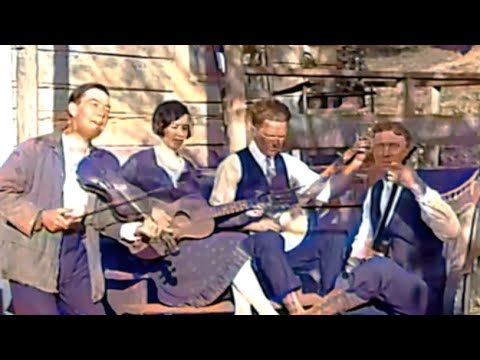
Bascom Lamar Lunsford — Rare Footage & Clips
In the misty dawn of March 21, 1882, a son was born to the hills of western North Carolina - Bascom Lamar Lunsford would grow up to be a guardian of that region's rich cultural heritage. By the time he took his first breath, the United States was still reeling from the aftermath of the Civil War, and the country's musical landscape was as fragmented as its people. But in those rugged Appalachian hills, a unique tradition of folk music was simmering, waiting to be unearthed by a curious and passionate champion like Lunsford.
As a young man, Lunsford would walk the same trails that his ancestors had traversed for generations, collecting stories, songs, and dances that had been passed down through oral tradition. He'd listen to the elderly women of the community, their voices weaving tales of love, loss, and hardship, as they worked in the fields or sat on their porches, spinning wool. These were not just songs - they were windows into a way of life that was rapidly disappearing.
In 1953, Lunsford's dedication to preserving this heritage would bear fruit with the release of Smoky Mountain Ballads, an album that would become a benchmark for Appalachian folk music. The collection featured traditional tunes like "I Wish I Was a Mole" and "Pretty Polly," their melodies as haunting as the mountains themselves. But it was more than just a record - it was a time capsule, capturing the essence of a bygone era before it vanished forever.
Lunsford's work didn't stop at music; he was also a folklorist, collecting stories, dances, and crafts that had been lost to the ages. His passion for preserving this cultural heritage earned him recognition from the Library of Congress, which would eventually appoint him as a state folklorist for North Carolina. This was no small honor - it marked Lunsford's status as a keeper of the flame, a guardian of the traditions that defined his people.
In 1956, Lunsford released Minstrel Of The Appalachians, another album that showcased his mastery of traditional music. But this time, he was not just a performer; he was also a historian, weaving together fragments of Appalachian culture into a rich tapestry. This was no easy task - the region's musical heritage was as complex as its people, with influences from Scottish, Irish, and African traditions all jostling for space.
Lunsford's legacy extends far beyond his own music; it's a testament to the power of preservation and the importance of honoring one's cultural roots. In an era where traditional music is often reduced to nostalgic trinkets or commercialized for mass consumption, Lunsford's work stands as a beacon - a reminder that music is not just entertainment, but a vital link to our collective past.
In 2009, long after Lunsford's passing in 1973, his estate would release Music from South Turkey Creek, an album that brought together previously unreleased recordings and live performances. It was a fitting tribute to a man who had dedicated his life to preserving the music of the Appalachian region - a region that would soon be forever changed by the forces of industrialization and urbanization.
Today, as we look back on Lunsford's remarkable career, we're reminded of the importance of preserving cultural heritage in all its forms. His work was not just about collecting songs; it was about capturing the essence of a people - their stories, their struggles, and their triumphs. In an era where traditional music is often reduced to nostalgic trinkets or commercialized for mass consumption, Lunsford's legacy stands as a beacon - a reminder that music is not just entertainment, but a vital link to our collective past.
The clip of "I Wish I Was a Mole" from Smoky Mountain Ballads (1953) on DeepCutsArchive still sends shivers down the spine - it's a haunting melody that conjures up images of misty mountains and forgotten valleys. As we listen, we're transported to a bygone era, one where music was not just entertainment, but a vital part of everyday life.
In Lunsford's own words, "The people of these hills have always been a proud and independent folk... their songs are a reflection of this spirit." Today, as we celebrate his legacy, we're reminded that music is not just a form of entertainment - it's a window into our collective soul.
Curated from public records and music databases.