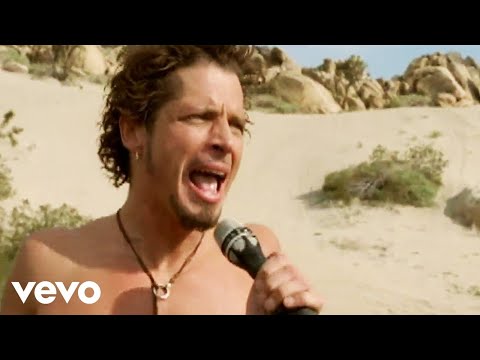
Audioslave — Rare Footage & Clips
The summer of 2001 was a tumultuous time for music. The world was still reeling from the 9/11 attacks, and the airwaves were filled with the sounds of protest and rebellion. It was against this backdrop that Audioslave emerged, a supergroup formed by some of the most influential musicians of the era: Chris Cornell (Soundgarden), Tom Morello, Tim Commerford, and Brad Wilk (Rage Against the Machine). Their debut album, released in 2002, was a fusion of 1970s hard rock and 1990s alternative, with a dash of 1960s funk, soul, and R&B.
The band's sound was a deliberate attempt to break free from their respective pasts. Cornell's soaring vocals, which had become synonymous with Soundgarden's grunge sound, were now paired with Morello's unconventional guitar work, which had been the hallmark of Rage Against the Machine's politically charged rock. The result was a unique blend that both honored their influences and forged a new path.
One of the most striking aspects of Audioslave's live performances was their commitment to sonic experimentation. At the 2003 Dublin concert, Cornell's voice soared through the Irish air as he belted out hits like "Cochise" and "Like a Stone". Morello's guitar work was a key component of the band's sound, with his use of unconventional techniques creating a rich tapestry of noise.
The band's emphasis on live performance was not limited to their music. In 2005, they made history by becoming the first American rock band to perform an open-air concert in Cuba. The show, which took place at the Havana's Alejandro Robles Stadium, was a testament to the band's commitment to pushing boundaries and challenging the status quo.
Throughout their six-year run, Audioslave released three albums: their self-titled debut, "Audioslave", followed by "Out of Exile" in 2005. The latter marked a significant shift in the band's sound, with Cornell's vocals taking center stage and Morello's guitar work becoming even more experimental.
The band's impact on music history cannot be overstated. With over eight million records sold worldwide, they were one of the most successful rock bands of their era. Their Grammy nominations only added to their credibility, cementing their status as one of the most innovative and influential bands of the 2000s.
But what sets Audioslave apart from other supergroups is not just their music – it's their commitment to sonic experimentation and pushing boundaries. At the 2005 KROQ Weenie Roast concert in Irvine, California, Morello took the stage with a custom-made guitar that looked more like a sculpture than an instrument. The resulting performance was a fusion of rock, funk, and soul, with Cornell's vocals soaring above the din.
The band's legacy extends beyond their music as well. Their commitment to live performance and sonic experimentation has inspired a generation of musicians to push the boundaries of what is possible on stage. At the 2003 Philadelphia concert, Commerford took the stage with a custom-made bass that looked like it belonged in a museum rather than a rock club.
Audioslave's impact on music history is a testament to their innovative spirit and commitment to sonic experimentation. Their legacy continues to inspire musicians today, and their influence can be heard in everything from indie rock to electronic music. As the band's final performance at Camden's Tweeter Center in 2007 came to a close, it was clear that Audioslave had left an indelible mark on the world of music.
The image of Chris Cornell standing alone on stage, his voice echoing through the empty venue, is one that stays with you long after the music has faded away. It's a poignant reminder of the band's impact and legacy – a testament to their commitment to pushing boundaries and challenging the status quo.
Curated from public records and music databases.