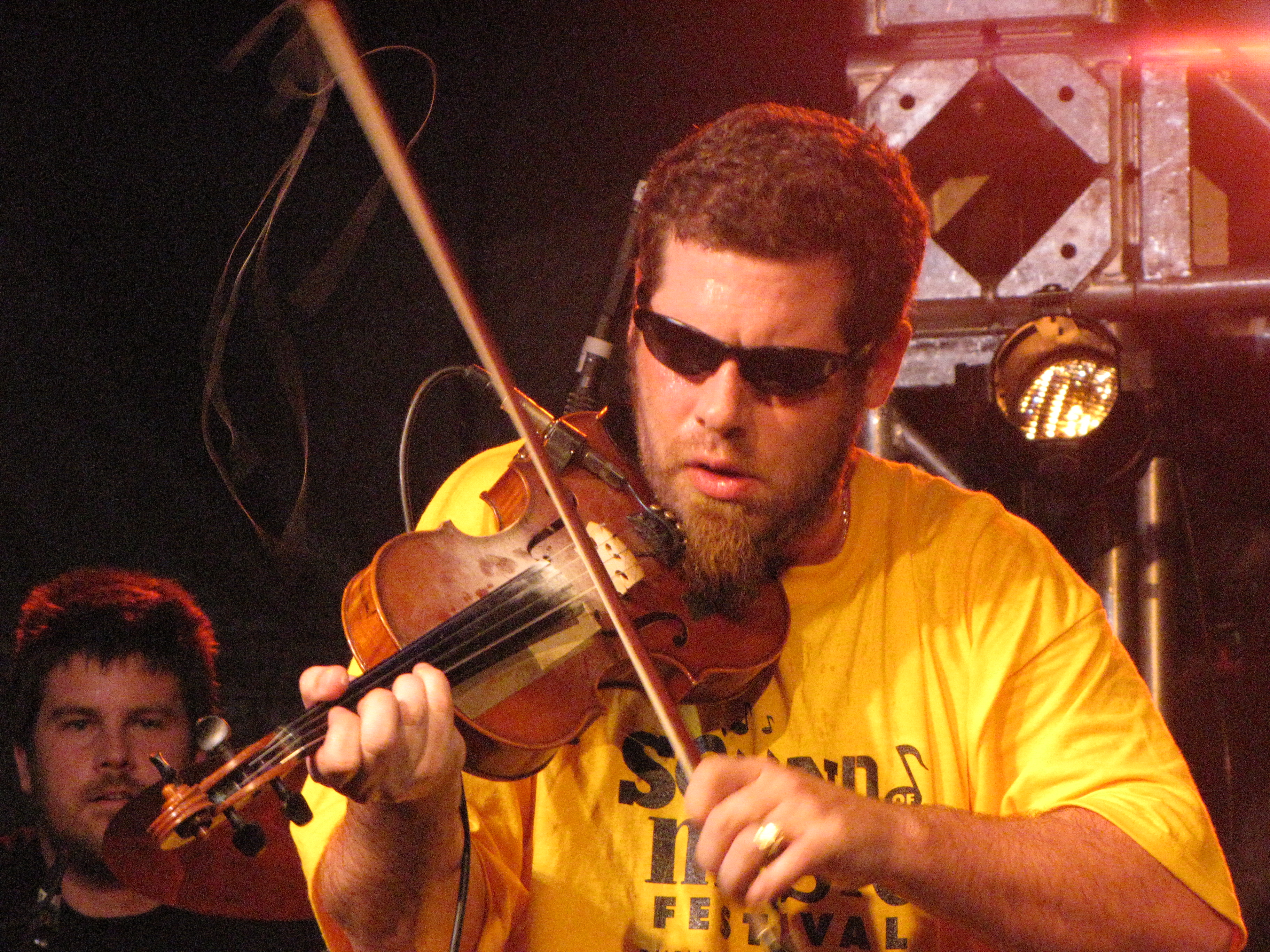
Ashley MacIsaac — Rare Footage & Clips
In the dimly lit, smoke-filled rooms of 1970s Cape Breton Island, a young Ashley MacIsaac would often sit at his father's feet, mesmerized by the old man's fiddle playing. It was here, amidst the rugged beauty of the Maritimes, that MacIsaac's own musical journey began to take shape. By the time he was ten years old, he had already mastered the intricacies of traditional Cape Breton fiddle music, his fingers dancing across the strings with a precision and passion that would come to define his career.
Fast forward to 1995, and MacIsaac's breakthrough album Hi™ How Are You Today? was released to widespread critical acclaim. This double-platinum selling Canadian record catapulted him onto the national stage, earning him not one but two Juno Awards in 1996 – Best New Solo Artist and Best Roots & Traditional Album – Solo. It was a testament to his dedication to preserving the rich musical heritage of his native Cape Breton, while simultaneously pushing the boundaries of what was possible within the traditional genre.
One clip from our archive captures MacIsaac's unique style perfectly: a 1993 recording of him performing "The Devil Among the Tailors" at a local festival. The way he weaves together the intricate fingerpicking patterns and soaring fiddle melodies is nothing short of breathtaking, transporting listeners to the rugged coastlines and rolling hills of Cape Breton.
But MacIsaac's impact on Canadian music extends far beyond his own impressive discography. His influence can be heard in the work of countless other artists who have followed in his footsteps, from Natalie MacMaster to The Rankin Family. And yet, despite his significant contributions to the genre, MacIsaac remains a relatively underappreciated figure outside of Canada.
This is perhaps due in part to the fact that MacIsaac's music often defies easy categorization. While rooted firmly in traditional Cape Breton fiddle music, his style also incorporates elements of folk, rock, and even pop – making him a true original within the Canadian musical landscape. As he himself once said in an interview, "I'm not just a fiddler, I'm a storyteller."
MacIsaac's subsequent albums only served to solidify his reputation as one of Canada's most innovative and exciting musicians. From the Celtic-infused electronica of Helter's Celtic (1999) to the more stripped-back, acoustic soundscapes of A Celtic Solstice (2002), each release pushed him further down the path of experimentation and exploration.
But it's not just MacIsaac's music that has left a lasting impact on Canadian culture. His commitment to preserving traditional Cape Breton fiddle music has helped to keep alive a vital part of the country's heritage – one that is all too often overlooked in favor of more commercial or mainstream styles. As he once told an interviewer, "I'm not just making music for myself, I'm making it for my people."
In 1997, MacIsaac won his third Juno Award for Best Instrumental Artist, cementing his status as one of Canada's most respected and accomplished musicians. And yet, despite this impressive accolade, he remains a relatively low-key figure – preferring to let his music speak for itself rather than courting the spotlight.
One clip from our archive that showcases MacIsaac's unique ability to blend traditional and modern styles is a 2001 recording of him performing "The Wind That Shakes the Barley" at a concert in Toronto. The way he seamlessly weaves together the intricate fiddle melodies with a driving rock beat is nothing short of masterful – a testament to his boundless creativity and innovative spirit.
Today, MacIsaac continues to tour and record music, his legacy as one of Canada's most influential musicians remaining strong. His commitment to preserving traditional Cape Breton fiddle music has helped to keep alive a vital part of the country's heritage – one that will continue to inspire future generations of musicians and fans alike.
Curated from public records and music databases.